REVIEW · CASABLANCA
Best Inclusive 15 Days Morocco Tour
Book on Viator →Operated by Enjoy Desert Tours · Bookable on Viator
Morocco starts with a mosque and ends with stargazing. What makes this route interesting is how it moves from imperial-city sights to Erg Chebbi dunes at a real human pace, with riads most nights. I particularly like the guided walking time in Fes and Marrakech, and the way the desert camp adds comfort to the wild factor. One thing to think about: the drive days stack up, so expect long hours in a vehicle between regions.
You get a strong classic-Morocco hit list without feeling like you’re bouncing through stops with no context. Plus, the trip includes door-to-door airport transfer and private transport, which matters in Morocco where getting yourself organized can eat time. If you’re the type who wants lots of downtime or only short rides, this might feel a bit full.
In This Review
- Quick takeaways before you go
- The big idea: Casablanca to the Sahara and back in 15 days
- Day 1 Casablanca: Hassan II Mosque first, then a proper arrival
- Rabat and Chefchaouen: Royal marble, an unfinished tower, then blue alleys
- Volubilis to Meknes to Fes: Roman mosaics and a gate worth lingering at
- Fes Medina with a local guide: Karaouine Mosque and tanneries without getting lost
- Middle Atlas to Midelt via Ifrane and cedar forests: cooler air and macaque breaks
- Ziz Valley to Merzouga: fossils, date palms, and the approach to the dunes
- Erg Chebbi camel trek: nomad tea, dune views, and that night under canvas
- Todra Gorge and Dades Valley: a canyon stop before the rose city
- Kalaa Mgouna (the rose city) and Skoura Oasis: buying scents, touring kasbahs
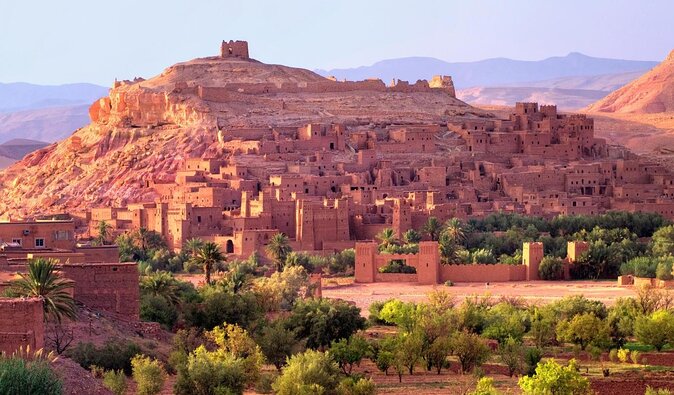
- Ait Ben Haddou to Marrakech: UNESCO kasbah vibes and high Atlas views
- Marrakech with a local guide: Koutoubia, Bahia palace, and Djemaa el-Fna
- Essaouira coast day: Skala fortress, thuya wood, and wind power
- Returning to Casablanca via Safi and El Jadida: a final coast reset
- Price and what you really get for $3,012.79 per person
- Who should book this, and who should pick something else
- Should you book this 15-day Casablanca Morocco tour?
- FAQ
- FAQ
- How long is the Morocco tour from Casablanca to the Sahara?
- What transportation is included during the trip?
- What lodging do I get during the 15 days?
- Are meals included?
- Do I ride camels in the Sahara?
- Is museum entrance included?
- Is free cancellation available?
Quick takeaways before you go
- Hassan II Mosque opening move in Casablanca sets the tone right away, especially if you land early
- Chefchaouen on foot for real alley time in the Blue City, with no driving clutter
- Roman Volubilis + Meknes gate stop gives you contrast beyond the medinas
- Local-guided Fes and Marrakech medinas saves time and helps you understand what you’re seeing
- Erg Chebbi camel trek with a nomad visit plus a night in the Sahara camp
- Rosewater shopping in Kalaa Mgouna is practical, giftable, and easy to plan around
The big idea: Casablanca to the Sahara and back in 15 days
This is a 15-day Morocco tour from Casablanca built around a simple logic: start with coastal cities, work inland through the imperial centers, then go big for the desert, then finish with the coast again in Essaouira and back to Casablanca. You’re not just checking boxes. You’re moving through Morocco’s different moods—minaret views, mountain roads, desert silence, and Atlantic wind.
The value is strongest when you price it as a package. You’re getting private air-conditioned transport, 14 nights split between authentic riads and a luxury desert camp, plus breakfasts and a few dinners. On top of that, you get local guides in the two places where wandering without help can be overwhelming: Fes and Marrakech.
One more practical note: this is a private tour/activity, so you’re not sharing the day with random people. That usually makes the pace and timing feel smoother, even when the route is long.
You can also read our reviews of more tours and experiences in Casablanca.
Day 1 Casablanca: Hassan II Mosque first, then a proper arrival
Most trips start with a scramble. This one starts with orientation. After you land at Mohamed V International Airport, you’re picked up and driven to your hotel, then you can fit in a visit to the seaside Hassan II Mosque if your arrival timing works.
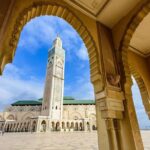
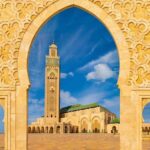
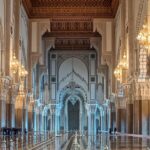
Hassan II is a major deal: it’s the world’s third-largest mosque and has a minaret listed at 210 meters. It also has a big visitor advantage—non-Muslims are allowed entry—so it’s one of the easiest “major monument” moments to build into an arrival day.
Practical takeaway: wear shoes you can walk in. The site is massive, and even when you’re not climbing anything, you’ll still cover ground. Since your first night is in a hotel with bed and breakfast, you’re not paying extra for a complicated first meal plan.
Rabat and Chefchaouen: Royal marble, an unfinished tower, then blue alleys
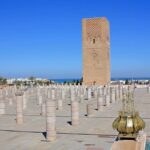
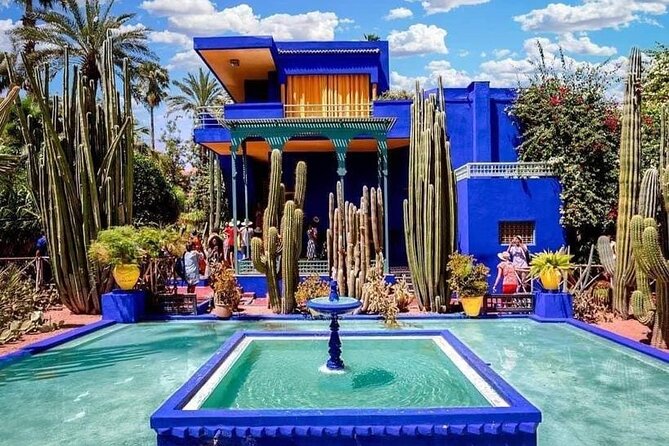
The next leg drives you from Casablanca toward Rabat, then onward to Chefchaouen, known as Morocco’s Blue City. Rabat brings the calm, formal side of the country: you visit the Royal Palace, the Hassan Tower, and the Mausoleum of Mohammed V.
The Hassan Tower story is interesting because it’s unfinished. Sultan Yacoub El-Mansour intended a 60m minaret, but it stops at 44m. That kind of “history with the human interruption” feels more real than a perfectly staged monument.
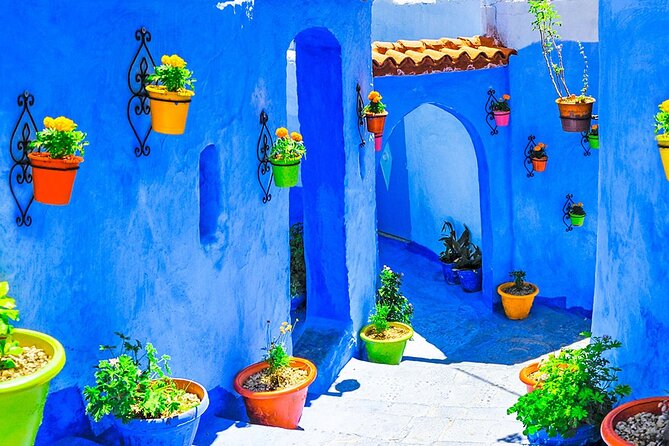
Then you shift gears into Chefchaouen. The big win here is that you explore the Medina area with no drive time, which keeps the day feeling local instead of logistics-heavy. You’ll see whitewashed walls and the famous blue doors and windows, plus mountain scenery around the Rif.
In a lot of Morocco trips, Chefchaouen becomes a quick photo stop. Here, it gets time to breathe. If you like walking slow, you’ll love it.
Volubilis to Meknes to Fes: Roman mosaics and a gate worth lingering at
Day 4 adds a valuable contrast. You head to Volubilis, the Roman archaeological site, and spend the morning among ruins built around 2000-year-old mosaics. It’s a totally different “Morocco story” than medina alleys and desert tents, and it helps break up the trip so it doesn’t feel repetitive.
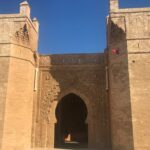
Then the route continues to Meknes, including Bab Mansour, often described as the most grand gate in Morocco. You’ll see lavish zellij tilework and inscriptions on top, and it’s tied to Sultan Moulay Ismail. I like this stop because it’s not just a photo wall. You can actually spend a few minutes looking at the details without feeling rushed.
After lunch, you roll on to Fes for the next stage. Expect another travel-day rhythm shift here: the trip keeps moving, but the program adds enough variety that the long hours don’t feel wasted.
Fes Medina with a local guide: Karaouine Mosque and tanneries without getting lost
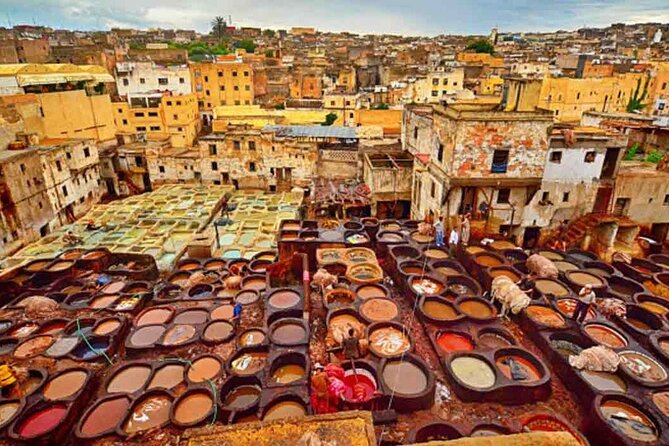
Fes is the kind of city where you need a guide if you want it to click fast. You get a guided walking tour within the Medina, with time at major cultural sites and markets (souks).
The anchor stop is the Al Karaouine Mosque and University. It’s described as the spiritual heart of Fes, and it can host up to 20,000 people at prayer. Even if you don’t go deep into religious architecture, that scale helps you understand why this place matters.
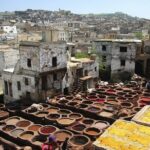
You’ll also visit the tanneries. That can be a sensory experience, and not everyone enjoys it. If you’re sensitive, plan for that and keep your focus on what your guide explains rather than trying to interpret everything yourself.
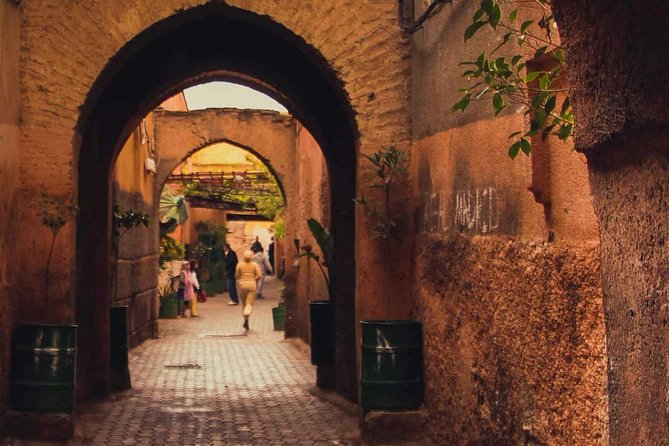
The practical value of this day is the way it organizes the Medina. When you have someone who knows how to route you through narrow alleys and which areas to prioritize, you spend less time circling and more time learning.
Middle Atlas to Midelt via Ifrane and cedar forests: cooler air and macaque breaks
Day 6 shifts north toward the Middle Atlas Mountains. You stop in Ifrane, nicknamed like little Switzerland for its beauty and pseudo-alpine vibe. It’s a helpful reset after Fes.
From there, you pass the cedar forest around Azrou and stop to see Barbary macaques. Then you drive through Berber villages in the mountains before reaching Midelt.
This portion is best for two types of people: people who like roadside scenery, and people who want a break from big-city walking days. You still need to stay flexible—this is part of the trip where the car time is real—but the stops keep it from feeling like only driving.
Ziz Valley to Merzouga: fossils, date palms, and the approach to the dunes
Next you head toward Erfoud and Merzouga, which is where Morocco’s desert story becomes literal. You cross the Ziz Valley, known for its date-palm views, then stop in Erfoud, a town associated with fossils.
Even if you’re not shopping or geeking out on fossils, the stop is useful because it breaks up the drive and gives the region a sense of place. By the time you reach Merzouga in the afternoon, you’re close enough to feel the change in atmosphere.
And here’s the important part: the itinerary sets up your desert adventure so you’re not starting the camel trek with zero rhythm. You spend your first night in a hotel or riad near the dunes of Erg Chebbi, then the big ride happens the next day.
Erg Chebbi camel trek: nomad tea, dune views, and that night under canvas
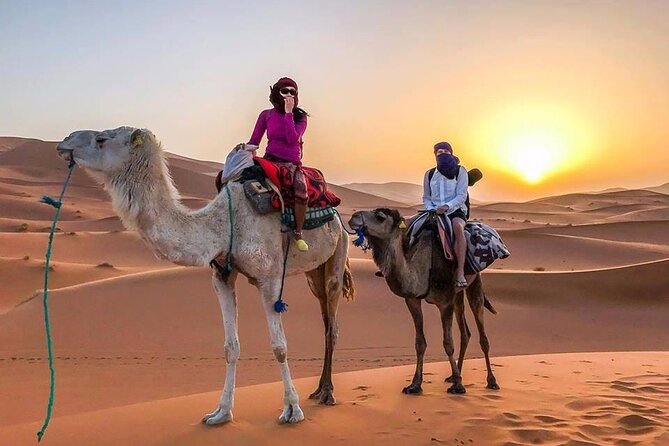
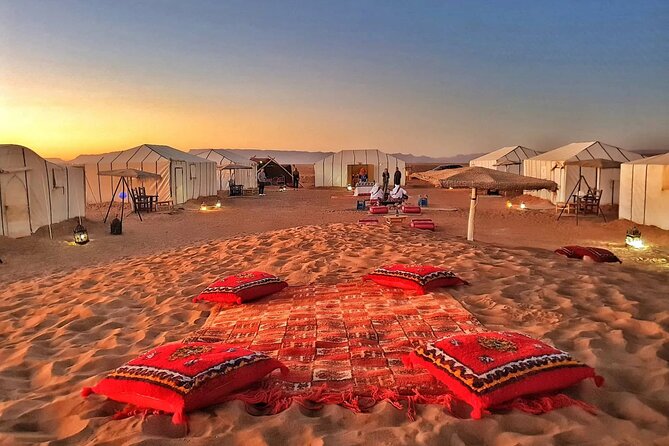
This is the day people remember. You go deep into the dunes of Erg Chebbi, where the sand shifts across a stretch described as 28 km and reaches heights around 160 meters. You’ll ride camel passing by old, muddy Berber villages and stop for panoramic viewpoints along the way.
A key detail: you visit a nomad family living in a tent and share mint tea while your guide talks about nomadic life. That human connection is why the trek feels more meaningful than a staged ride.
Then you do lunch at a Berber pizza restaurant before heading back to your camp/hotel area for downtime. You’ll typically have time to swim or relax depending on your accommodation.
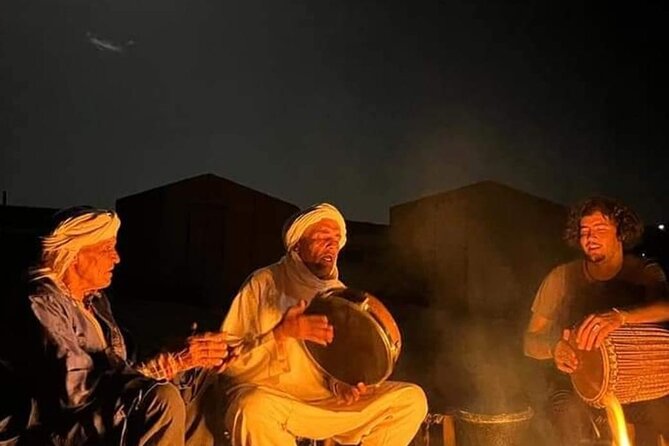
What stands out in praised experiences is comfort at the end of the day. In feedback, I saw repeated mentions of very comfortable beds, excellent food, and camps that felt clean and well kept. One group described their tent as having independent bathrooms, hot water, and a warm, tidy setup, plus evening activities like a campfire and cultural performance. Even if your exact tent style varies, the general theme is comfort that matches the scenery.
Todra Gorge and Dades Valley: a canyon stop before the rose city
Day 9 starts with an early wake-up for sunrise in the desert area, then breakfast before you move on. That timing matters: sunrise views tend to be the moment where the desert stops being a concept and becomes a full-body experience.
From there, you visit Rissani, tied to the Alaouite dynasty’s founding, and you stop at its souk where sectors include dates, vegetables, spices, animals, cloth, and crafts. It’s a good way to see daily life beyond the major postcard sites.
Then you go to Todra Gorge, where you have time to explore the gorge itself. After lunch, you continue to the Dades Valley.
This is the day where the trip shifts back from dunes to stone. If you like contrast, you’ll appreciate how the day gives you both: desert morning, then gorge exploration.
Kalaa Mgouna (the rose city) and Skoura Oasis: buying scents, touring kasbahs
Day 10 is a smart mix of nature, small-town character, and culture. You drive through Dades Valley, then stop in Kalaa Mgouna, described as the rose city. This is where you can buy rosewater so your linen smells good long after you’re gone.
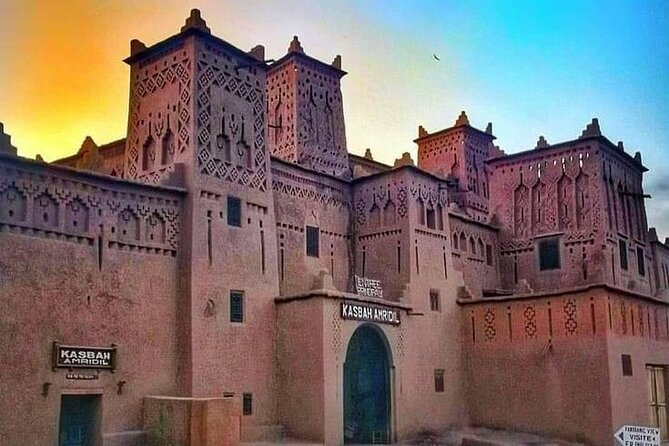
Next you continue to Skoura, then visit Kasbah Ameridil, described as well preserved. After lunch, you get time for hiking within the valley.
If you’re thinking about gifts, this is your easiest win. Rosewater is easy to pack and easy to explain to someone at home: it’s a practical souvenir with a purpose.
Ait Ben Haddou to Marrakech: UNESCO kasbah vibes and high Atlas views
Now you head toward Marrakech via the High Atlas Mountains. Your major stop is Ait Ben Haddou Kasbah, described as the largest kasbah in Morocco and a UNESCO world heritage site. It’s connected to the caravan routes and the stopover life under figures like T-hami El Glaoui.
You also get road time through remote Berber villages as you cross the mountains. Even if you’re not the type to pull out your camera every five minutes, the drive itself can be a highlight because it changes the air and the architecture quickly.
Then you arrive in Marrakech and move into riad life for your next stage.
Marrakech with a local guide: Koutoubia, Bahia palace, and Djemaa el-Fna
Marrakech is where guided time pays off again. You meet a local guide in your riad and take a walking tour around major monuments.
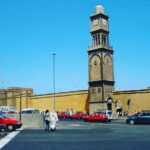
The skyline anchor is the Koutoubia Mosque, a 12th-century masterpiece whose minaret dominates the city view. Then you visit El Bahia Palace, known for Andalusian and Moorish architecture, a tiled courtyard, and gardens that feel designed for wandering.
After lunch, you visit Djemaa el-Fna. This is one of those places where you’re surrounded by energy, even if you choose to keep it calm and just watch. Plan to walk. Keep water handy.
If you want Marrakech to feel like it has a point (not just noise), your guide is doing real work here.
Essaouira coast day: Skala fortress, thuya wood, and wind power
Day 13 trades the inland heat for Atlantic sea air with Essaouira. You visit the Skala fortress, the harbor, and souks. You’ll learn about thuya wood—the processing and cutting of it by local craftsmen—and you can wander through the Medina alleys and crafts.
You also get time in the Mellah, described as the Jewish headquarters area. If you like understanding how different communities shaped a city, that part adds context.
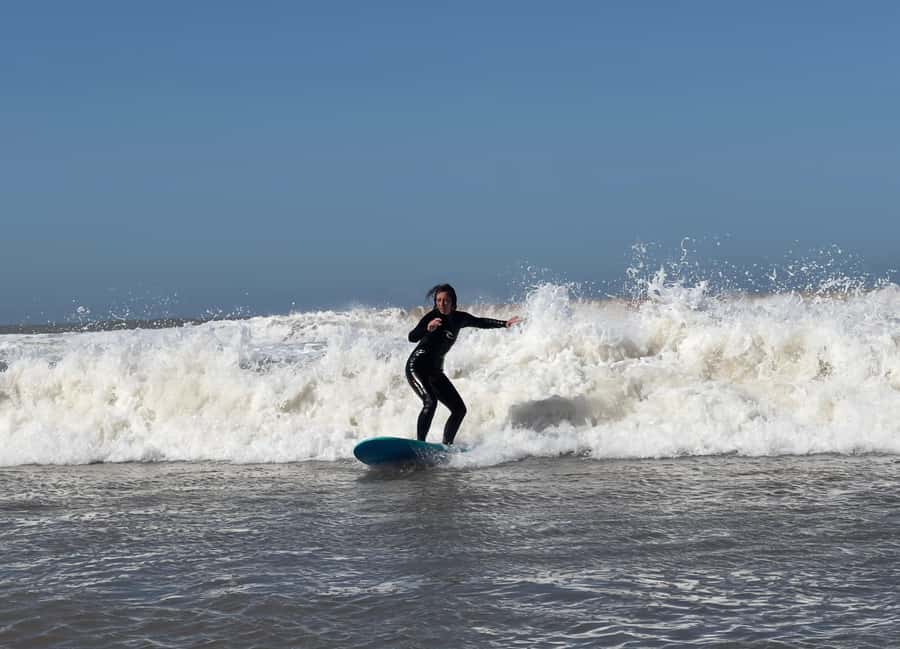
The other huge feature is the beach. Essaouira is known for strong winds and is sometimes called the city of the winds, with surfers visiting from everywhere. If you like fresh air and salty walks, this is a great day.
Returning to Casablanca via Safi and El Jadida: a final coast reset
Day 14 gives you a free morning in Essaouira. You can walk the beach, check the Medina more deeply, or just let the day stay slow.
Then you drive back to Casablanca along the coast, with stopping points including Safi and El Jadida. You arrive in Casablanca late afternoon or early evening depending on the pace.
It’s a good final rhythm: you end the trip without another giant landmark day. You end with coastal scenery and enough time to prepare for departure the next day.
Price and what you really get for $3,012.79 per person
At $3,012.79 per person, this isn’t a budget-only Morocco trip. The value sits in the package components that are expensive to organize yourself: private transport, long-distance driving, lodging variety, and guided walking time in the two high-traffic cities.
You’re getting:
- Airport pick-up and drop-off
- Private air-conditioned 4×4 or mini-van for the tour days
- 14 nights in authentic riads plus a luxury desert camp
- All breakfasts and a few dinners
- Camel trekking through the dunes of Erg Chebbi, plus an overnight in the Sahara camp
- Local guide in Fes and Marrakech medinas
What’s not included:
- Drinks, snacks, lunches, and other dinners
- Entrance in museums
So how do you judge whether it’s worth it? If you value stress-free logistics and want built-in desert accommodation that doesn’t cut comfort, it makes sense. If you’d rather travel ultra-flexibly and pay per attraction later, the total cost might feel heavy.
Who should book this, and who should pick something else
I’d point you to this tour if you want a “classic hits” Morocco trip with real structure: you like walking medinas, you want at least two guided city days, and you want a desert overnight that includes camel trekking and camp comfort.
I’d steer you away if you hate long drive days. Morocco’s distances add up fast, and this itinerary stacks multiple cross-country legs. Also, the camel trek is active. It’s not described as extreme, but it’s still time on camel back over sand.
This tour is also a strong choice if you’re traveling as a pair or family that prefers private pacing rather than matching someone else’s schedule. The private setup usually makes the whole flow feel more controllable.
Should you book this 15-day Casablanca Morocco tour?
If your dream Morocco includes Fes and Marrakech with guides, a real Erg Chebbi camel trek, and a mix of riads and a quality desert camp, then yes, this one is worth considering. The price is easiest to justify because you’re buying time saved on transportation planning and getting accommodations across regions that would be annoying to stitch together.
If, however, you want lots of free days in each city, or you prefer short car hours, you might want a shorter route or a slower-paced version. Use the deciding factor that matters most to you: do you enjoy Morocco’s changes between regions, or do you want one area only?
FAQ
FAQ
How long is the Morocco tour from Casablanca to the Sahara?
The tour runs for about 15 days.
What transportation is included during the trip?
The package includes 15 days of private transport in an air-conditioned 4×4 or mini-van.
What lodging do I get during the 15 days?
You’ll stay for 14 nights in authentic Moroccan riads and a luxury desert camp.
Are meals included?
Yes. The tour includes all breakfasts and a few dinners. Lunches and other dinners are not included.
Do I ride camels in the Sahara?
Yes. The tour includes camel trekking through the dunes of Erg Chebbi, along with an overnight in a Sahara desert camp.
Is museum entrance included?
No. Entrance in museums is not included.
Is free cancellation available?
Yes. You can cancel up to 24 hours in advance for a full refund.