REVIEW · AGADIR
Agadir: 2h Surf Lesson with Local Instructors
Book on GetYourGuide →Operated by Everyones Surf Agadir · Bookable on GetYourGuide
Two hours, one surf lesson, big payoff. I love the small-group coaching with instructors like Ayoub, and the way they help you stand and get your first rides fast. I also love that equipment is included, so you’re not wasting time figuring out gear. A fair consideration: at only 2 hours, you’ll improve a lot, but you won’t leave surfing solo on every wave.
Agadir’s beach is an easy place to learn. You get a friendly, professional setup, plus the local surf culture vibe that makes the whole thing feel more like hanging out than taking a class. And yes, there’s usually a photographer involved, so you can grab real action shots after you wipe out a few times (it happens).
In This Review
- Key Points Worth Noting
- Where Agadir Surf Lessons Fit (Beginner-Friendly, Skill-Up Too)
- The 2-Hour Flow: From Beach Meeting to First Waves
- Why the Sand Instruction Is the Secret Sauce
- Meet the Coaches: Local Surf Culture, Real Coaching
- Small-Group Size: More Attention, Less Waiting
- Equipment Included: Start Fast, Stay Focused
- Photos: Get Proof You Actually Surfed
- Price and Value: Is $31 Fair for What You Get?
- What to Bring (So You Don’t Have to Borrow From Strangers)
- Safety and Comfort: The Real Rules of Surf Learning
- When Conditions Change: It’s a Beach, Not a Factory
- Who Should Book This Agadir Lesson (And Who Might Want Something Else)
- Should You Book? My Take
- FAQ
- How long is the Agadir surf lesson?
- Where does the lesson take place?
- How much does it cost?
- What’s included in the lesson?
- Is it a small-group lesson?
- What languages do the instructors speak?
- What should I bring?
- Is it suitable for everyone?
- Can I cancel and get a refund?
Key Points Worth Noting
- Local instruction in multiple languages (French, English, Arabic, Spanish), so the basics land quickly.
- Small groups: you may be with a handful of people, and sometimes it’s very small for extra attention.
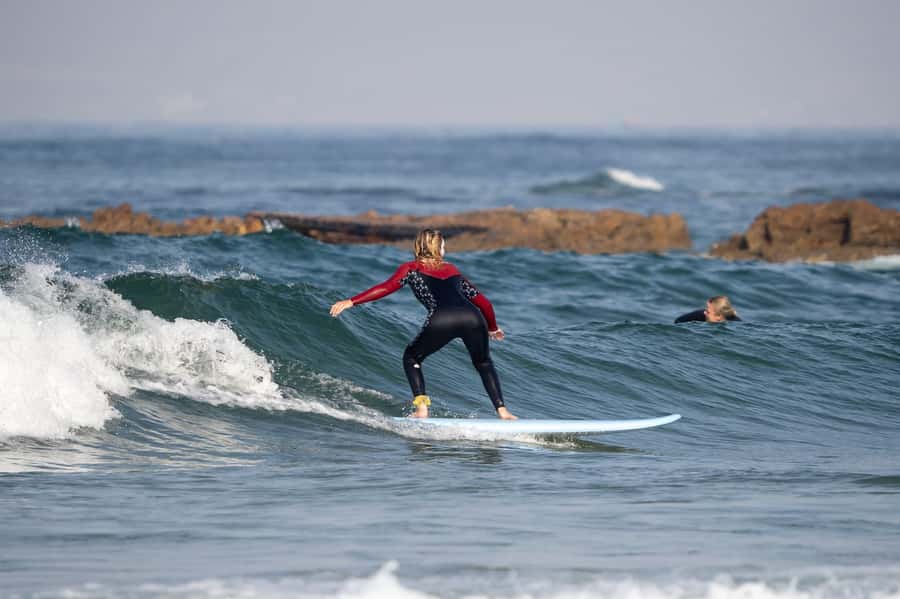
- Progress-focused format: sand practice plus in-water coaching helps beginners get upright sooner.
- Photos are available and have been called out as great quality by multiple people.
- Agadir beach setting gives ideal conditions for learning when the session is on.
Where Agadir Surf Lessons Fit (Beginner-Friendly, Skill-Up Too)
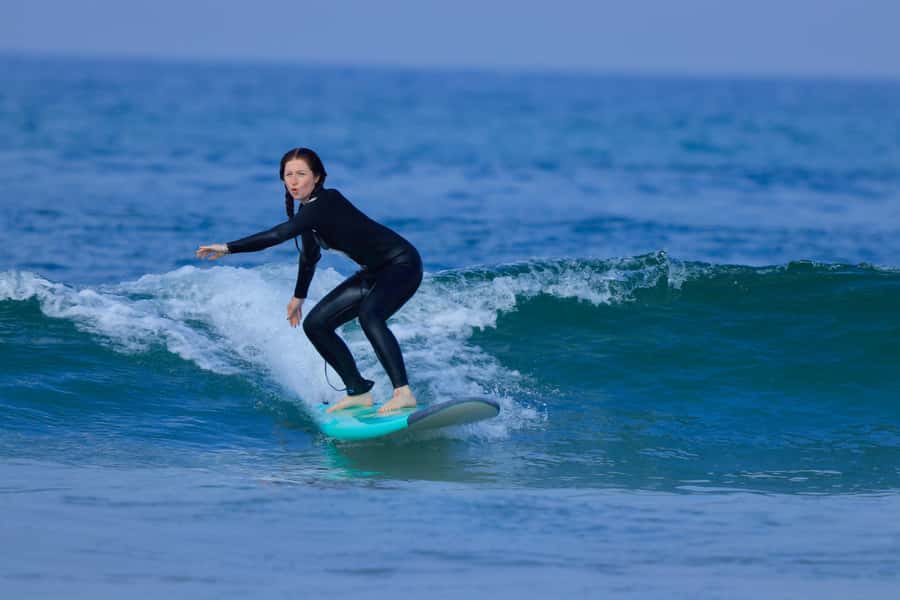
This 2-hour lesson is built for people who want to learn surfing—or polish what they already know—without the big-crowd feel. The key word here is coaching. You’re not just handed a board and sent out. Local instructors work with you based on your level, and the session pace stays friendly and relaxed while still being professional.
If you’re brand new, you’ll learn the basics in the right order: safety, how to handle the board, and how to get your body into position. One of the standout details in the feedback is how patient the instructors are with first-timers, including when waves feel rough.
If you’ve surfed before, you’ll still get value. You can expect technique tweaks—especially around how you manage the board and timing—because that’s where most people lose waves even when they technically “know how to surf.”
A few more Agadir tours and experiences worth a look


The 2-Hour Flow: From Beach Meeting to First Waves
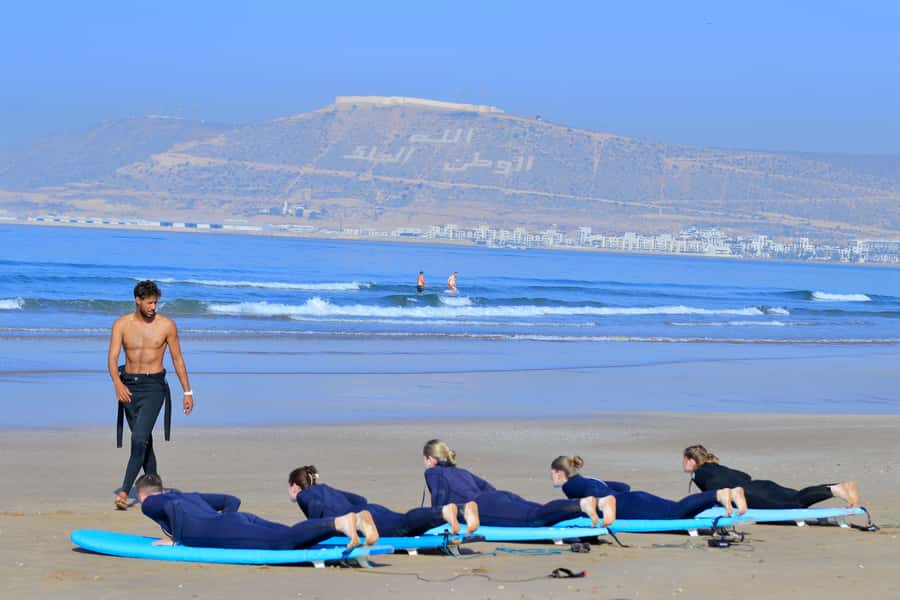
You’ll meet on Agadir beach—the exact meeting point gets sent to you after reservation. This matters because surf lessons live and die by location. You want the group to assemble right where the instructors can get you into the water with the right conditions.
Once you’re together, the session usually follows a clear rhythm:
Briefing and warm-up
Expect a quick start on the beach so you know what you’re doing before you’re fighting the ocean. Several people mention a warm-up and clear instruction before going anywhere near the waterline.
Sand practice that actually helps
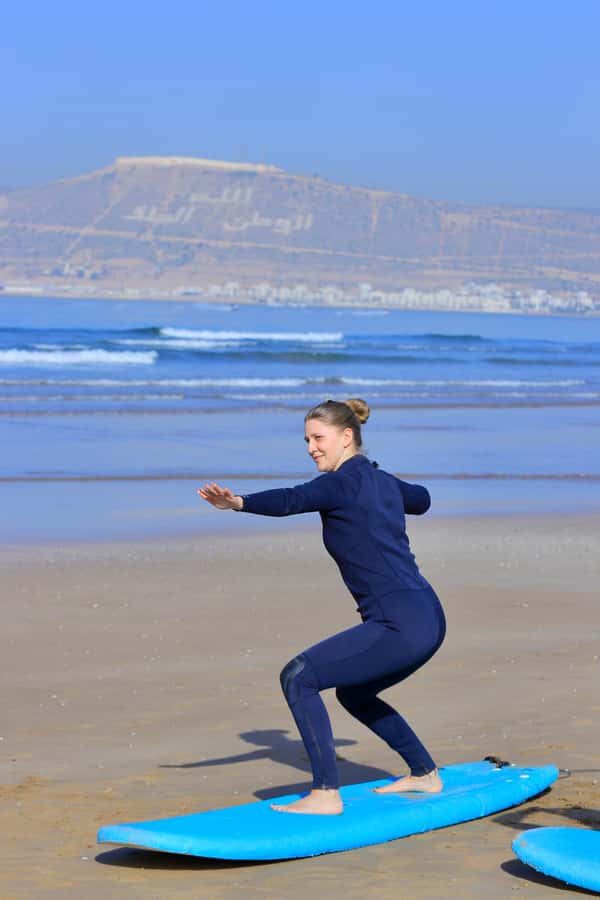
A lot of surf lessons rush this part. Here, you’ll do on-sand coaching—how to stand, how to manage the board, and how to control your position before you ever commit to a wave. That’s a big reason beginners report standing up more quickly.
Into the water with close support
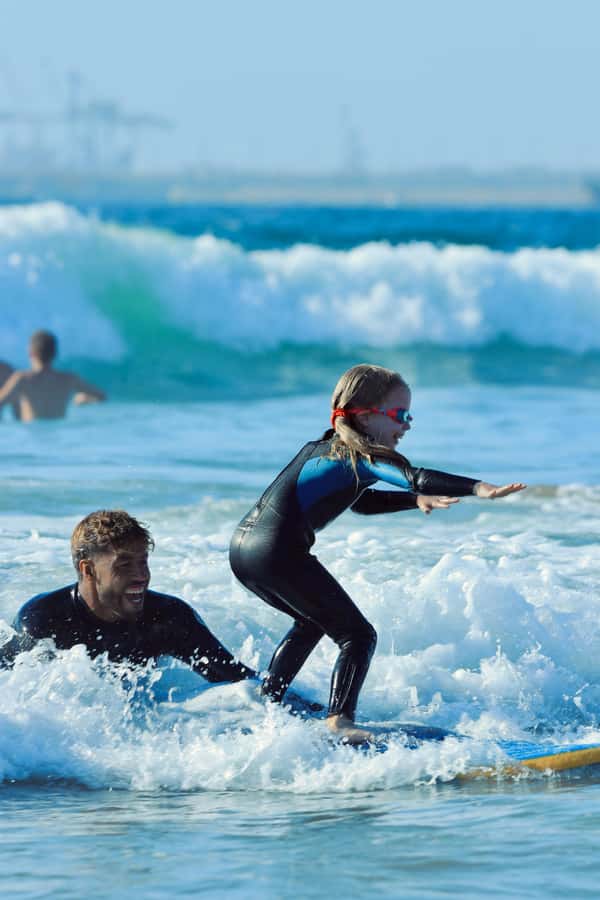
When you do go in, instructors stay very close and give adjustments as you go. Multiple people specifically praised how safely the instructors guided them, even when conditions weren’t perfectly smooth.
Time to ride
A lesson like this is short on purpose. The goal is “enough reps to feel real progress,” not an all-day camp.
Why the Sand Instruction Is the Secret Sauce
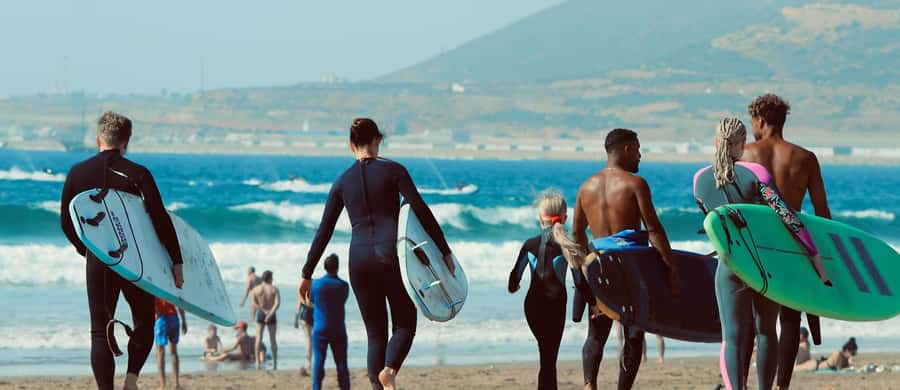
Here’s the part I think most people underestimate: the sand portion. On paper it sounds simple—practice standing. In reality, it’s where you avoid the classic first-day chaos: board sliding away, feet in the wrong place, and the sudden realization that you’re trying to do a full-body move while the ocean is also doing ocean things.
In this lesson, the sand work is practical. You’re shown what to do to stand up and manage the board, then you rehearse it until the movement becomes more natural. One person described a setup that included a run-through on the sand, then water time right after. That sequencing helps because your body learns the steps before your mind has to deal with waves.
And because it’s a small group, you can actually get corrections. That’s the difference between “I watched someone else do it” and “someone fixed what I’m doing wrong.”
Meet the Coaches: Local Surf Culture, Real Coaching
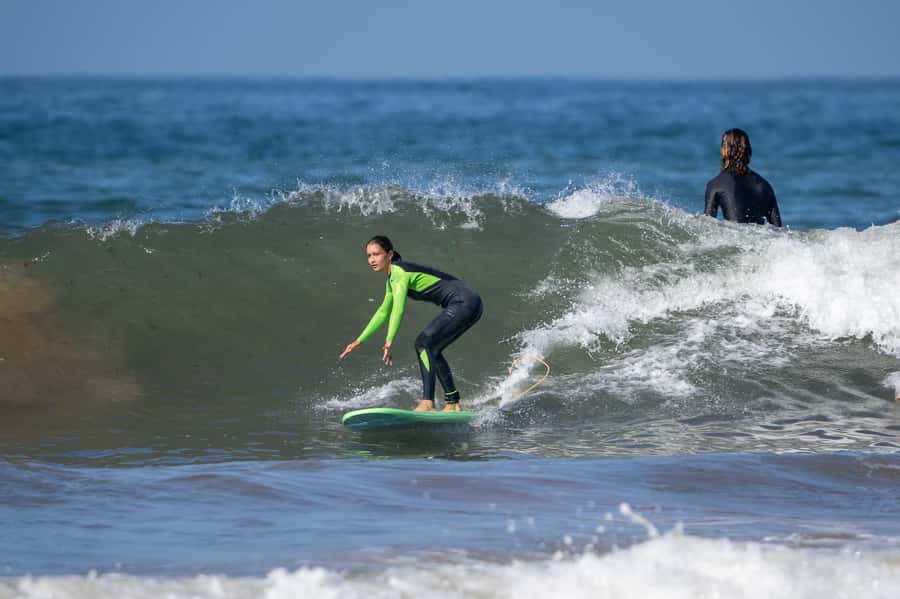
The provider is Everyones Surf Agadir. What you should expect is local knowledge, not generic instruction. The lesson is led by local instructors who bring the Moroccan surf culture vibe—people describe it as good vibes, laid-back, and friendly while still feeling serious about safety.
Names that come up in feedback include Ayoub, Othman, and Abdel. Ayoub is frequently mentioned for clear instruction, patience with beginners, and giving each person attention based on what they need. That individualized attention is a theme you’ll want if you’re new or if you’re trying to correct one specific habit.
Also worth noting: communication is supported across languages—French, English, Arabic, and Spanish. So if you’re more comfortable thinking in one of those, it’s more likely the lesson will click without you constantly guessing.
Small-Group Size: More Attention, Less Waiting
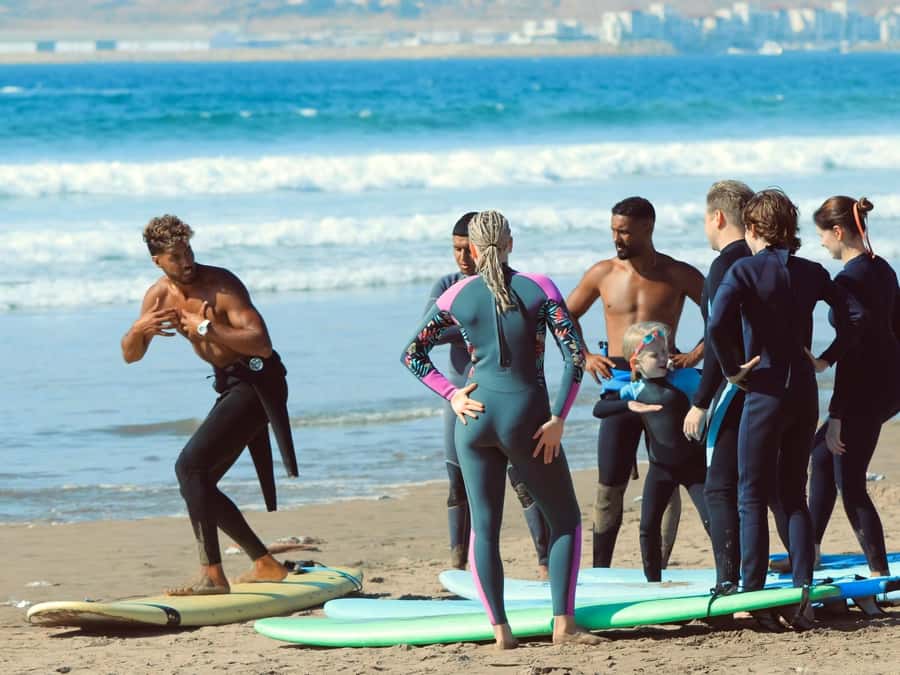
You’re promised a small-group lesson, and the feedback backs that up. People mention groups around 5–6 and, in some cases, as small as two. That’s a huge deal for learning. In a large class, you spend more time waiting your turn than practicing.
With a smaller group, you get:
- More time in the water relative to the class size
- More chances to be watched and corrected
- Faster feedback on what’s working
For beginners, that can mean the difference between feeling overwhelmed and feeling safe enough to keep trying. For intermediate surfers, it means you can get targeted tweaks instead of general tips.
A few more Agadir tours and experiences worth a look




Equipment Included: Start Fast, Stay Focused
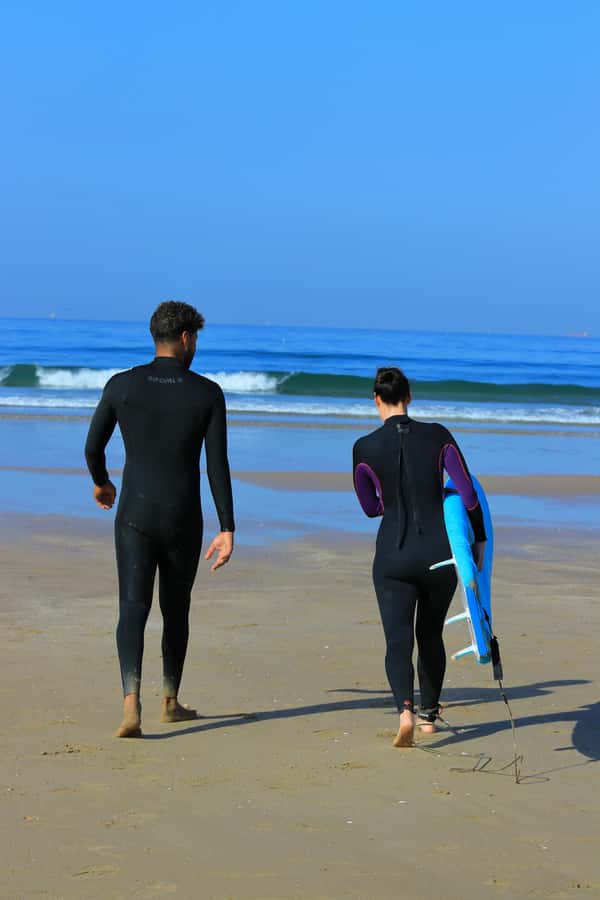
The lesson includes surf equipment. That’s not just a convenience—it changes your mindset. When gear is covered, you show up ready to learn instead of troubleshooting wetsuits, boards, leashes, or sizing.
Wetsuits come up in feedback too. One person noted that the organizers asked about wetsuit size, and the communication ahead of time helped things go smoothly on the day.
So when you arrive, you’re not spending the first part of the lesson getting sorted. You’re using that time to learn, which is the whole point of a short 2-hour session.
Photos: Get Proof You Actually Surfed
Some surf lessons say they’ll take photos and then deliver blurry chaos. Here, people specifically call out the photo offering as a strong part of the experience, describing the photographer as helpful and the images as good quality.
Multiple people recommended paying for the photos if you can. That makes sense. When you’re learning, you often can’t see what you looked like from the beach. Photos give you something to study later—foot placement, timing, and board angle—without needing technical oceanographer skills.
If you care about memory, this is a practical add-on rather than a gimmick.
Price and Value: Is $31 Fair for What You Get?
At $31 per person for a 2-hour lesson with coaching and equipment, the value is pretty strong—especially if you factor in local instruction and the small-group setup.
Here’s how I think about it:
- You’re paying for trained supervision, not just board rental.
- You’re paying for time in the water plus coaching in the sand.
- You’re not paying extra for equipment (which adds up fast elsewhere).
The only “value caution” is timing. Because it’s only 2 hours, the lesson is best viewed as a progress session. You’ll likely get far more than you’d expect on your first day, but you still won’t master every wave type.
If you treat this as step one—or step two—then $31 feels like a smart buy.
What to Bring (So You Don’t Have to Borrow From Strangers)
Bring the basics and you’ll avoid the awkward scramble mid-lesson. The listed essentials are:
- Swimwear
- Towel
- Sunscreen
- Water
- Beachwear
Practical note: sunscreen is a must. Agadir sun can be real, and wetsuit days don’t mean you’re protected. Also, bring water even if you think you won’t need it—2 hours on the beach adds up fast.
If you want the lesson to feel comfortable, arrive with your swimwear ready so you can change quickly and get started.
Safety and Comfort: The Real Rules of Surf Learning
Surfing is fun. Surfing is also physical. This lesson isn’t suitable for people with pre-existing medical conditions, based on the activity guidance provided.
Beyond that, think about comfort:
- You’ll be in a wetsuit (it’s part of learning properly).
- You’ll practice moving with a board while you learn how waves affect balance.
- Even when conditions are not ideal, instructors focus on keeping you safe and guiding you close.
One review highlighted that an instructor managed to guide people safely even when waves were rough. That tells me they’re paying attention to control and correct timing, not just pushing everyone out for the thrill.
When Conditions Change: It’s a Beach, Not a Factory
The ocean has its moods. One person noted that if surf wasn’t good enough on the original day, the team stayed in touch and did the lesson a couple days later.
So if you’re planning around it, keep your schedule flexible where possible. This isn’t about perfection; it’s about learning in workable conditions.
Who Should Book This Agadir Lesson (And Who Might Want Something Else)
Book this if:
- You want a beginner-friendly first surf experience with clear guidance.
- You care about personal attention and small-group teaching.
- You’d like a fun day on the beach that still feels structured.
- You want local surf culture and not just a generic activity.
You might think twice if:
- You have medical limitations that make ocean activities unsafe.
- You’re expecting a full course that covers everything in depth over multiple days. This is focused: learn fundamentals, catch waves, and improve fast.
It’s a great choice for couples, friends, and even teens. One review mentioned a 13-year-old having a great first experience with patient instruction.
Should You Book? My Take
Yes, I’d book it—especially if you’re new or you want a real technique boost without the hassle of renting gear or hunting for instruction. The strengths are consistent: small-group coaching, sand practice that sets you up to stand, equipment included, and instructors who stay engaged with your progress.
If you can, plan to treat it like practice time. You’ll likely catch at least a few moments where everything clicks. And if you don’t on the first try, that’s still normal. The coaching style here is built around helping you keep going safely until it does.
FAQ
How long is the Agadir surf lesson?
The lesson lasts 2 hours.
Where does the lesson take place?
It’s on Agadir beach, in the Souss-Massa area.
How much does it cost?
The price is $31 per person.
What’s included in the lesson?
You get surf coaching and surf equipment.
Is it a small-group lesson?
Yes. It’s described as a small-group lesson, and in practice groups can be small (even just a couple of people on some dates).
What languages do the instructors speak?
Instructors may speak French, English, Arabic, and Spanish.
What should I bring?
Bring swimwear, a towel, sunscreen, water, and beachwear.
Is it suitable for everyone?
It’s not suitable for people with pre-existing medical conditions.
Can I cancel and get a refund?
Yes. Free cancellation is offered up to 24 hours in advance for a full refund.