REVIEW · TANGIER
Tangier to Sahara desert with overnight stay in desert camp 4 days
Book on Viator →Operated by Morocco Road Trips · Bookable on Viator
Blue-city dreams meet Sahara stars.
This Tangier to Marrakech road trip is one of those smart Morocco combos: you get the Rif Mountains and Chefchaouen’s famous blue streets, then you head inland through big cultural stops like Fez before the dunes take over. I especially like how the days stack meaningfully, not just “drive-by tourism,” and the overnight desert camp makes the Merzouga part feel like an event, not a quick stop. One thing to consider: it’s a lot of time in the car, and you’ll be happiest if you accept long drives as part of the deal.
What really sells me is the structure: private, air-conditioned transport; a camel trek with sunset; and meals that keep you fueled for each leg. Dinner is built in at the desert camp (tagine, mint tea, and traditional Berber music), and the itinerary also includes a sunrise moment back out in the dunes. The possible drawback? Lunches and drinks aren’t included, so you’ll want to budget cash for extra meals and water between stops.
You start at 9:00 am, and the tour ends in Marrakech late afternoon on Day 4. If you’re flexible about timing and can handle early mornings (there’s a sunrise option), this itinerary can give you a very complete Morocco snapshot in four days.
In This Review
- Key points to know before you go
- Tangier to Marrakech by private car: why this 4-day route fits
- Chefchaouen Blue City and Fez: a perfect culture warm-up
- The drive to Merzouga: Middle Atlas to Erg Chebbi in a day
- Camel trek at sunset and desert camp night in Merzouga
- Todra Gorge and Dades Valley: kasbah roads and cliff canyon drama
- Roses, Ouarzazate studios, and Ait-Ben-Haddou before Marrakech
- What’s included (and what you’ll manage yourself)
- Price and logistics: is $1,123 per person good value?
- Who this tour suits best (and who might want a different style)
- Should you book this Tangier to Sahara to Marrakech tour?
- FAQ
- How long is the Tangier to Sahara desert with overnight camp tour?
- What’s the starting point and start time?
- Is this a private tour?
- What are the main stops on the itinerary?
- Do you ride camels and stay overnight in the desert?
- What’s included in the price?
- What is not included?
- What if weather is poor for the desert portion?
- When can I cancel for a full refund?
Key points to know before you go
- Private vehicle, one-way route: Tangier start, Marrakech finish, with air-conditioned comfort.
- Chefchaouen + Fez early on: two major culture hits before the desert.
- Merzouga camel trekking at sunset: you’re not just seeing dunes, you’re in them.
- Overnight in a desert camp: dinner, mint tea, and music while you watch the sky.
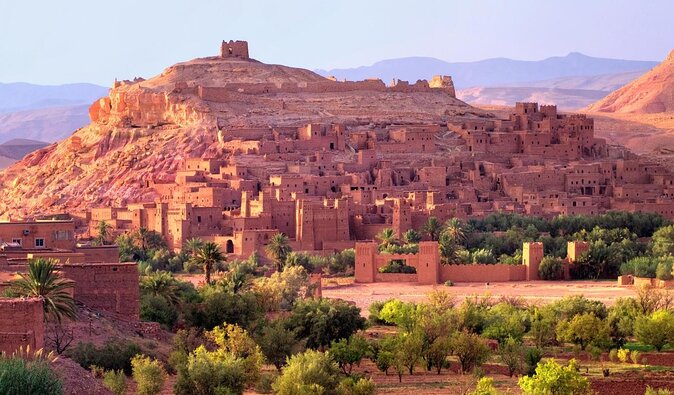
- Todra Gorge and Dades Valley: dramatic canyons plus fortified kasbah stops on the way to Marrakech.
- Ait-Ben-Haddou + Atlas pass into Marrakech: a UNESCO kasbah and the high-mountain crossing.
Tangier to Marrakech by private car: why this 4-day route fits
This tour is built for people who want Morocco’s big themes in a short time: coast-to-mountains, city culture, and desert nights. You’re not stuck on one “type” of travel. You start in Tangier, then the drive steadily changes the scenery and the vibe—Rif hills, blue Medina lanes, old-city density, then wide-open Saharan quiet.
The private vehicle is a real plus. It means you’re not negotiating group pacing, and you can usually absorb stops without feeling rushed. Also, one-way routing matters here: you’re not doubling back to go “back to where you came from.” That saves time and keeps the trip feeling like a journey rather than a loop.
That said, you should go in knowing Morocco road trips run on long days. The itinerary includes full transit days with multiple stops, and the desert portion has specific timing (sunset and sunrise). If you’re the type who wants everything spontaneous, this might feel structured. If you want the best shot at hitting the big sights, it’s a strong fit.
You can also read our reviews of more tours and experiences in Tangier.


Chefchaouen Blue City and Fez: a perfect culture warm-up
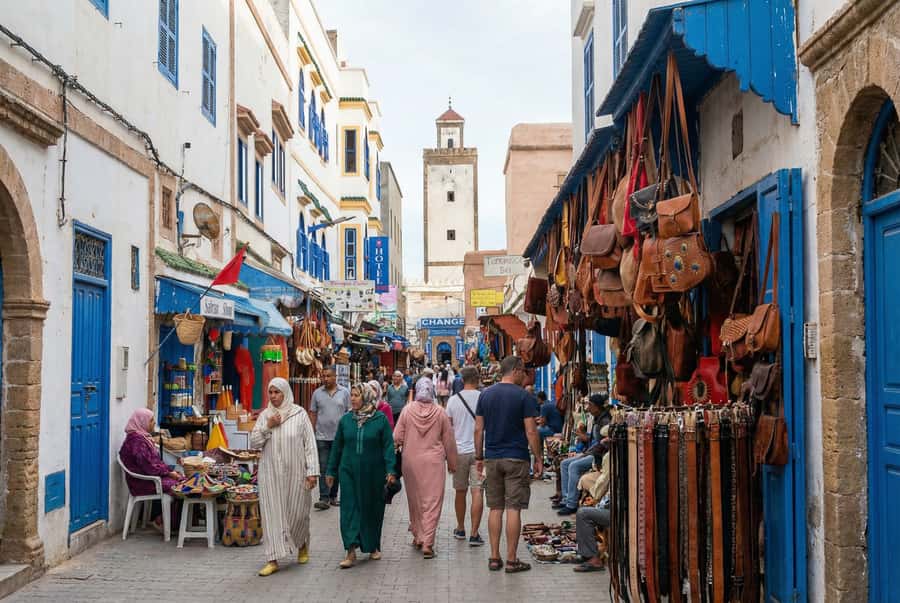
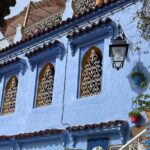
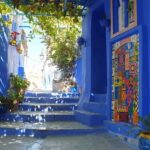
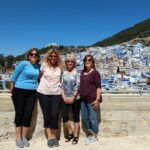
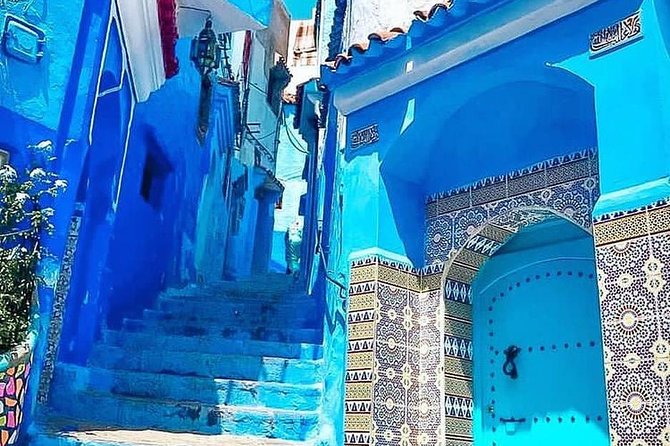
Day 1 is about contrast. Chefchaouen (Chaouen) is the “pause and look” portion of the trip. You’ll step into the medina area where the old town’s buildings are famously washed in blue, and you’ll find workshops along the steep lanes. The main square (Place Outa el Hammam) is a natural anchor point, with the Kasbah nearby and the Ethnographic Museum in the same general area. Even if you only have a limited window, Chefchaouen helps you reset your brain for what’s coming next: you’re seeing Morocco through craft, texture, and hill-town rhythm.
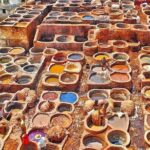
Then the route continues toward Fez. Fez is a different kind of Morocco. It’s older, denser, and more layered—perfect for the “I want history and daily life in the same place” traveler. The practical value of stopping here is that you’re breaking the long road before you push deeper toward the dunes. It also sets you up for the next day’s drive into the Middle Atlas and onward toward Merzouga.
Tip that pays off: wear shoes that handle steep cobbles and don’t expect medina walking to be flat or easy on the ankles. You’re doing a mix of strolling and climbing.
The drive to Merzouga: Middle Atlas to Erg Chebbi in a day
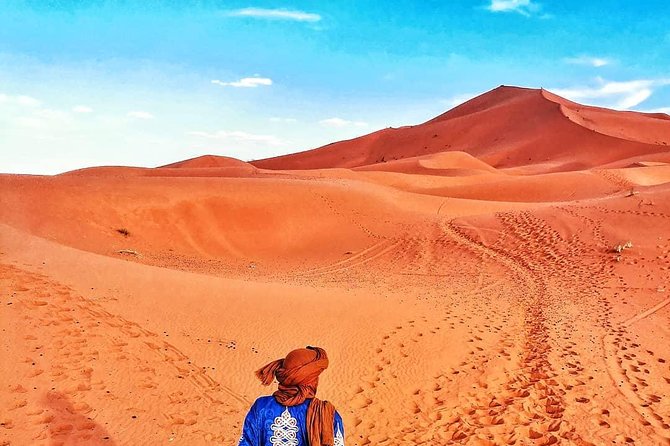
Day 2 is the classic Morocco-to-desert transition. After breakfast, you head from Fez toward Merzouga, crossing the plains of Saïs and moving through the cedar forests area in the Middle Atlas (passing through Ifran and Azrou). You’ll also pass by Midelt for lunch, then continue by the Ziz River area—where thousands of palm trees show up along the route—and toward Erfoud.
What I like about this stretch is that it isn’t random. You get a steady sense of Morocco’s geography changing as you go: forests and hills to river palms and kasbah silhouettes to desert edge towns. That makes the desert feel earned rather than “suddenly here it is.”
The final approach to Merzouga targets the Erg Chebbi dunes area. That matters because the dunes are what your camel trek is centered on. By the time you reach Merzouga, you’ve already been in a travel bubble all day, so the shift into dune time feels like a reward.
If you get carsick easily, take note: the itinerary is long and road conditions can vary. An air-conditioned vehicle helps, but it won’t magically remove every twist of a mountain road.
Camel trek at sunset and desert camp night in Merzouga
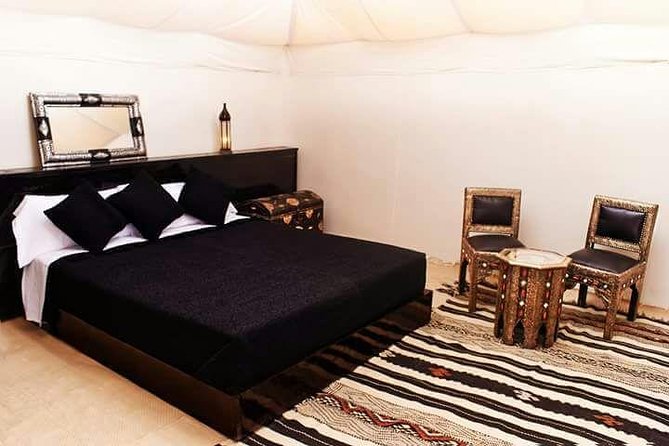
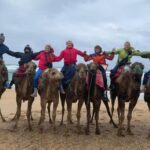
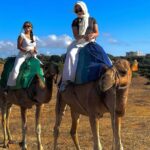
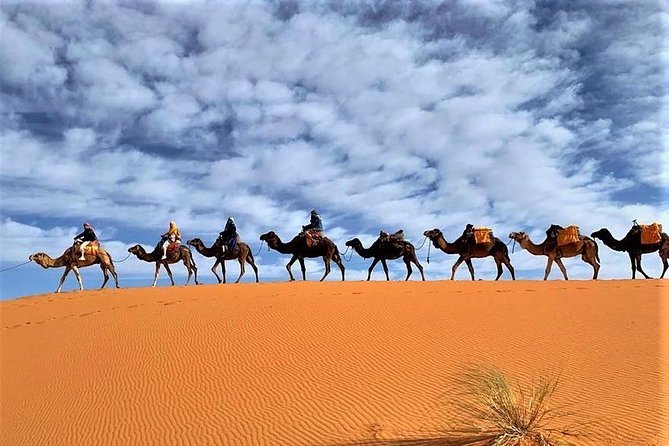
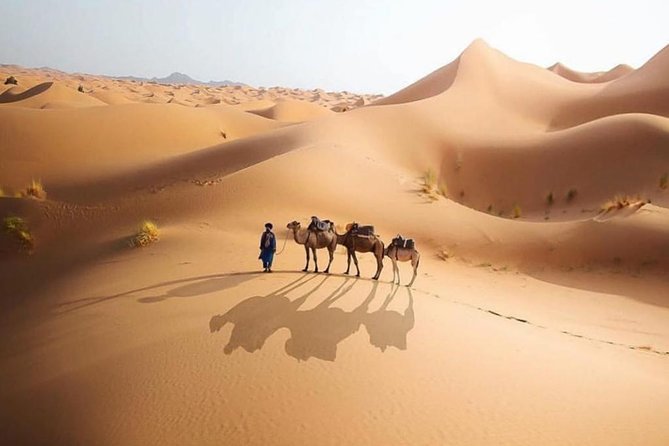
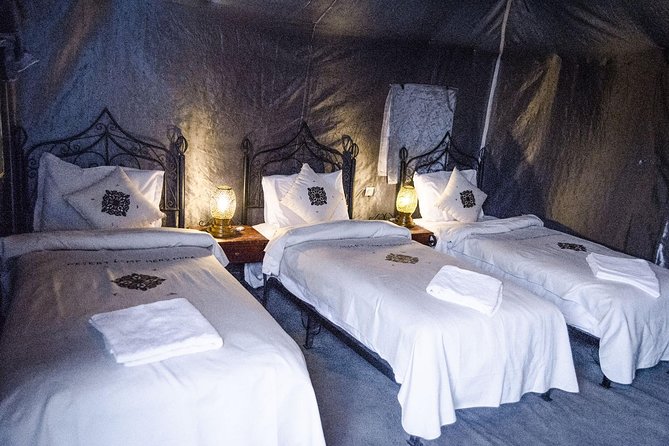
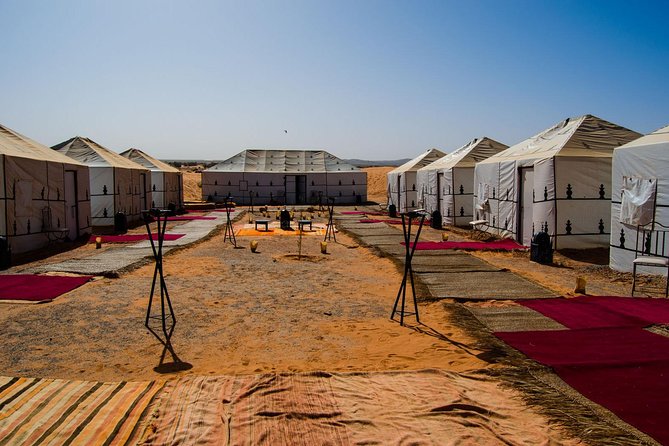
This is the heart of the trip. In Erg Chebbi, you’ll ride camels to see the sunset over the dunes, then you’ll spend the night at a desert camp. It’s one of those “simple on paper, big in real life” moments. The timing matters: sunset changes dune color and scale, and being on a camel puts you at a slower pace than walking or driving.
Even the included camp atmosphere is part of the point. Your evening includes a traditional tagine dinner, mint tea, traditional Berber music, and time to watch the stars while the moon rises. This isn’t just a place to sleep. It’s built as an evening experience, and it’s why the overnight is worth it compared with tours that only pass through the desert area.
The next morning, you’ll wake early for sunrise and return by camel to the hotel (where you’ll have shower time). That sunrise/dawn pairing is a major value of an overnight: you get both light shows—the late-day desert glow and the early-morning quiet.
One practical consideration: desert camp nights can be affected by weather. If conditions are poor, the experience may be adjusted. The tour data also says the experience requires good weather, so keep your plans flexible.
Todra Gorge and Dades Valley: kasbah roads and cliff canyon drama
Day 3 shifts from sand back to stone. After sunrise and your camel return, you set off toward the Dades Valley area. You’ll stop by the oasis of Tinghir and get a chance to walk along the Todgha river bank, including visiting Berber villages and observing local daily life.
Then it’s on to Todra Gorge. Todgha (Todra) Gorge is a series of limestone canyon walls carved by the river through the High Atlas mountains. The practical win here is that it gives you a walkable, high-impact natural break after desert time. You’re trading dunes for towering cliff sides, and the scale is immediate.
From there, you continue along the kasbah road into Dades Valley. You’ll have an opportunity to visit a fortified kasbah before arriving at your next stop. This is where the trip starts layering “Morocco looks different in every region” into something you can actually feel: desert night, canyon morning, and kasbah architecture all in sequence.
If you like photos, Todra Gorge is the easy win. Bring a camera you can manage quickly on short walks; canyon lighting changes fast.
Roses, Ouarzazate studios, and Ait-Ben-Haddou before Marrakech
Day 4 is a credits-roll day, the kind that feels packed because it is. After breakfast, you drive toward Marrakech through the Dades Valley (the valley of one thousand kasbahs). You pass El Kelaa Mgouna, known for rose growth and the Festival of the Roses in May (so even outside festival season, it’s an interesting stop to connect place with seasonal culture).
Then comes Skoura, an oasis area famous for roses and palm trees. You’ll also see a fortified residence kasbah linked to a powerful family that protected the land and village. This is a good moment for photos and a short visit that adds meaning beyond “another kasbah.”
Next up is Ouarzazate, often called Moroccan Hollywood. You’ll stop at a museum connected to the film studios idea (Musee Theatre Memoire de Ouarzazate). The goal isn’t cinematic nostalgia—it’s understanding how Morocco became part of world movie production while also staying very much Morocco.
From Ouarzazate, you visit the Ksar of Ait-Ben-Haddou, a UNESCO site and a well-known filming location. The kasbah setting is one of the most photogenic stops on the route, and it helps justify the hours of driving because the place is visually powerful and historically meaningful in a very grounded way.
Then the road climbs again through the Atlas Mountains via Tizi Ntichka Pass, passing Berber villages with stone-and-mud houses. You arrive in Marrakech late afternoon, which is just enough time to feel you’ve earned the city—without turning Marrakech into a late-night scramble.
What’s included (and what you’ll manage yourself)
Your included package covers the big-ticket items that usually drive cost on Morocco road trips: air-conditioned private vehicle, two hotel overnights, camel trekking with an overnight desert camp, and multiple meals (two dinners at camp/hotel days and three breakfasts).
Specifically:
- Camel trekking plus the overnight desert camp night
- Dinner provided twice (including the desert camp tagine dinner)
- Breakfast provided three times
- Transport by air-conditioned vehicle
- Two nights in hotels (plus the desert camp night)
What’s not included is the “daily budget” portion: lunches and drinks. This isn’t a deal-breaker, but it changes how you should plan. You’ll want to keep some cash or card ready for quick meals en route, and don’t forget water between long drives.
Also note: the tour is private, meaning only your group participates. That’s great for pacing and comfort. If you’re traveling as a small group, this private setup often feels like better value than you’d expect, because costs don’t explode only because you’re smaller.
Price and logistics: is $1,123 per person good value?
At $1,123.09 per person for a four-day Tangier-to-Marrakech route, you’re paying for a full, protected itinerary: private vehicle, key stops, two hotel nights, and the desert camp night with camel trekking. The biggest value drivers are the desert overnight and the transport span across multiple regions.
If you compare it to doing this as a patchwork of trains and separate transfers, you’ll likely feel the convenience cost immediately. This package takes care of the hardest part—moving between far-apart areas on a schedule that matches sunset and sunrise timing. That timing is where many independent plans get messy.
Where the cost can feel heavy is if you’re the kind of person who expects downtime each day. This plan is structured and includes many stops, so you’ll get the most value if you like a full agenda and you’re comfortable with long transit windows.
On the other hand, if you want a guided experience that handles the big “logistics headaches” (getting from city to city, then to the dunes, then to Marrakech), the price starts looking pretty fair.
One more practical detail: the start time is 9:00 am. The tour says confirmation is received at booking, and a mobile ticket is offered. These sound small, but they matter when you’re coordinating transport in Tangier and want the plan to feel concrete quickly.
Who this tour suits best (and who might want a different style)
This itinerary is a strong match for you if:
- You want Merzouga and the Sahara overnight, not just a quick desert taste
- You’re okay with long driving days to connect big regions
- You want major Morocco landmarks packed into a short trip window
- You like the mix of city and canyon and kasbah architecture
It may be less ideal if:
- You hate early starts (sunrise is part of the desert segment)
- You want lots of free time with no schedule pressure
- You’re traveling with strict budget limits for lunches and drinks
On guide quality: in past experiences with Morocco Road Trips, names like Ali have come up for organization and helping people feel safe on the road. Another guide name that shows up in similar trips is Hicham. You can’t guarantee who you’ll get, but it’s a good sign that the company’s guides are the type who manage the flow well.
Should you book this Tangier to Sahara to Marrakech tour?
If your heart says Sahara overnight plus Moroccan highlights in four days, I’d say yes. The value is in the combination: Chefchaouen’s blue streets, Fez’s old-city feel, Merzouga’s sunset camel ride and desert camp evening, Todra Gorge canyon drama, and Ait-Ben-Haddou plus the Atlas pass into Marrakech.
Before booking, I’d check two things:
1) Your tolerance for long driving days and early mornings.
2) Your budget for lunches and drinks, since those are not included.
If you’re good with that, this tour is the kind of Morocco trip that gives you a lot of “wow” moments without requiring you to stitch together a dozen separate arrangements.
FAQ
How long is the Tangier to Sahara desert with overnight camp tour?
The tour lasts about 4 days.
What’s the starting point and start time?
Start time is 9:00 am, and pickup can be arranged from the airport, port, or your hotel in Tangier.
Is this a private tour?
Yes. Only your group participates.
What are the main stops on the itinerary?
The route includes Chefchaouen, Fez, Merzouga (Erg Chebbi) with camel trekking and an overnight desert camp, Todra Gorge and the Dades Valley area, Ouarzazate (including a stop at Musee Theatre Memoire de Ouarzazate), and Ait-Ben-Haddou, finishing in Marrakech.
Do you ride camels and stay overnight in the desert?
Yes. You’ll ride camels in the dunes and spend one night in a Sahara desert camp.
What’s included in the price?
Included items are: camel trekking with overnight in the Sahara desert camp, air-conditioned vehicle, two overnights in hotels, and meals (2 dinners and 3 breakfasts).
What is not included?
Lunches and drinks are not included.
What if weather is poor for the desert portion?
The experience requires good weather. If it’s canceled due to poor weather, you’ll be offered a different date or a full refund.
When can I cancel for a full refund?
You can cancel up to 24 hours in advance for a full refund. If you cancel less than 24 hours before the start time, the amount paid won’t be refunded.