REVIEW · AGADIR
Surf Lessons in Taghazout Ride the Waves with Expert Instructors
Book on Viator →Operated by Yalla Surf Shop · Bookable on Viator
Taghazout waves teach fast when coaching is good. I love the safety-first coaching built into the whole lesson, from the ocean rules to how you practice before you go out. I also like the small-group attention, capped at 10 people, so you’re not just watching someone else surf while you wait your turn.
One consideration: there’s no private transportation, so you’ll want to plan how you get to Paradise Surf Shop in Taghazout (and back). Good news is the activity ends right where you start, so your day stays simple.
In This Review
- Key things to know before you go
- Why Taghazout surf lessons work so well from Agadir
- Price and value: $30.05 for a board, wetsuit, and 2 hours
- Paradise Surf Shop start: what the first moments feel like
- The core lesson flow: from warm-up to first rides
- 1) Briefing: the basics and the rules
- 2) Warm-up and stretching
- 3) Surfboard introduction and care
- 4) Paddling and catching small waves
- 5) Pop-up practice: beach first, then water
- Instructor attention and group size: why max 10 matters
- Surf time goals: what you should aim to do in two hours
- Ocean safety you can feel during the lesson
- Getting there (and not overcomplicating your day)
- Who should book this lesson
- Weather and wave reality check (the honest part)
- Should you book this Taghazout surf lesson?
- FAQ
- How long is the surf lesson?
- What’s included in the price?
- Do I need to bring my own surfboard or wetsuit?
- Where do I meet for the lesson?
- How big is the group?
- Is transportation included?
Key things to know before you go
- Safety rules that actually get used before anyone grabs a board
- Step-by-step progression from warm-up to paddling to pop-up practice
- Surfboard and wetsuit included for the full 2-hour lesson
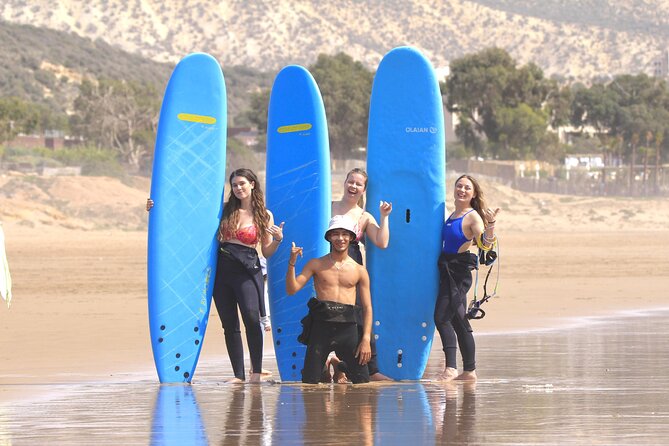
- Small group size (max 10) so coaching stays hands-on
- Taghazout’s beginner-friendly reputation thanks to consistent surf conditions
- You’ll practice on land first so the first time out feels less chaotic
Why Taghazout surf lessons work so well from Agadir
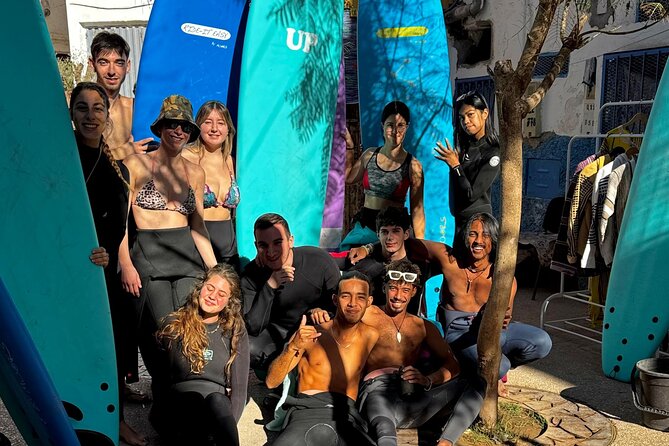
This experience is listed around Agadir, but the surfing part happens in Taghazout. That matters because Taghazout is the kind of surf town where the local rhythm is built around the ocean. The upside for you: you’re not trying to learn surfing in a random coastline spot with no support. You’re learning where surf activity is normal, and instructors can focus on technique instead of improvising.
I also like that the lesson is designed for real humans, not just athletes. The structure starts with basics, then moves into paddle control and pop-up mechanics, then finally into catching manageable waves. That is exactly what helps first-timers stop feeling like surfing is one giant mystery.
And if you already know the basics, the lesson still has room to sharpen your fundamentals. You’ll get safety guidance, condition awareness for your skill level, and technique practice that can iron out the common mistakes people make when they’re nervous.
A few more Agadir tours and experiences worth a look
Price and value: $30.05 for a board, wetsuit, and 2 hours
At $30.05 per person for about 2 hours, the price is easiest to judge by what you actually get. You get the surfboard and wetsuit included for the lesson, plus guided instruction the entire time. For many surfing options, gear rental can be a surprise add-on. Here, it’s built in.
Also, the lesson length is long enough to matter. Two hours gives you time to learn the flow: briefing, warm-up, board handling, practice, and then the water work. If the session were shorter, you’d mostly spend time getting set up. Here, you spend more time doing the thing.
One more value point: the group size is kept small (maximum 10). That doesn’t automatically mean “you’ll be the best surfer by dinner,” but it does improve your odds of getting corrections when something feels off.
Paradise Surf Shop start: what the first moments feel like
You’ll begin at Paradise Surf Shop at G7VR+QHR, Taghazout 80022, Morocco. The activity ends back at that same meeting point, so you don’t need to guess how to “finish” your experience.
In the first stretch, instructors typically set expectations fast. You’ll get a quick intro to surfing fundamentals like paddling, balance, and the basic pop-up idea. This is a good moment to take in the why behind the moves, because you’ll be asked to practice them right away. If you know you’re a beginner, that’s even more reason to pay attention early, before muscle memory starts forming.
You’ll also cover safety tips and ocean awareness. The point isn’t scare tactics. It’s practical rules that help you stay safer and surf with more confidence once you’re in the water.
The core lesson flow: from warm-up to first rides
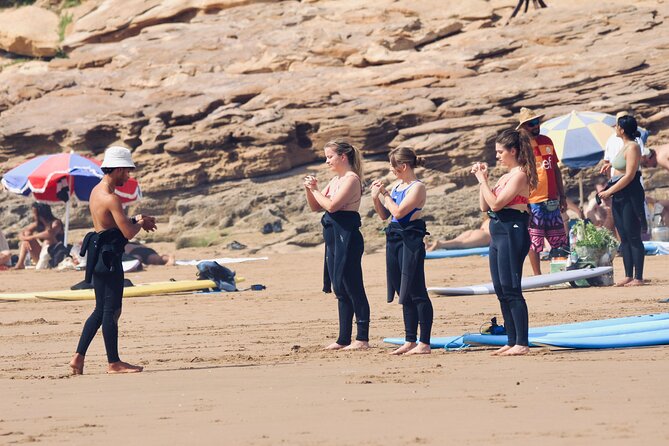
This is not a “watch for a bit” experience. It’s hands-on from the start, with a clear progression.
1) Briefing: the basics and the rules
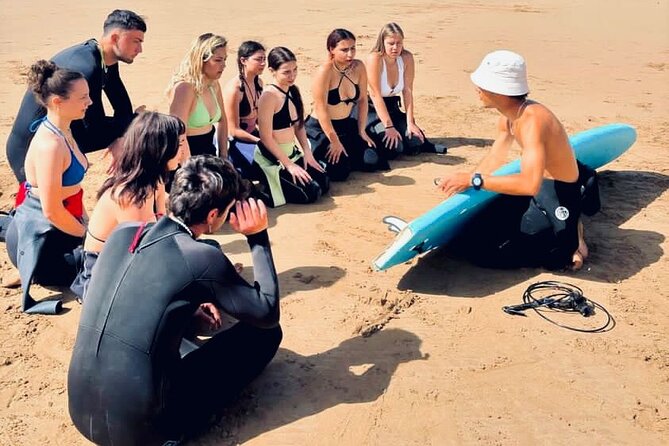
You start with an introduction that covers key technique pieces: how to paddle efficiently, how to balance on the board, and how the pop-up works as one smooth motion. You’ll also learn essential safety rules and ocean awareness, including how to identify surf conditions that fit your skill level.
That “conditions fit your level” part is important. Surfing feels random when you’re picking waves blindly. When you get taught how to read what’s manageable, you spend more time catching waves and less time watching the ocean hand you a lesson you didn’t sign up for.






2) Warm-up and stretching
Next comes warm-up and stretching. It’s simple, but it matters because surf technique is full-body work: shoulders and core for paddling, legs for stance, and balance for the pop-up. If you’re not warmed up, you’ll compensate with tense movements, and instructors can’t fix what you can’t control.
3) Surfboard introduction and care
Then you meet your surfboard: where to place yourself, how to position it, and how to handle it responsibly. When gear use is explained before you hit the water, you’re less likely to waste time figuring out “where to stand” and more likely to focus on technique.
You’re also in a wetsuit during the lesson (provided), which helps you stay comfortable enough to concentrate on learning.
4) Paddling and catching small waves
After practice with the board feel, you’ll try paddling and catching small, manageable waves under supervision. This is where nerves often drop. Even if you can’t “surf” like you see on videos, catching waves at your level builds the confidence you need to keep improving.
5) Pop-up practice: beach first, then water
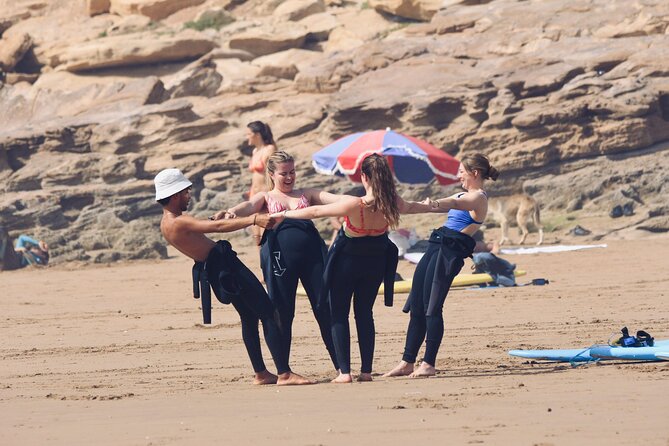
You’ll practice the pop-up movement from lying to standing. First you’ll do this on the beach, then out in the water when you’re ready.
I like this order because it reduces chaos. Many beginners try to learn the pop-up while also dealing with paddling timing and wave movement. Splitting it into stages gives your brain fewer jobs at once.
Instructor attention and group size: why max 10 matters
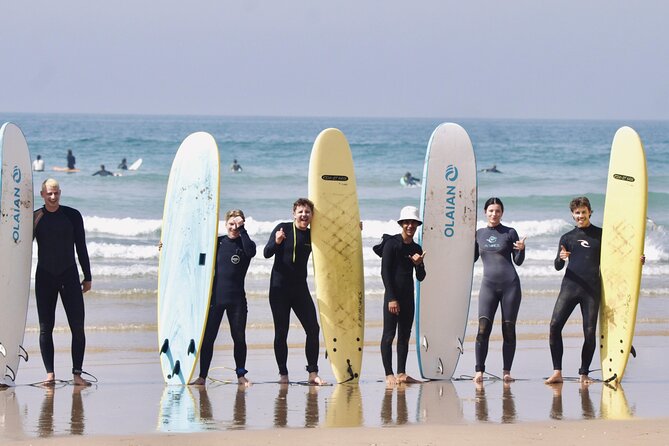
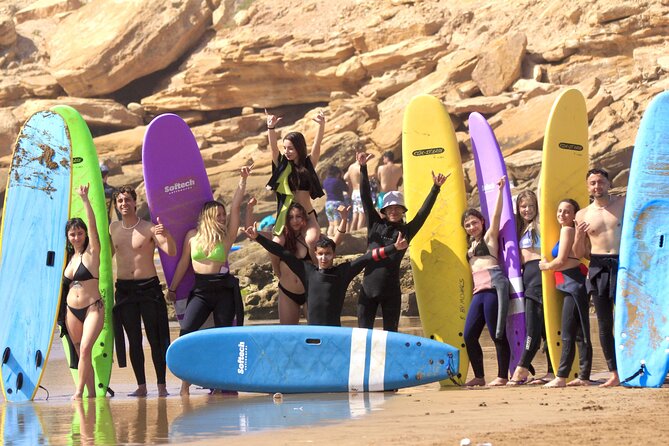
With a maximum of 10 people, you’re more likely to get what makes lessons work: corrections and immediate feedback. Surf coaching is hard to do from a distance. You need someone watching your paddling angle, your stance timing, and your balance the moment you try to stand.
The lesson’s approach is also built around safety, so instruction doesn’t stop at “how to fall.” You’ll get guidance on how to stay aware in the water and what to look for in surf conditions based on your level.
One more practical benefit: when groups stay small, you’re less likely to spend most of the session waiting. That keeps the lesson momentum going. You learn one skill, practice it, and move to the next, instead of losing your rhythm.
Surf time goals: what you should aim to do in two hours
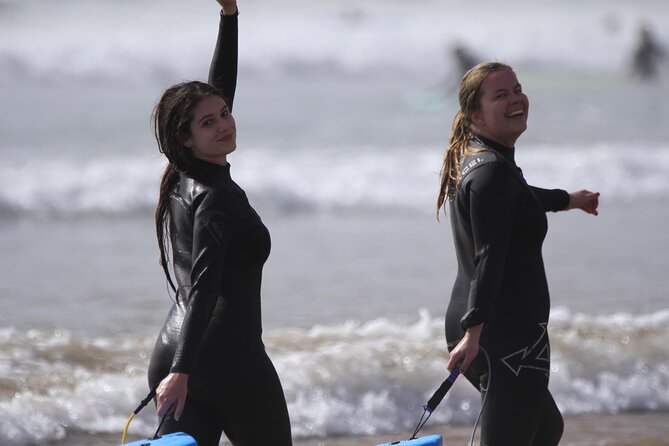
Two hours can sound short, but this lesson is structured to get you meaningful repetition. Here’s what you should focus on during the session, mentally.
- Get comfortable with paddling: not just pushing through water, but paddling with control.
- Practice balance: even when waves are small, balance is the foundation.
- Own the pop-up sequence: beach practice should make the first attempts in-water feel less random.
- Catch manageable waves: your success metric for the day is progress and consistency, not perfect turns.
If you’re a beginner, you should leave with the big win: you know how to take the basic steps in order and what to do when you’re on the board. If you already surf, you can use the lesson as a technique check—especially on pop-up timing and safe decision-making in real conditions.
Ocean safety you can feel during the lesson
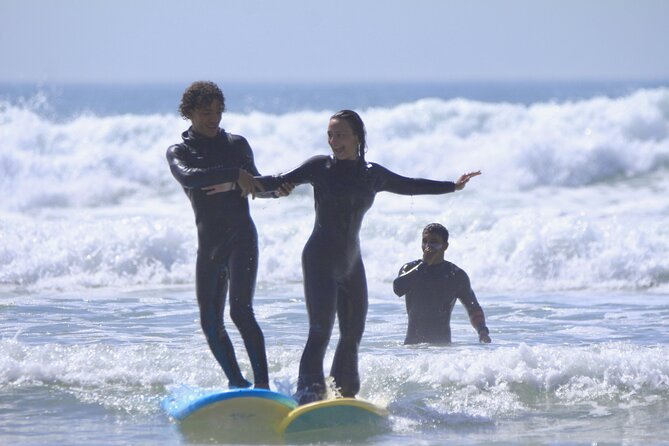
The coaching style is clearly set up to keep you safe and steady. You’ll start with safety rules and ocean awareness, and that training is meant to guide your behavior in the water. That’s the difference between feeling like you’re “allowed” to surf and actually knowing what to do while you’re doing it.
A good surf lesson does two things at once: it teaches technique and it teaches awareness. This one includes both, and that’s why first-timers can still have a solid experience. When you understand where to focus and what to avoid, the ocean stops feeling like an opponent and starts feeling like a place you can work with.
Getting there (and not overcomplicating your day)
Because there’s no private transportation, plan your route to Paradise Surf Shop in Taghazout. The good part is that you don’t need a complicated pickup plan at the end. The lesson ends back at the meeting point.
If you’re staying around Agadir, keep expectations realistic. You’re going to spend some time getting to Taghazout and then back. The lesson itself is only about two hours, so your scheduling should match that pace.
Also, the tour uses a mobile ticket, which usually makes check-in easier if you’re traveling with a phone and stable battery life.
Who should book this lesson
This surf lesson is a strong fit for:
- First-timers who want structured instruction and safety guidance, not guesswork
- Beginners who learn best in steps, with beach practice before water attempts
- Intermediate riders who want a technique refresher on pop-up mechanics and basics
- Anyone who values small-group coaching and hands-on feedback
The “most travelers can participate” note also suggests the activity isn’t limited to one specific fitness profile. That said, surfing does require movement in a wet, cool environment, so you’ll want to feel comfortable being active for about two hours.
Weather and wave reality check (the honest part)
Surf lessons depend on conditions. Even with consistent Taghazout surf, your exact experience can vary based on what the ocean is doing that day. The lesson’s job is to keep you in the right zone—catching small, manageable waves and practicing technique safely.
So if you’re hoping for a specific kind of big-wave moment, you may or may not get it. But if your goal is learning, building confidence, and leaving with improved basics, this format is designed for that.
Should you book this Taghazout surf lesson?
Yes, if you want a guided first step into surfing that’s organized, safety-focused, and beginner-friendly. The big reason to book is the way the lesson is built: warm-up and stretching, board introduction, structured paddling work, then pop-up practice on land before you try it in the water.
It’s also good value for the money because the wetsuit and surfboard are included and you get the full two hours of instruction. And with small groups up to 10, you’re more likely to get the kind of attention that actually changes your technique.
Skip it only if you’re looking for transport support or a private, custom, long-form surf program. In that case, you may want a different option that matches your logistics and time frame.
FAQ
How long is the surf lesson?
The lesson lasts about 2 hours.
What’s included in the price?
You get a surfboard and a wetsuit for the duration of the lesson, plus 2 hours of surf instruction.
Do I need to bring my own surfboard or wetsuit?
No. The surfboard and wetsuit are included.
Where do I meet for the lesson?
You meet at Paradise Surf Shop, G7VR+QHR, Taghazout 80022, Morocco. The activity ends back at the meeting point.
How big is the group?
The activity has a maximum of 10 travelers.
Is transportation included?
No private transportation is included.