REVIEW · AGADIR
Sandboarding adventure and painted village 1/2 day from Agadir or Taghazout
Book on Viator →Operated by Bakhazouz Tours Company · Bookable on Viator
One morning, sand and sea collide. This half-day trip from Agadir is a fun mix of dune action and local stops, with a rare ocean-waves-and-desert-sand view. I love the sandboarding part most, plus the drive through real coastal villages that makes the day feel grounded in everyday Morocco. The only drawback to keep in mind is that it’s weather-dependent, so you’ll want a backup plan if conditions are poor.
I also like how the timing stays tight: pickup starts at 8:30 am and the whole outing is about 4 hours. With a small group (max 7), it’s easier to get help when you’re learning, and the guides tend to keep the pace friendly. Still, it is physical—climbing up the dunes and sliding down the sand can be exhausting if you’re not expecting that.
The route itself is part of the charm. You’ll bounce through places like Tamraght, Taghazout, Aghroud, and Tamri, then reach dune areas close to the beach where you can enjoy that “desert feel” without committing to a full-day excursion.
In This Review
- Quick take: the best parts of sandboarding + painted village
- Sandboarding by the Atlantic: why this feels special
- The 8:30 am pickup and the drive through Tamraght, Taghazout, Aghroud, Tamri
- Tabouga Mountain: a quick viewpoint stop that makes the day feel bigger
- The sandboarding session: getting your balance and actually having fun
- Why the ocean-and-dune views are the star of the show
- Painted village time (and the local pauses that make it feel real)
- Group size, guides, and how the day stays relaxed
- Price and value: is $63.90 worth it?
- What to bring for sand, wind, and a morning schedule
- Who this morning sandboarding + painted village tour is best for
- Should you book it?
- FAQ
- Where does this sandboarding and painted village tour start?
- How long is the tour?
- How much does it cost?
- Is pickup included?
- What kind of vehicle is used?
- What is the group size?
- Is the tour dependent on weather?
- What is included with tickets?
Quick take: the best parts of sandboarding + painted village
- Sandboarding near the Atlantic where ocean waves and dunes share the same view
- A short, well-paced morning built around photos, riding, and a return before lunch gets away
- Village-to-village driving along the Essaouira road corridor with lots of photo stops
- Small groups (up to 7) that make it easier for first-timers to learn comfortably
- Local moments that can include tea/bread and a stop connected to the painted village experience
Sandboarding by the Atlantic: why this feels special
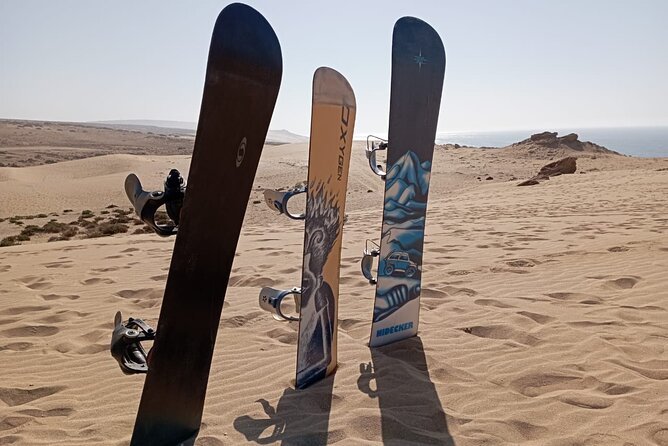
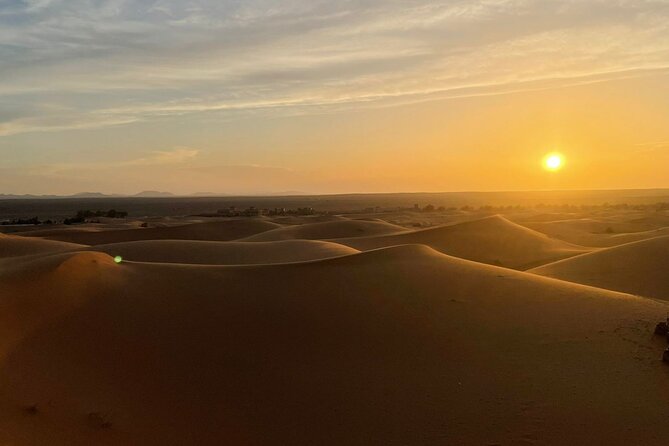
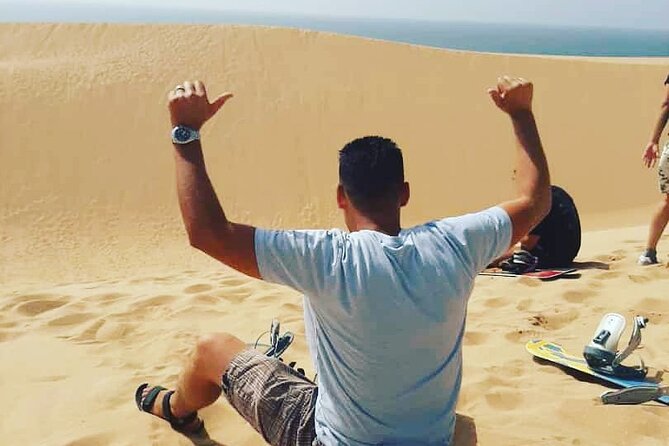
Most Morocco sandboarding sounds like a big-desert fantasy. This one has a different flavor because the dunes are close enough to the coast that you can actually see the Atlantic energy while you ride. That contrast—cold-looking ocean movement with warm sand under your feet—adds a memorable edge to a session that’s already fun on its own.
You also climb in the classic way: you’ll work your way up the dunes and then ride down. Afterward, you’ll climb the sand ladder again to get away from the beach area behind the dunes. It’s not just for thrills. That ladder move helps you fully swap the “seaside” feeling for the “dune” feeling, even though you’re not deep in the Sahara.
A few more Agadir tours and experiences worth a look

The 8:30 am pickup and the drive through Tamraght, Taghazout, Aghroud, Tamri
This trip is built around a morning start, with pickup from your location at 8:30 am. You’re typically headed out in a 4×4 or a minivan, and the early departure is a big part of why the whole day feels focused instead of dragged out.
On the drive, the scenery is a story by itself. The route follows the Essaouira road, a corridor where you get contrast between the western High Atlas and the Atlantic coast. That means you’re not just staring at one view. You’ll pass through coastal towns and village areas such as Aourir, Tamraght, Taghazout, Aghroud, and Tamri, and you’ll likely get several natural photo pull-offs along the way.
If you like travel that feels like real movement through a region—not just a straight shot to one attraction—this portion is a win. It’s also practical: you’re learning how the coast and inland hills relate, in a way that a single viewpoint won’t.
Tabouga Mountain: a quick viewpoint stop that makes the day feel bigger
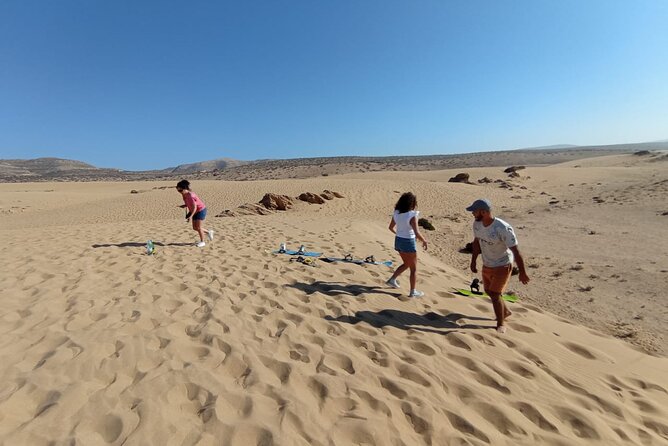
Before you reach the dune areas, there’s a stop near the top of Tabouga Mountain for photos. It’s short, but it matters, because it acts like a reset. You go from village driving into a higher vantage point, then you drop back toward the sand.
Think of it as your “okay, I get it now” moment. From up there, you can understand why these dunes feel linked to the coast rather than separated from it. It’s the kind of stop that makes the later sandboarding ride feel more like part of a landscape you recognize, instead of a random outdoor activity.
The sandboarding session: getting your balance and actually having fun
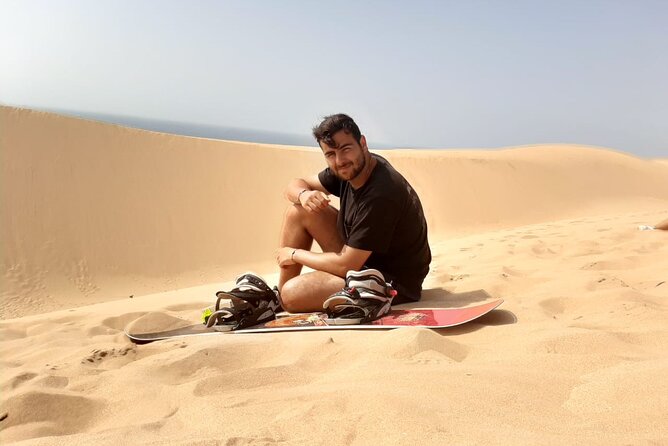
The heart of the tour is sandboarding, and the good news is that it’s beginner-friendly in real life. Guides are patient with first-timers, and if you’ve ever snowboarded, it clicks faster. Even if you haven’t, the session is designed so you can learn without turning it into a problem.
What you’re really practicing is body control: weight placement, how to stabilize while moving over uneven sand, and how to slow down at the end. The dunes here can be exhausting, though. One reason people mention fatigue (in a good way) is that you’re not just sliding—you’re also climbing back up, repeatedly.
You’ll also get that “leave the beach behind” experience when you climb the sand ladder. That’s your signal that you’re moving beyond the shoreline area and into deeper dune riding. Expect sand in places you don’t want it, and plan accordingly.
Why the ocean-and-dune views are the star of the show
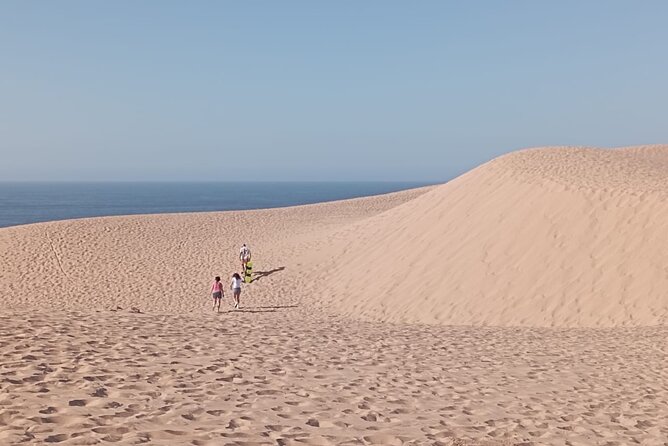
This is the part I’d frame as the trip’s signature. Near the beach, you get a rare combo: ocean waves plus desert-style dunes. It’s not something you see every day, especially when you’re starting from Agadir or Taghazout and keeping the outing to a half-day.
You’re also close enough to feel that coastal rhythm: wind, spray, and the sense that the Atlantic is active even when you’re focused on the sand. For photography, that combo gives you variety—wide shots of dunes, then tighter angles when the rider and board cut lines across the sand.
If you’re picking this tour mainly for views, that’s where it pays off. You get to enjoy the scene while doing an activity, instead of treating the dunes like a backdrop you stand beside.



Painted village time (and the local pauses that make it feel real)
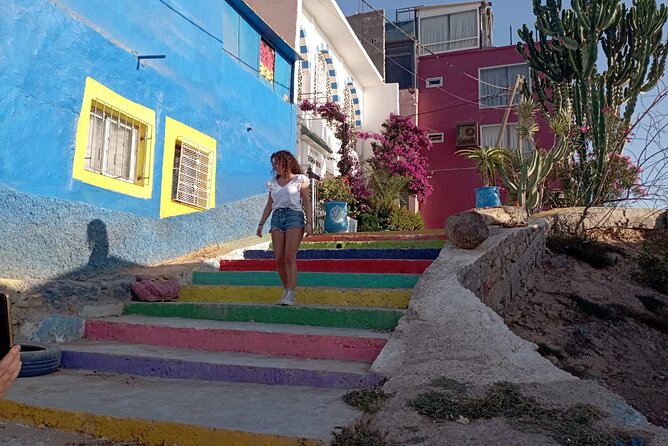
This experience includes a painted village element, and that cultural stop is what helps the tour feel more complete than a pure adrenaline outing. When you mix sandboarding with a village stop, the day doesn’t feel like you only came for one activity—you get a glimpse of how people live, build, and present their spaces.
You may also encounter small local moments along the way, such as pauses for tea and bread at a genuine Moroccan home. Those are the kinds of stops that turn a scenic route into an actual human experience. One more cultural detail that pops up in guide-led days is traditional Berber-style clothing for photos, though the exact offering can vary by day and group.
The practical takeaway: even if sandboarding is your main reason for booking, don’t rush through the village part. That’s where you slow down enough to appreciate the texture of the region.
Group size, guides, and how the day stays relaxed

With a maximum of 7 travelers, you’re not stuck in a huge herd. That makes a difference when you’re learning a new activity, because instruction can actually be personal. It also helps with pacing: you’re less likely to feel like you’re waiting for someone to catch up all the time.
Guides can shape the vibe heavily on this kind of trip. Names that come up include Rachid and Ismaël, and what people highlight is their ability to explain Morocco’s culture in a way that feels natural, not like a lecture. One thing I like about this setup is that the day can turn into a conversation, even while you’re moving around.
And since the overall duration is about 4 hours, this is a strong “morning add-on.” You can still plan the rest of your day without losing it to transport delays.
Price and value: is $63.90 worth it?
At $63.90 per person, this is priced like an outdoor half-day with included pickup, not like a bare-bones activity. What makes it feel fair is what’s included: pickup offered, a guided sandboarding experience, and the day’s core admissions are listed as admission ticket free.
Also, the small group size matters for value. Big tours can mean rushed instructions and more waiting. Here, the limit of up to 7 people supports a smoother experience, especially if you’re new to sandboarding.
So should you judge it by the sandboarding alone? I’d say no. The better comparison is sandboarding plus the painted village and the drive through real coastal towns. If those village elements align with what you want, then this price tends to feel like solid value for a short time window.
What to bring for sand, wind, and a morning schedule
This is an active morning outing, and sandboarding means sand will find its way into your life. Bring sunscreen, water, and something you’re okay getting dusty. If you wear delicate shoes, you might regret it. Closed footwear helps more than you’d think.
Also consider the weather. The experience requires good weather, so you should dress for conditions that look stable in the morning, not just beautiful on paper. If it’s cooler than you expect near the coast, bring a light layer.
Since the tour runs roughly 4 hours, you’ll want a small buffer: a snack plan, hydration, and sunglasses can make the whole day feel easier.
Who this morning sandboarding + painted village tour is best for
This is a great fit for people who want variety in a short window. Couples can enjoy it because it’s active but not overly long. Families often like it too, especially when the guides adjust their approach so kids and teens can keep up.
It also works well for first-timers. The activity is often described as easy to get the hang of, and having instruction matters when the board is new and the sand is shifting.
On the other hand, if you want a slow, full-day desert immersion with long stops and lots of lounging, this might feel too short. This is designed to be energetic and efficient, not a deep multi-hour camp experience.
Should you book it?
I’d book this if you’re looking for a half-day morning adventure that combines real coastal scenery with dune riding and a cultural stop. The payoff is strong if you want both action and a bit of local texture, especially with the small group size and the way guides like Rachid and Ismaël help make the day feel friendly.
I’d skip—or at least think twice—if you hate physical effort, you’re sensitive to sand, or you’re traveling during a period where weather might be questionable. The tour depends on conditions, and the dunes do ask for some stamina.
If your ideal Morocco day looks like a quick scenic drive, a guided activity that’s actually doable, and a painted village moment to balance it out, this one makes a lot of sense.
FAQ
Where does this sandboarding and painted village tour start?
It starts with pickup from your location in the Agadir area, with the tour beginning at 8:30 am.
How long is the tour?
The total duration is about 4 hours.
How much does it cost?
The price is $63.90 per person.
Is pickup included?
Yes, pickup is offered.
What kind of vehicle is used?
The trip is typically done in a 4×4 or a minivan.
What is the group size?
The tour has a maximum of 7 travelers.
Is the tour dependent on weather?
Yes, it requires good weather.
What is included with tickets?
Admission tickets are listed as free, and you receive a mobile ticket.