REVIEW · CASABLANCA
Private Grand Tour of Morocco
Book on Viator →Operated by SaharaTrek · Bookable on Viator
Your 12-day Morocco rush is surprisingly well paced. This private Grand Tour stitches together the Atlantic coast, Rif Mountains, Mediterranean-facing Tangier, and the Sahara’s dunes, all with pickup and a car that keeps your day from turning into chaos. I like that the trip mixes guided time with room to wander on your own—so you get both context and freedom—while staying in riads and a Jr. Suite style base.
What I like most is the way the planning feels handled for you. A big part of the value is daily breakfast in your riad and guided tours where admissions are taken care of, including stops such as Atlas Studios and Volubilis. And if you’re the type who wants fast answers, the company’s coordinator Luiza is repeatedly praised for quick replies and itinerary tweaks (names you might hear in your guide team include Aziz and Mohammed).
One possible drawback: it’s a lot of driving. You’ll be moving nearly every day, and there’s walking in medinas plus some climbs (like Aït Benhaddou), so you’ll want moderate fitness and comfortable shoes.
In This Review
- Key things that make this Morocco Grand Tour work
- What you’re paying for in this private Grand Tour of Morocco
- Day 1: El Jadida’s Portuguese citadel and Essaouira’s riad life
- Day 2: Sunrise in Essaouira, thuja scents, and Marrakech after dark
- Day 3: A private guided walk through Marrakech’s medina (and what to do with your free time)
- Day 4: High Atlas to Aït Benhaddou, plus Atlas Studios in Ouarzazate
- Day 5: Valley of Roses, Todra Gorge height, and Erg Chebbi sunset camel time
- Day 6: North from the dunes to Fez via Midelt and the Middle Atlas
- Day 7: The Fez Medina walking tour you’ll actually understand
- Day 8: Volubilis Roman ruins and Meknes sights with self-guided time
- Day 9: Chefchaouen’s blue medina and a Rif mountain sunset
- Day 10: Tangier and the Strait of Gibraltar from the White City streets
- Day 11: Cap Spartel, Hercules Caves, Lixus, and Rabat’s royal monuments
- Day 12: Casablanca’s colonial center and a Hassan II Mosque tour before your flight
- Is the pace worth it? Comfort, guide time, and time to breathe
- Should you book this 12-day Grand Tour of Morocco?
- FAQ
- Is this tour private?
- Where does the tour start and when?
- How long is the tour?
- Are meals included?
- Are entry fees included?
- What’s included in the price, and what isn’t?
- Is pickup offered?
- Will I be able to tour Hassan II Mosque?
- Can I cancel for a full refund?
Key things that make this Morocco Grand Tour work
- Atlantic-to-Sahara route: you see nearly every major region, not just the highlights.
- Riads + guided pacing: breakfasts daily, plus private walks in Marrakech and Fez.
- Sahara moment done right: camel caravan at Erg Chebbi with a sunset on the dunes.
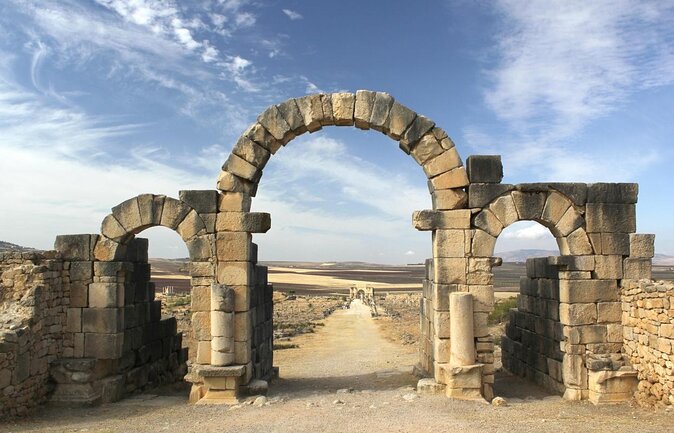
- Admissions included for major sites: Atlas Studios, Volubilis, Cap Spartel, Hercules Caves, Lixus, and the Hassan II Mosque tour (when open).
- Local guide support: you get named experts like Aziz and Mohammed in the feedback, which usually means smoother medina navigation.
- Easy to manage in real life: air-conditioned vehicle for long legs, and pickup from Casablanca.
What you’re paying for in this private Grand Tour of Morocco
At $2,471 per person for about 12 days, you’re not buying a single-ticket sightseeing day. You’re paying for private transportation (with air-conditioning), multiple riad stays, daily breakfast, guided tours, and a bundle of admissions that would otherwise add up fast on your own.
The value gets clearer when you tally the “hard parts” of independent Morocco travel: coordinating drivers across long distances, finding the right neighborhood to stay in each city, arranging guides for the medina labyrinths, and getting into key sights without wasting half a day figuring out logistics. Here, the trip is structured so you’re not just collecting stamps. You get enough guide time to understand what you’re looking at, then time to walk streets and choose your own pace.
Still, you should go in with the right expectations. This is a sweep, not a slow, one-city-at-a-time holiday. If your idea of travel is long afternoons in one neighborhood with zero rushing, you might want a shorter version or extra nights in fewer places.
You can also read our reviews of more private tours in Casablanca
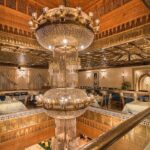
Day 1: El Jadida’s Portuguese citadel and Essaouira’s riad life
Your Morocco starts with a two-hour drive south from Casablanca’s Mohamed V Airport to El Jadida, a walled port town tied to the Portuguese trade route era. It’s sleepy and atmospheric, and the underground cistern is a standout because it changes the mood fast: you go from sunlit ramparts to a hidden space built to store water for centuries.
After El Jadida, you head about four hours to Essaouira and check into Riad Mimouna in the old city. The practical win here is location. When you stay inside the medina, you don’t burn time commuting; you can step out into narrow lanes, then return when you want a break. Expect a flexible evening: eat at restaurant choices nearby or follow the cooking smoke from food vendors, then settle back into riad life.
Day 2: Sunrise in Essaouira, thuja scents, and Marrakech after dark
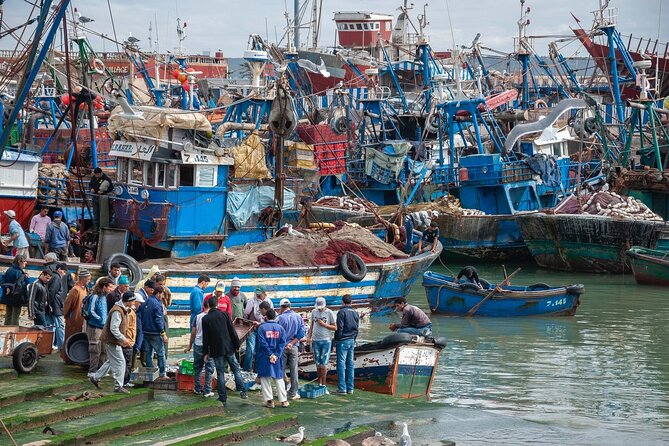
Start day two in Essaouira, with breakfast at your riad and a chance to see the port and ramparts before the day gets loud. In the morning light, the city feels different—less performance, more daily rhythm. Walk the walls and you’ll notice the smell of thuja wood in the air, a small detail that makes this kind of early exploring memorable.
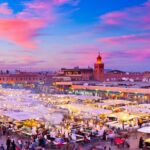
Then you drive about three hours to Marrakech and check into Riad Azoulay deep in the medina. Your evening centers on Jemaa el-Fnaa Square, where cook fires, musicians, and street performers fill the air. I’ll be honest: this is also where the pushiness can feel intense. The best strategy is to go with a plan—pick what you want to eat, keep moving between acts, and don’t let one vendor steer the whole night.
Day 3: A private guided walk through Marrakech’s medina (and what to do with your free time)
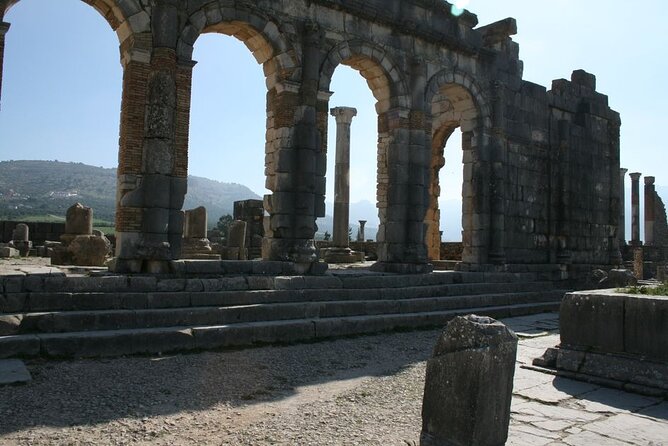
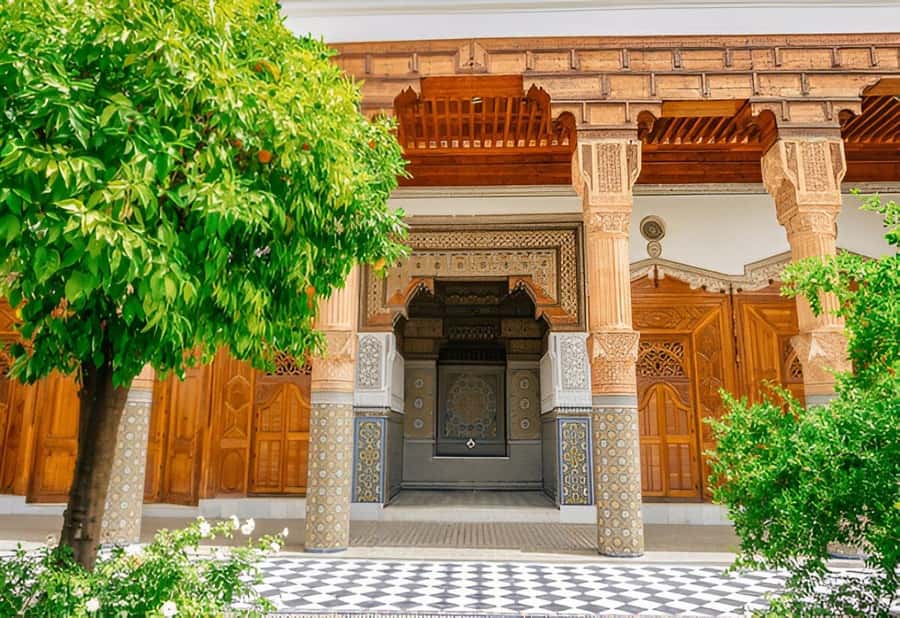
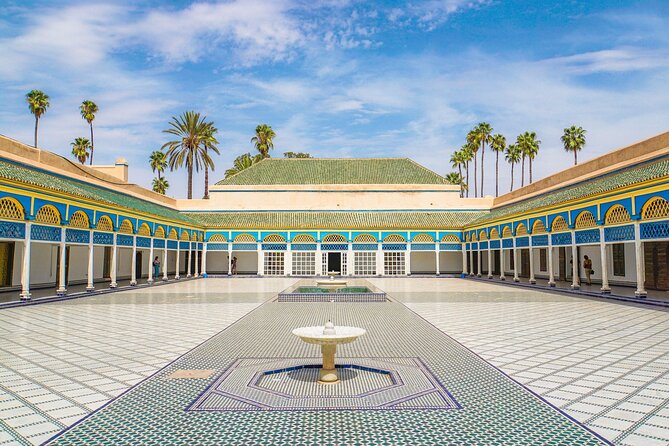
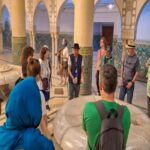
Today is built around a private four-hour guided tour in Marrakech with admissions included. Your guide leads you through the places that shape the city: the Saadian Tombs, a madrasa, major restored palaces, and big ruins that help you place what you’re seeing in time. The practical benefit of a guide here is simple: the medina is busy, and it’s easy to wander without understanding why each street matters.
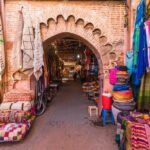
Expect scooters weaving through crowds and a nonstop stream of shops and food sellers. A good guide helps you balance it so you’re not just staring at stalls all day—you’re connecting the sights to the story. After the tour, you’re free to return to your own wandering style, whether that’s shopping for crafts, stepping into a courtyard café, or finding a quieter lane for a breather.
Day 4: High Atlas to Aït Benhaddou, plus Atlas Studios in Ouarzazate
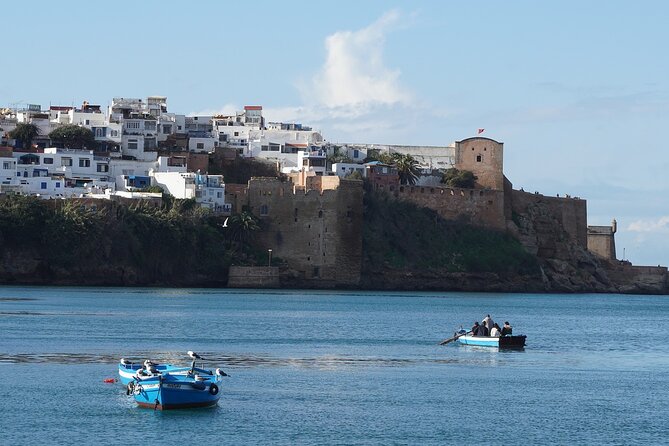
This day is road-travel heavy in a good way. You’ll climb toward the High Atlas Mountains and drive over the Tizi-n-Tichka Pass, known for dramatic turns and steep drops. The views here are real, but the comfort matters too—your air-conditioned vehicle helps when the climb comes with heat and dust.
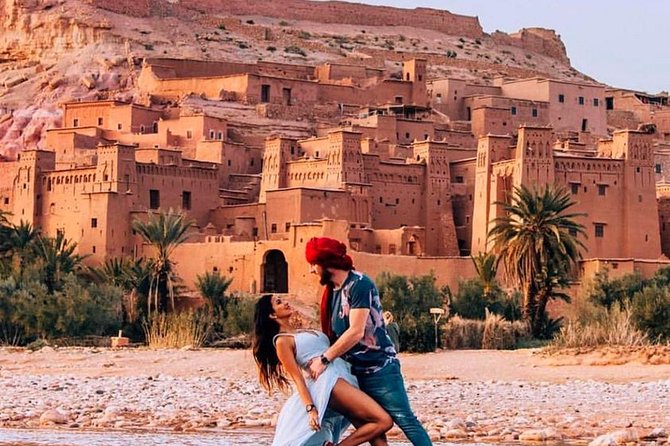
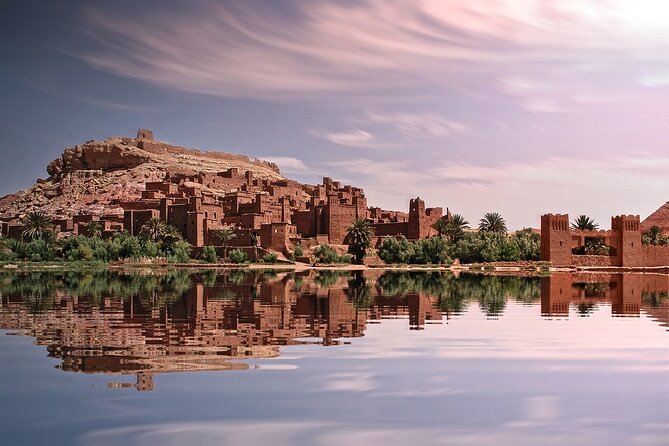
Next is Aït Benhaddou, a fortified 11th-century kasbah that’s UNESCO-listed and tightly linked to trans-Saharan trade routes. You’ll walk across the bridge into a place that feels like a time capsule, then climb through uneven stone streets and past small shops. The reward at the top is a wide view over the Atlas and valley below, which is the kind of payoff that makes the climb worth it.
After Aït Benhaddou you visit Atlas Studios near Ouarzazate. The one-hour guided tour through backlots and soundstages gives you the behind-the-scenes feeling of how Morocco has been filmed for decades, with sets shifting from scenes tied to Rome and Jerusalem to other big-screen worlds. That evening is in Skoura, where you’ll have dinner and more downtime.
Day 5: Valley of Roses, Todra Gorge height, and Erg Chebbi sunset camel time
You leave Skoura and head toward the Valley of Roses, known for rosewater production, with small villages and earth-hewn kasbahs along the way. It’s not just a detour—it’s a shift in scenery from plains to valleys, and it helps you feel Morocco’s regional variety rather than treating it like one long string of cities.
Then comes Todra Gorge, where you’re dropped near the mouth of the gorge and then walk along a narrow road next to a stream. The cliffs rise around you—about 500 feet—and it’s a quick walk, not a marathon, but it still needs your attention because you’re on a walkway inside the canyon walls.
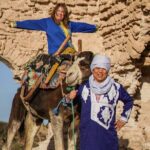
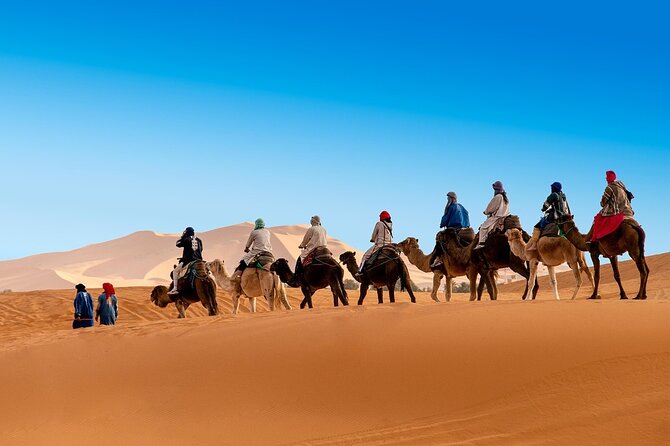
In the afternoon you reach Erg Chebbi, the edge of the Sahara. You check into Auberge Dunes D’or, relax briefly, then join a camel caravan into the dunes for sunset. The camel ride is gentle, and the best part is what you do once you get into the sand: you dismount and walk up to a dune top before twilight deepens. Dinner back at the auberge makes the whole sequence feel like a complete experience, not a quick photo stop.
Day 6: North from the dunes to Fez via Midelt and the Middle Atlas
After breakfast you check out and drive north toward Fez, with the Sahara’s emptier dunes gradually giving way to foothills. This is one of the most relaxing transitions on the whole trip because the scenery shifts without a huge emotional jolt—you’re not moving from chaos to chaos.
You pass through Midelt, where the Middle Atlas Mountains climb in and you may spot cedars and streams. There’s even a mention of Barbary apes if you’re lucky, which is the kind of “maybe” that makes the road feel like an adventure instead of a commute. By the time you reach Fez, the atmosphere changes again: the city feels like a giant medina spread over a valley.
You check into Riad el Yacout. The evening is yours, so don’t rush it. With this much travel, the smartest move is to eat early, take a slow shower, and let Fez land before you go exploring.
Day 7: The Fez Medina walking tour you’ll actually understand
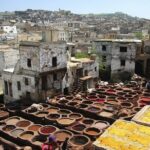
Fez really starts before sunrise. You’ll have breakfast in the riad courtyard as muezzin calls fill the morning, then meet your guide for a five-hour walk through the medina. This is the labyrinth city people talk about, but the guided time keeps it from becoming random. You learn the logic behind streets, markets, and landmarks.
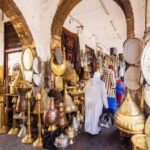
Shopping is a big part of the experience here, especially for traditional crafts. You’ll hear the work from metalworkers shaping brass and bronze, and you’ll notice the rhythm of weavers in the market areas. It’s not just buying souvenirs; it’s watching the making process and understanding what you’re seeing.
Day 8: Volubilis Roman ruins and Meknes sights with self-guided time
Today blends a major site with an easy, flexible structure. First, you drive about an hour and a half west to Volubilis, the Roman ruins founded centuries before the Morocco you’ll recognize today. You can explore on your own, and the tour includes a visit where entry is covered and a guided option may be available.
Then you head to Meknes, the imperial city where you’ll tour key monuments on your own. The big picks include Heri es Souani (granaries and stables), the Prison de Kara, and the Mausoleum of Moulay Ismail. You’re driven back to Fez after, with the rest of the day free—handy if you want to repeat your favorite Fez streets or get your shopping done without pressure.
Day 9: Chefchaouen’s blue medina and a Rif mountain sunset
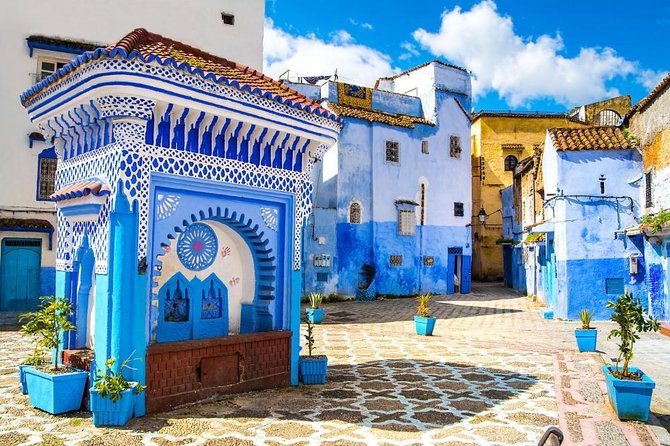
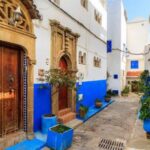
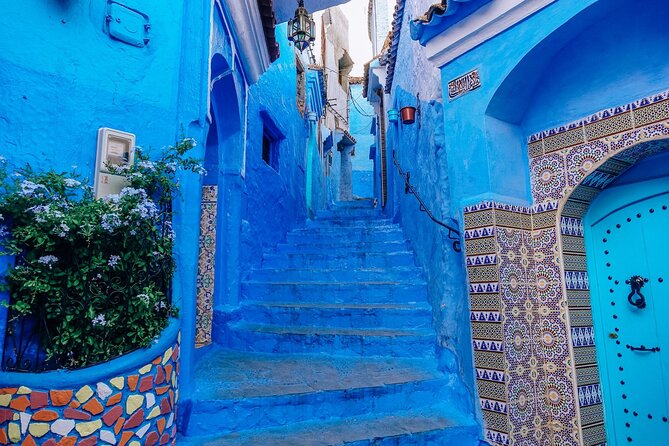
Driving north takes about four hours to Chefchaouen, set in the Rif Mountains and centered on Berber country. The old city is mostly about wandering: check into your riad, then walk the narrow lanes lined with blue buildings. It’s a calming visual effect that makes photos look good, but the real value is how relaxed the time feels when you’re not sprinting between sites.
You can head toward the waterfall and stream at the edge of town or hike up for sunset. For dinner, choose something simple near the medina; small restaurants are scattered throughout the area, so you don’t need to plan every detail. Then return to your riad and sleep, because tomorrow brings another big shift.
Day 10: Tangier and the Strait of Gibraltar from the White City streets
You’ll drive about two and a half hours north to Tangier, with your afternoon mostly on your own after you check into the riad. Tangier sits with the Strait of Gibraltar close by, and Europe feels like it’s on the horizon even if you’re staying firmly in Morocco.
Spend time in the places with layered identity: the American Legation museum, the Kasbah high walls and alleyways, and the Grand Socco market area. If you like walking, Tangier works well because the streets connect viewpoints, shops, and cafés in a way that feels natural rather than forced.
Day 11: Cap Spartel, Hercules Caves, Lixus, and Rabat’s royal monuments
This is a big “coast + classical ruins + capital” day. Starting from Tangier, you go to Cap Spartel, where the Atlantic meets the Mediterranean, with rocky coast views and quiet stopping points. Next is the Caves of Hercules, a short visit with tunnels carved out by Phoenicians.
Then you head south to Lixus, Roman ruins along with the remains of a coliseum area. If you like seafood, the nearby village of Larache is suggested as a lunch option, which makes sense because coastal food is part of the regional experience, not just a meal.
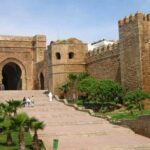
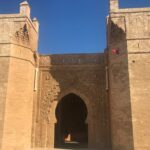
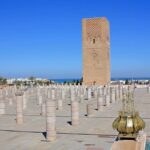
In the afternoon you continue to Rabat, Morocco’s capital. You’ll see the Hassan Tower ruins, the Royal Tombs (with honor guards), and then the Kasbah of the Udayas on a bluff above the Sale River. After a day of old empires and shoreline stops, the drive back to Casablanca for the night feels like a reset.
Day 12: Casablanca’s colonial center and a Hassan II Mosque tour before your flight
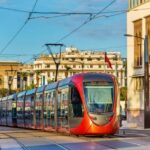
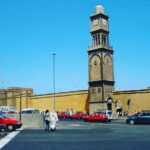
On your final day, you’ll do Casablanca sightseeing by car, starting with the colonial French and Art Deco district. This is a different side of Morocco—more urban, more European-influenced architecture, less medina maze.
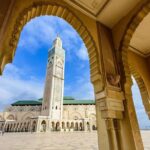
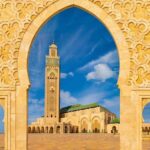
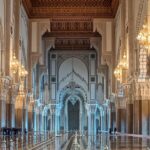
Then you visit Hassan II Mosque for a tour, with an important detail: it’s closed on Fridays. Your driver then takes you to Mohamed V Airport for your flight out, so build in the idea that the day is structured around getting you airborne smoothly.
Is the pace worth it? Comfort, guide time, and time to breathe
The smartest part of this tour isn’t any single city. It’s the rhythm: guided walks where you’d otherwise get lost, then free time where you can choose your own pace. In Marrakech and Fez, the private walking tours are a huge help. They make the medina feel readable instead of overwhelming.
The second smart part is the vehicle. Long legs between regions can feel exhausting, and air-conditioning helps you arrive with enough energy to enjoy the next riad instead of just crashing. Finally, the riad stays themselves are practical: when you’re in the old city, you can step out immediately and don’t waste half the day on transit.
The trade-off is that you won’t linger in any one place for weeks. If you want to slow down, consider adding extra nights in Marrakech, Fez, or Chefchaouen on top of this backbone.
Should you book this 12-day Grand Tour of Morocco?
Book it if you want to see a huge sweep of Morocco with minimal planning and maximum structure. This is a good fit when you like the idea of guided context for big sights, then personal time to walk markets, eat what looks good, and enjoy your riad.
Don’t book it if your travel style is slow, quiet, and low-movement. You’ll be on the road often, and you’ll do enough walking in old cities and at elevated sites that comfortable shoes and moderate fitness matter.
If you do book, I’d pack for movement: sturdy footwear, light layers for changing conditions, and a simple plan for each evening (even just deciding where you’ll eat). Also, if you’re traveling on a Friday, flag the Hassan II Mosque timing early so your final day runs smoothly.
FAQ
Is this tour private?
Yes. It’s listed as a private tour/activity, and only your group participates.
Where does the tour start and when?
The start is Mohamed V Airport in Casablanca, Morocco, with a start time of 6:00 am.
How long is the tour?
It’s listed as 12 days, approximately.
Are meals included?
Yes. Breakfast is included 10 times, and dinner is included 3 times.
Are entry fees included?
The tour includes guided tours and admissions, and the itinerary shows admissions included on several specific stops.
What’s included in the price, and what isn’t?
Included items are an air-conditioned vehicle, accommodations, guided tours and admissions, breakfast, and some dinners. Not included are flights and tips.
Is pickup offered?
Pickup is offered.
Will I be able to tour Hassan II Mosque?
The tour says the Hassan II Mosque tour is closed on Fridays, so your day may need to align with opening times.
Can I cancel for a full refund?
Yes. There is free cancellation up to 24 hours in advance of the experience for a full refund.