REVIEW · CASABLANCA
Morocco Top Trips: 15-Day Private Tour in Morocco
Book on Viator →Operated by Morocco Top Trips · Bookable on Viator
Morocco is one country, but this trip feels like six trips. You start in Casablanca with the massive Hassan II Mosque, then glide into blue Chefchaouen, the medina maze of Fez, and the big-canvas desert around Merzouga. After that come palaces and markets in Marrakech, plus the Atlantic breeze of Essaouira.
What I like most is the mix of guided moments and breathing room. You get real sightseeing support in places like Rabat, Fez, and Marrakech, and you also get time to wander on your own in Chefchaouen and Essaouira. The main trade-off is that it is very full: long drives show up on multiple days, so if you hate car time, this may feel like constant motion.
In This Review
- Key highlights you should clock right away
- Casablanca to Hassan II: the right first day to orient you
- Rabat and the road to Chefchaouen: imperial sights plus blue-street magic
- Chefchaouen side trips: Akchour waterfalls and sunset-ready viewpoints
- Volubilis and Meknes: Roman ruins and gate-and-medina touring
- Fez: the medina maze, mosques, madrassas, and craft quarters
- The long push to Merzouga: Ifrane, cedars, monkeys, and the Ziz Valley
- Erg Chebbi days: 4×4 dunes, nomad tea, Gnawa performance, and camel nights
- Todra Gorge and Dades: sunrise dunes, fossils in Rissani, and canyon walking
- Ouarzazate and Skoura: kasbahs, roses, and movie-set vibes
- Ait Benhaddou and Tizi n-Tishka to Marrakech: best views for the effort
- Marrakech full day: palaces, gardens, tombs, souks, and Jemaa el Fna
- Imlil day trip from Marrakech: a mountain reset with a local guide
- Essaouira on the Atlantic: white medina walls and salty air
- Price and value: what you’re really paying for
- Who should book this Morocco Top Trips style of route
- Should you book this 15-day private Morocco itinerary?
- FAQ
- How long is the Morocco tour?
- Where does the tour start and end?
- Is this tour private?
- Do you include pickup and airport transfers?
- Do you do a camel ride in the desert?
- What are the main stops you can expect?
- What is the cancellation policy?
Key highlights you should clock right away
- A private tour for just your group, with pickup and airport transfers to reduce stress
- Hassan II Mosque in Casablanca as your first major sight, before Morocco gets into full swing
- Chefchaouen plus Akchour and sunset at the Spanish Mosque for views that are hard to forget
- Volubilis Roman ruins and Meknes medina to mix empires, not just one style of sightseeing
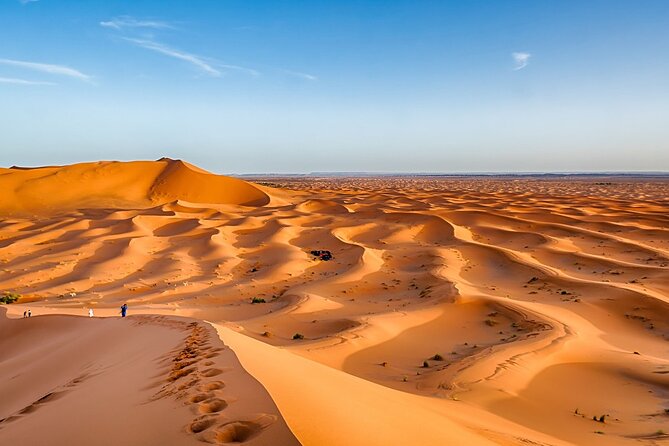
- Merzouga/Erg Chebbi with 4×4, nomad tea, Gnawa music, and a camel ride to camp
- Marrakech palaces and Jemaa el Fna plus an optional-feeling day trip in Imlil
Casablanca to Hassan II: the right first day to orient you
Most Morocco trips start with chaos: new language, new roads, and too many first impressions. This one starts cleaner. You arrive in Morocco, meet your driver/guide, and head to your hotel in Casablanca to settle in before going sightseeing.
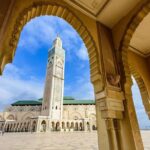
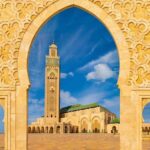
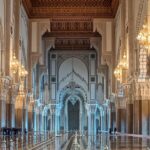
Then you hit Hassan II Mosque, one of the biggest mosques in the world. Even if you are not chasing architecture, it’s a strong way to understand scale and ambition in Morocco. The program lists the mosque tour at about an hour, and the general idea is simple: you’ll get the highlights without turning the day into a marathon.
Practical note: you’ll likely spend your first evening recharging. Use it to plan your clothing for the rest of the trip, because day temperatures can swing, especially once you’re near the Atlas Mountains later.
You can also read our reviews of more private tours in Casablanca
Rabat and the road to Chefchaouen: imperial sights plus blue-street magic
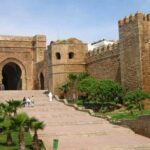
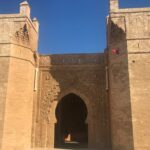
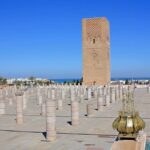
Day 2 is built around two mood changes. First: Rabat, Morocco’s capital and one of the imperial cities. You cover Oudaya, the old medina, Shalla, and the Hassan Tower area. You’ll also see Kasbah des Oudaias and the Hassan Tower itself. This is the kind of stop that helps you “read” Morocco later—imperial power, religious symbolism, and old city layouts.
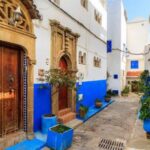
Then you drive to Chefchaouen, famous for its blue streets and photo-perfect corners. The itinerary gives you time to explore independently after arrival, which matters. Chefchaouen is at its best when you can stop whenever something catches your eye—small doorways, stairs, and sudden views over rooftops.
In Chefchaouen, expect light walking and lots of curiosity. The town is known for being visually consistent, but every bend feels different once you slow down.
Chefchaouen side trips: Akchour waterfalls and sunset-ready viewpoints
Chefchaouen isn’t just a “walk in blue” place. Day 3 turns it into a real day out with viewpoints and nature.
You start with a walk through the quieter streets and then go to an observation deck on the mountain for panorama views. After that, the program allows free time for shopping and independent wandering—use it for small crafts and easy coffee stops.
Then comes Akchour waterfall. This is where you trade blue walls for mountain scenery and open air. You’ll have a chance to take in the views from the mountains and get photos that look like they were staged, even though you just walked into the right place.
In the afternoon, you visit the Spanish Mosque and then catch sunset in that area. It’s one of those “timing matters” moments. Dress in layers because sunset near viewpoints often brings a chill.
Volubilis and Meknes: Roman ruins and gate-and-medina touring
Day 4 takes you away from the coast-and-mountain feel and into two historical styles that don’t get mixed enough on shorter trips.
You start with Volubilis, a UNESCO World Heritage site. The ruins are Roman-era and spread out over green fields. The program emphasizes that it’s one of the best-preserved Roman monuments of North Africa, including administrative buildings, palaces, baths, and mosaics. If you like history, this day is a big payoff because the site is large enough that it won’t feel like a quick checklist stop.
Next you continue to Meknes, another imperial city. You get a short city tour and a lunch break, then visit Bab Mansour Gate and the Meknes medina (also UNESCO-listed). Bab Mansour Gate is a standout visual—ornate, dramatic, and easy to understand even if you don’t know the details yet.
Trade-off to accept: this day is a classic “drive + visit” format. It’s efficient, but you’ll want good walking shoes.
Fez: the medina maze, mosques, madrassas, and craft quarters
Fez is the stop where many people decide if they love Morocco or just like it. This itinerary spends about five hours on sightseeing in the city’s cultural and religious core.
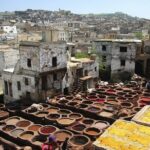
You’ll explore the ancient Medina (Fes el-Bali, UNESCO World Heritage). The program mentions the Bu Inania mosque, madrassas (Muslim universities), Nejjarin Square, and a fountain. Then you’ll move into the handicraft quarters where leather and pottery work continues using skills passed down over generations.
Here’s what matters for you: Fez can feel overwhelming if you go without guidance. Having a guide helps you understand what you’re looking at and where to step into shops without getting lost in the wrong direction.
At the same time, the itinerary structure keeps things realistic—you get focused stops, but you are not locked in a single spot all day.
The long push to Merzouga: Ifrane, cedars, monkeys, and the Ziz Valley
Day 6 is one of the most important days, even though it’s mostly driving. The itinerary calls it around a 7-hour journey toward Merzouga, and that’s honest.
You’ll pass through Ifrane, often described as having a European-like climate and feel. There are parks and chalet-style areas, and in winter it can resemble a ski destination. The itinerary also mentions Atlas cedars near Azrou and a stop where you may feed friendly wild monkeys. That’s the kind of quick, memorable moment that breaks up an otherwise long transit day.
Lunch is planned in Midelt. Then the route runs through the gorge and valley of the Ziz River. As you approach Er-Rashidia, the scenery shifts toward desert terrain.
Consideration: accept that you’re trading speed for variety. This day feels like a moving montage of Morocco’s zones—forest-ish, valley, then desert.
Erg Chebbi days: 4×4 dunes, nomad tea, Gnawa performance, and camel nights
If the desert is the reason you’re here, this is where the trip earns its legend.
On day 7, you meet the 4×4 driver after breakfast for an excursion in the dunes around Erg Chebbi. Then you stop for a cup of tea with nomads in the desert—an easy way to see everyday life from the inside rather than just snapping photos from the roadside.
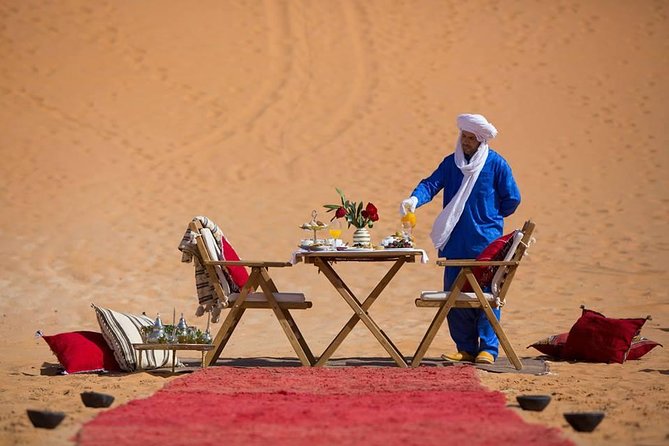
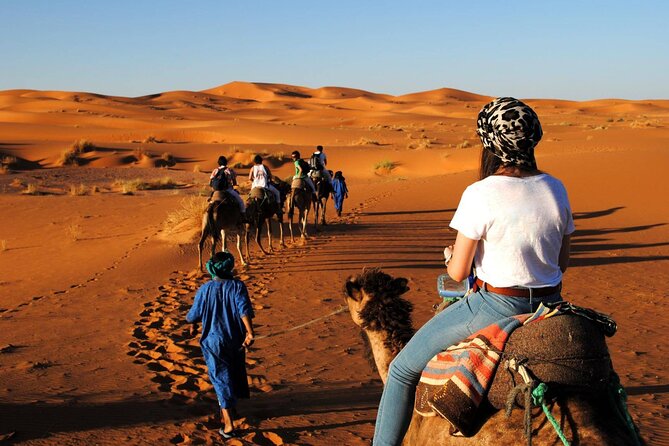
Later, you head to Khamlia to enjoy a Gnawa performance, tied to local culture. Then you arrive in Merzouga, at the foot of the dunes, and in the afternoon you do the camel rides to the desert camp.
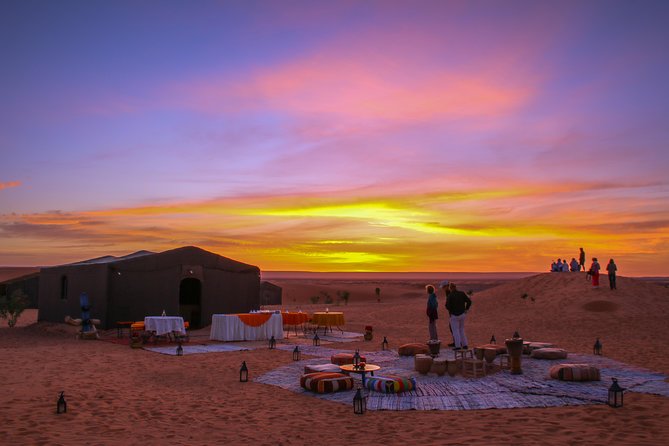
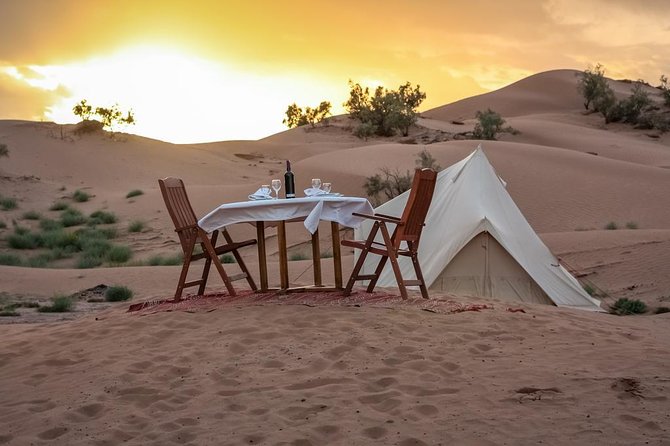
The camp setup described here is not a rough-survival fantasy. It includes comfortable beds, individual showers, and toilets. That matters because you’ll enjoy the night more if you can actually wash and rest.
Dinner is Moroccan, followed by drumming around the fire and Berber songs, plus clear-sky stargazing. This is the kind of evening where your brain finally slows down.
Small practical tip: pack for nighttime cold. Even when daytime feels mild, desert evenings can get cool.
Todra Gorge and Dades: sunrise dunes, fossils in Rissani, and canyon walking
Day 8 starts with sunrise to watch dunes in the early light. Then you return to Merzouga for breakfast and continue toward Dades.
The drive includes a stop in Rissani, described as having “the fossil factory” where you can see fossils from the region. It’s a quick detour, but it gives the journey some scientific texture, not just scenery.
Then there’s a panoramic photo stop near Tinghir in a palm oasis. After that you head to Todra Gorge. You’ll walk along the gorge and have lunch at a local restaurant. The idea is simple: get out of the car and feel the canyon walls with your own legs.
Then you continue through the villages of Dades. This stretches the journey into multiple “small chapters” instead of one long sightseeing day.
Ouarzazate and Skoura: kasbahs, roses, and movie-set vibes
Day 9 moves from Dades toward Ouarzazate and packs in a few of Morocco’s most film-friendly visuals.
You pass by Mgouna, where the rose festival is held every year. Then you continue to Skoura oasis, known for fertile palm fields and villages with crops like olives, figs, and pomegranates.
You can tour the valley and also visit Kasbah Amridil in the oasis of Skoura. The itinerary calls it a fortified kasbah and highlights its beauty. It’s the kind of stop that makes you understand why Morocco has been a backdrop for stories on screen.
Next you reach Ouarzazate, sometimes called the Hollywood of Morocco, because many films were shot there. You visit Kasbah Taourirt and also the Cinema Museum and Atlas Film Studio.
Reality check: this day is fascinating, but it is also built for people who enjoy sights that have been used in movies. If you only care about raw nature, some museum time might feel a bit extra.
Ait Benhaddou and Tizi n-Tishka to Marrakech: best views for the effort
Day 10 is a big transit day, but it’s not boring.
You visit Ait Benhaddou, a UNESCO site. The itinerary notes that it’s a filming location for Game of Thrones, which helps explain why it draws crowds. The visit lasts about an hour, which is enough to walk the main areas and get the “wow” factor without turning the day into a long loop.
Then you drive to Marrakech via the highest Atlas Mountains, taking Tizi n-Tishka at about 2260 meters. The itinerary suggests 3.5–4 hours of driving time excluding stops, with photo stops along the way. It also warns that this road is picturesque and you should stock up on warm clothes.
When you arrive in Marrakech, the itinerary allows rest and time on your own. Don’t underestimate this. Marrakech works best after you reset.
Marrakech full day: palaces, gardens, tombs, souks, and Jemaa el Fna
Day 11 is a full city day, and it’s structured to hit the major highlights without pretending you can do everything.
You start with Koutoubia Mosque, then Manara Pavilion surrounded by olive plantations. After that come the tombs of the Saadian sultans, and palace architecture stops at Bahia Palace and El Badii Palace. You also visit Majorelle Gardens.
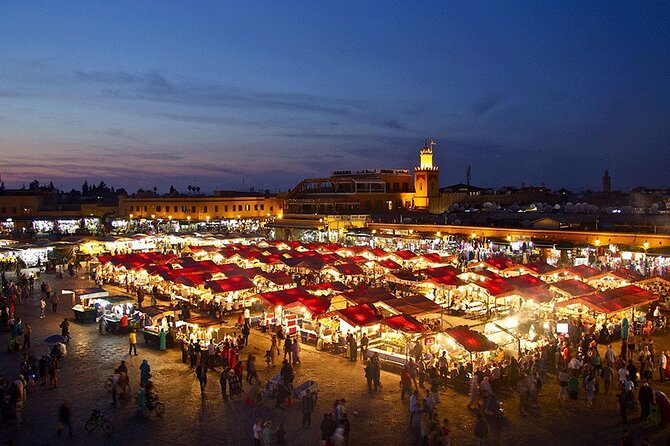
After lunch, you head to the most colorful market area and Jemaa el Fna square. The program describes it as an open-air theater where you might see snake charmers, healers, sorcerers, fruit merchants, and spice stalls.
How to make this day feel good: go in with the right expectations. Marrakech isn’t about quiet. It’s about energy and sensory overload, so plan breaks and keep your camera strap ready.
Imlil day trip from Marrakech: a mountain reset with a local guide
Day 12 gives you a break from city walls.
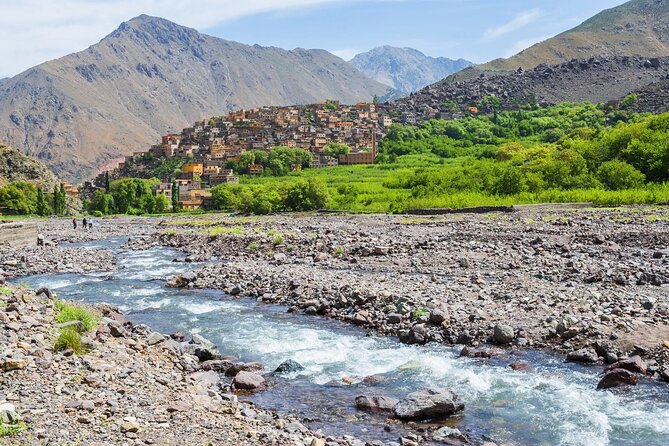
A driver picks you up in the morning for an adventure in the high Atlas Mountains to Imlil. You trek with a local guide who knows the area and can help you explore the village and get the most from the day. You’ll visit Toubkal National Park’s museum, then lunch at a restaurant in the region.
In the afternoon, you do the Imlil waterfall trek, described as one of the easiest treks nearby the waterfall.
This is a useful “active” day when the rest of the trip has so many driving legs. Also, it gives you mountain air and a different kind of Moroccan pace.
Essaouira on the Atlantic: white medina walls and salty air
Day 13 shifts you from inland heat to coastal breathing room.
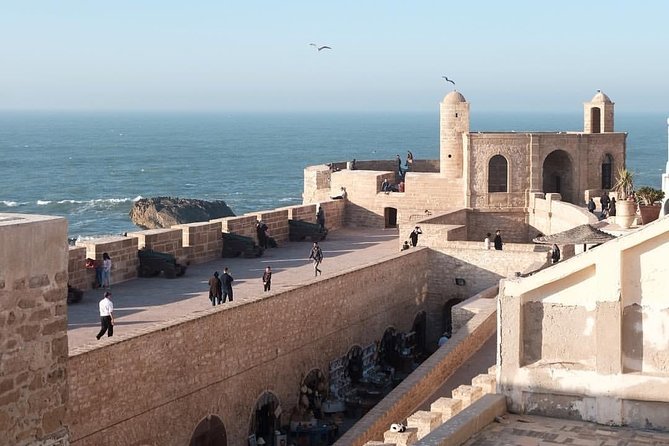
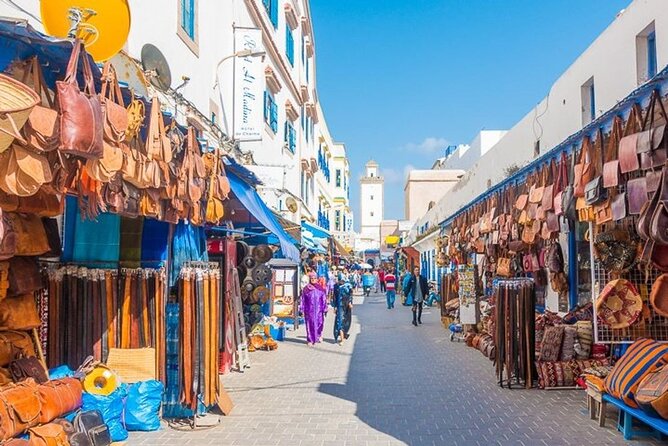
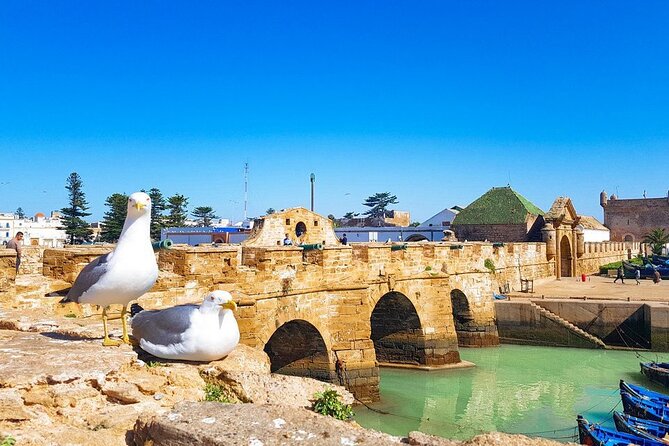
You drive to Essaouira (about 3 hours from Marrakech) and do a sightseeing tour of the “snow-white medina” surrounded by fortress walls and located on the Atlantic Ocean. Essaouira has a fishing port and a medina that still keeps its charm thanks to its walls and trading-port history.
The itinerary frames it as a place where artists come to stay for the old Mogador air. You also get a clearer sense of Morocco’s maritime side, which you don’t get as much earlier.
Day 14 then offers free time in Essaouira before you return either to Marrakech or Casablanca depending on your departure.
Price and value: what you’re really paying for
At $2,805.17 per person for 15 days, you’re paying for a private, full-route experience with transportation and guiding built into the flow.
Here’s how I think about the value:
- Private logistics: You’re not coordinating multiple transfers across a huge route. You’re also not bouncing between tour offices. Pickup and airport transfers remove common hassle.
- Distance coverage: The itinerary moves from Casablanca to Rabat to Chefchaouen, then down through Volubilis, Meknes, Fez, Merzouga, Dades, Ouarzazate, Ait Benhaddou, Marrakech, Imlil, Essaouira, and back. That’s a lot of country to cover efficiently.
- Desert components: The Merzouga portion includes 4×4 dunes, nomad tea, Gnawa music in Khamlia, camel rides to camp, and an overnight setup with showers and toilets, plus dinner and drumming/night entertainment.
- Guided highlights: Key medinas and landmarks (Rabat, Fez, Marrakech) are guided, so you spend time seeing rather than guessing.
The one thing you should confirm before you commit is what “included” means for you beyond the itinerary’s ticket notes. The schedule shows some admissions as free and some as included, but the exact scope can vary by operator and ticket type. Ask directly what’s covered: guide time, meals, and any optional add-ons like certain performances or specific entrances.
Who should book this Morocco Top Trips style of route
This tour fits best if you want variety more than pure relaxation. You’ll love it if you’re excited by:
- City + medina days (Casablanca, Rabat, Fez, Marrakech)
- Mountain and nature moments (Akchour, Atlas driving, Imlil)
- A real desert night with camel rides and dune time
- A guided structure that still gives you some free hours in places like Chefchaouen and Essaouira
It may be less ideal if you prefer slow travel with minimal driving, or if you dislike packing up frequently. The itinerary is built to keep moving and to hit lots of major sites in 15 days.
Should you book this 15-day private Morocco itinerary?
I’d book it if you want a “big route” that covers Morocco’s headline regions with a private car, local guiding, and an organized desert experience. The combination of Casablanca’s Hassan II Mosque, Chefchaouen’s blue streets, Fez medina touring, Merzouga’s Erg Chebbi dunes, and Marrakech’s palace-and-square day is a strong lineup for first-timers.
I’d hesitate only if your top priority is downtime. The route is full, and you’ll feel that on your body after a few long transit days.
If you do book, pack for temperature swings (especially warm layers for the Atlas pass and cooler nights in the desert), and plan to use your free time in Chefchaouen and Essaouira for wandering without a strict schedule. That’s where the trip turns from sightseeing into real memories.
FAQ
How long is the Morocco tour?
It’s about 15 days and 14 nights.
Where does the tour start and end?
It starts in Casablanca, with airport pickup/transfer on Day 1. It ends with an airport transfer in Casablanca or Marrakech depending on your flight on Day 15.
Is this tour private?
Yes. It’s a private tour/activity, and only your group participates.
Do you include pickup and airport transfers?
The tour offers pickup, and it includes an airport transfer on the final day (Casablanca or Marrakech, depending on your departure).
Do you do a camel ride in the desert?
Yes. After arriving in Merzouga near the dunes, you take camel rides to the desert camp.
What are the main stops you can expect?
You’ll visit Casablanca, Rabat, Chefchaouen, Meknes, Volubilis, Fez, Merzouga/Erg Chebbi, Dades, Ouarzazate (including kasbah and film sites), Ait Benhaddou, Marrakech, Imlil (day trip), and Essaouira.
What is the cancellation policy?
You can cancel for a full refund up to 24 hours in advance of the experience’s start time. Within 24 hours, there is no refund.