REVIEW · CASABLANCA
Marrakech Guided Tour From Casablanca With Camel Ride
Book on Viator →Operated by Marrakechandcasablancatours · Bookable on Viator
Camel ride and palaces make this day trip work.
This Casablanca-to-Marrakesh tour is built around a private guide who helps you cut through the maze of the medina and hit big landmarks like Koutoubia, Bahia Palace, and Jemaa el-Fnaa, then finish with a one-hour camel ride in the Palmeraie. It’s a smart way to see “more than one postcard” without spending your vacation stuck on logistics.
I particularly like the pickup-style convenience from your Casablanca hotel (start time is 7:00 am), plus the fact the sightseeing time is shaped around navigation—your guide is there to explain what you’re seeing and help you move when the streets get crowded. One guide name that comes up in feedback is Mly Abdeljebba Amid, who’s noted for speaking French, English, and Spanish, which is a big quality-of-life upgrade.
One thing to keep in mind: the day can feel long. Reviews also flag shopping pressure during the medina portion, with routes designed to steer you through markets and toward special places, so you’ll want to set boundaries early and stick to your plan.
In This Review
- Key things to know before you go
- Why a Casablanca-to-Marrakesh day trip makes sense
- The long drive: plan for a full day, not a quick hop
- Koutoubia Mosque: the minaret view you can’t miss
- Jemaa el-Fnaa square: people, noise, and a smart way to enjoy it
- Bahia Palace: zellige tiles and courtyards that cool you off
- El Badi Palace ruins and the Mellah: ruins plus a history detour
- Medina of Marrakesh: souks, shortcuts, and not getting lost
- Palmeraie camel ride: one hour of Morocco with a slower pace
- Price and logistics: what you’re paying for (and what to budget)
- Who should book this Marrakesh-from-Casablanca tour?
- Should you book it?
- FAQ
- What time does the tour start?
- How long is the trip?
- Is hotel pickup included?
- What’s included in the price?
- Is lunch included?
- What’s the cancellation policy?
Key things to know before you go
- Private-guided navigation so you can enjoy the medina instead of just surviving it
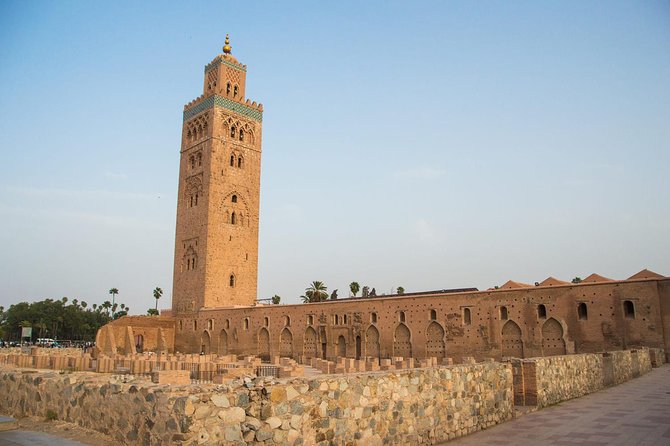
- Koutoubia Mosque stop with a famous 70-meter minaret view point, but no entry for non-Muslims
- Palaces and courtyards including Bahia Palace’s zellige tilework and marble courtyard
- Time in the medina with souk focus (shoe, perfume/spice, carpentry, leather) and real haggling energy
- One-hour camel ride in Palmeraie included, giving you a break from the city pace
Why a Casablanca-to-Marrakesh day trip makes sense
If Marrakesh is on your list, this kind of guided day trip is often the most efficient move. You’re not trying to figure out train times, transfer buses, or how to get from a station drop-off to the places you actually want to see. Instead, you get a single, structured day: pick up in Casablanca, guided highlights in Marrakesh, then return.
What I like about the pacing is that it isn’t only “big monuments.” You get a real taste of Marrakesh life—mosque views, the main square, palace interiors and courtyards, and time in the medina where your senses get hit with scents, sound, and shopfront chaos. The tour also ends with something very different: the Palmeraie camel ride, which changes the rhythm of the day.
Also, the format is private. Only your group participates, so you’re not waiting on a crowd to decide where to stand or when to move. That matters when you’re dealing with narrow streets and quick photo windows.
You can also read our reviews of more guided tours in Casablanca
The long drive: plan for a full day, not a quick hop
This experience runs about 8 hours total, and many people describe the driving time as substantial—roughly 3 hours each way. That means the trip is less about “relaxing” and more about using time well.
Practical advice: treat the day like a marathon with breaks. Wear comfortable shoes for the medina walking. Bring water. If you’re sensitive to early mornings, plan for it—7:00 am start is early by most vacation standards.
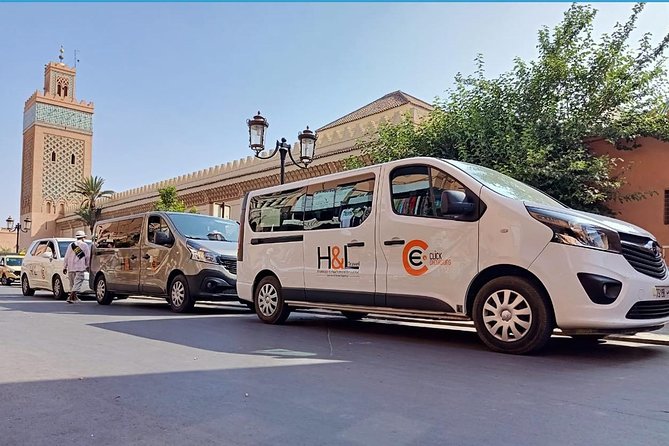
One good sign for comfort is that the tour includes private transportation. In real life, that’s the difference between arguing about where to meet and simply getting on with the day.
Koutoubia Mosque: the minaret view you can’t miss
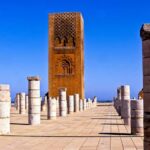
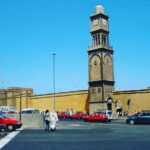
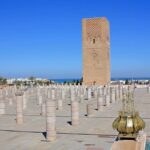
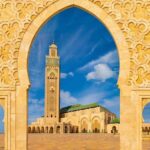
Koutoubia is the landmark you’ll recognize instantly in photos, because the minaret is about 70 meters tall and visible from far away. The tour stop is short (around 15 minutes), which can be perfect if you mainly want the iconic exterior and orientation for the rest of the day.
There’s also a legend attached to the minaret: when it was first built, the muezzin had to be blind because the minaret supposedly overlooked the ruler’s harem. It’s the kind of story Moroccans tell that turns an architectural fact into something memorable.
Two practical points matter here:
- Non-Muslims can’t enter the mosque building itself.
- You can still enjoy the structure and take photos outside, and use the stop to get your bearings.
If you arrive feeling like Marrakesh is a maze already, Koutoubia is a helpful anchor.
Jemaa el-Fnaa square: people, noise, and a smart way to enjoy it
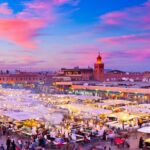
Jemaa el-Fnaa is Marrakesh’s central square, and it’s less about quiet sightseeing and more about atmosphere. This stop is about 30 minutes, right at the entry to the medina, so it works like a “welcome briefing” before you get deeper into the streets.
This is where you’ll see stalls, musicians, storytellers, fortune-tellers, and snake charmers. It’s a lot—sound, motion, smells—so don’t treat it like a museum stop where you linger politely.
Here’s the practical move: if it gets too intense, you can step out to nearby rooftop cafés to watch the scene from above. The tour’s short timing is actually helpful. You experience the square without burning the whole day fighting for space.
Bahia Palace: zellige tiles and courtyards that cool you off
Bahia Palace is one of those places where the attention to detail makes you slow down without anyone telling you to. Built in the late 19th century as the residence of Grand Vizier Bou Ahmed (who served Sultan Moulay al-Hassan I), it’s famous for the visual payoff inside.
Expect:
- Zellige tilework covering surfaces with geometric beauty
- Painted ceilings
- Ornate wrought-iron features
- A large marble grand courtyard and opulent salons
The quieter highlight is the internal courtyard of the grand riad, with banana-leaf plants and citrus trees. When you’re coming from the street noise, that shift to shade and greenery feels like a reset button.
Important for budgeting: Bahia Palace admission is not included. If you know you want to go in (you do), plan a bit of extra cash for the entrance fee.
El Badi Palace ruins and the Mellah: ruins plus a history detour
Next comes the Al-Mansour area—El Badi Palace ruins—then a stop in the Mellah, Marrakesh’s historic Jewish quarter.
El Badi first: these are the ruins of a once grand palace, built by Saadian ruler Al-Mansour with pavilions set amid huge gardens and reflective pools. Much of it is gone now, but the remnants still make sense in person. You’ll see sparse mosaic-tiled floors, ruined pavilions, and high walls enclosing the site.
What’s especially worth your time is the view from the top of the walls. You get excellent sightlines across the medina, and the storks nesting on the structures add a strange, real-life touch.
Then the Mellah: established in the 16th century, it’s still there as a neighborhood area and is now mainly populated by Muslims. The tour notes that a small synagogue has been nicely restored, and that the synagogue and the Jewish cemetery can be visited.
Admission note again: tickets here are not included, so treat this as another “carry a little extra money” moment.
Medina of Marrakesh: souks, shortcuts, and not getting lost
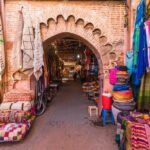
The medina is the main course. This stop runs about 1 hour 30 minutes, and it’s where your guide earns their keep.
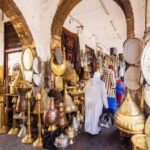
The medina is a labyrinth of narrow alleyways filled with shops, scents, and constant movement. Without a guide, it’s easy to spend your time walking in circles or missing the places you’d actually want to see.
With a guide, you can do two useful things:
- Get oriented fast, so you stop treating every turn like a gamble
- Shop with intention instead of wandering endlessly
The tour focuses on souks you can actually name and target:
- Babouche (shoe) souk
- Chouari (carpenter’s) souk
- El-Attarine (perfume and spice) souk
- Cherratine (leather) souk
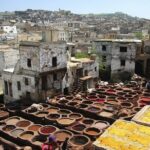
And yes, in the medina experience, some guides also point out other memorable sights as you move—people describe seeing things like the tanneries and the ramparts during this portion.
My practical take: if you want shopping, this is a great moment to start. If you don’t want shopping, you still get value because you’re getting local context and navigating support. Either way, decide early how you’ll handle sellers. A firm “no thanks” saves your mood.
Palmeraie camel ride: one hour of Morocco with a slower pace
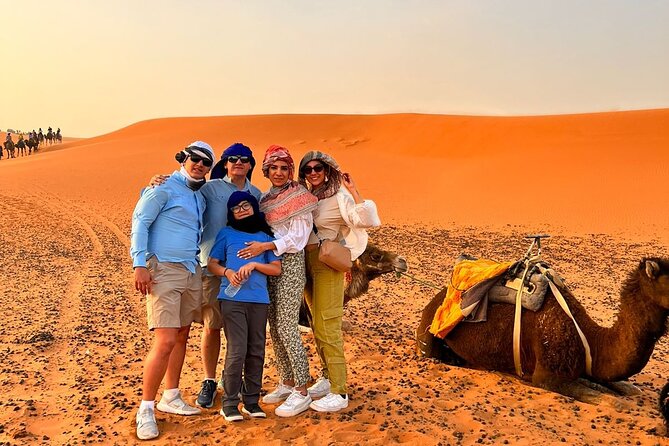
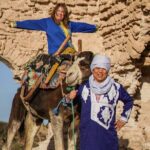
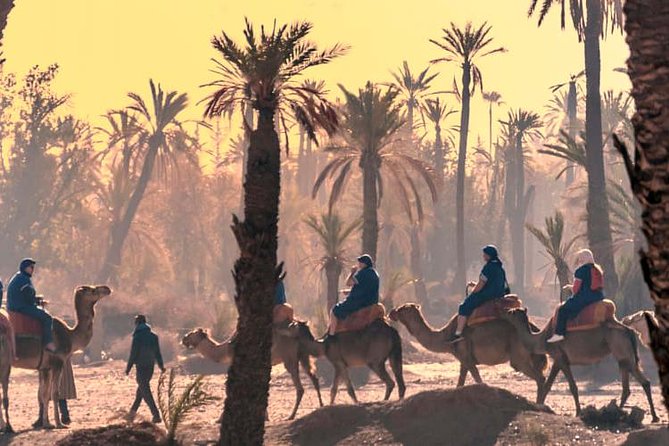
After all that stone-and-streets intensity, the Palmeraie camel ride is a welcome shift. You get one full hour here, and it’s included.
The Palmeraie area is known for palms and the feel of being outside the dense city core. On a camel, the pace is different—slower. That matters because it makes the experience feel less like another stop on a checklist and more like a real interlude.
This is also where you’ll probably want to take photos, but do it without rushing your ride. The best moments are the ones where you look around and not just at the phone screen.
One more practical reminder: a camel ride is part of the experience, but it’s still a ride. Wear shoes you can walk in comfortably, and keep your expectations grounded. This isn’t a theme park. It’s Morocco.
Price and logistics: what you’re paying for (and what to budget)
The listed price is $350 per person for an all-day guided route from Casablanca to Marrakesh, with private transportation and the camel ride included.
So where is the value coming from?
- The private transfer does real work for you. Driving time is long, and you’re not coordinating anything yourself.
- The camel ride is not an add-on. It’s built into the day.
- The private guide makes the medina and landmark stops far less chaotic, especially when you’re short on time.
Where costs can still pop up:
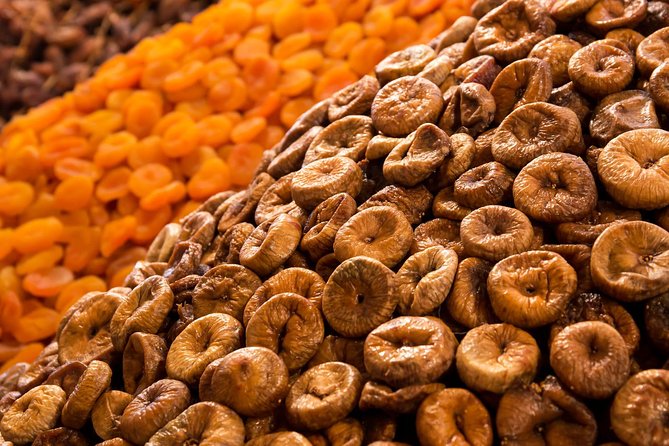
- Lunch is not included, so you’ll need to plan for food.
- Some attractions in the itinerary have admissions not included (for example, Bahia Palace, and parts of the El Badi/Mellah visit).
If you want a smooth day, bring a little extra for entrance fees and lunch, and keep some money aside for the medina shopping temptation. Just remember: the day can include market routing that pushes you toward purchases. If you hate that feeling, treat it like you would a strong sales environment at home—be polite, be firm, and move on.
Who should book this Marrakesh-from-Casablanca tour?
This works best if you want:
- A guided overview of Marrakesh’s biggest landmarks
- Real medina time without getting completely swallowed by it
- A memorable included camel ride rather than a separate ticket hunt
It’s also a strong pick if you’re staying in Casablanca and don’t want the mental load of planning your own route.
I’d be more cautious if:
- You dislike shopping pressure and hard-selling setups. The medina portion can include routes that feel designed to increase time in markets and “special places.”
- You’re very time-sensitive. The driving time can be heavy, so it’s not the move for a traveler who can’t handle long days.
The private format helps, though. In a private group, you can often set expectations with your guide about pacing and priorities.
Should you book it?
Book this tour if you want a one-day Marrakesh hit with structure: mosque landmark views, a palace visit, time in the medina with souk focus, and a one-hour Palmeraie camel ride included. It’s good value for a day that would be harder to organize on your own from Casablanca.
Skip or modify your plan if you know you’ll be miserable in market-sales environments. If you do book, go in with a plan: comfortable shoes, water, money for lunch and admission where needed, and a clear line on shopping so you can enjoy the real highlights instead of getting worn down.
FAQ
What time does the tour start?
The tour start time is 7:00 am.
How long is the trip?
The duration is listed as about 8 hours.
Is hotel pickup included?
Yes. Pickup is offered from your Casablanca hotel, and the tour includes private transportation.
What’s included in the price?
The price includes private transportation and the camel ride. A mobile ticket is also provided.
Is lunch included?
No. Lunch is not included.
What’s the cancellation policy?
You can cancel for a full refund up to 24 hours before the experience start time. If you cancel less than 24 hours before, the amount paid is not refunded.