REVIEW · MARRAKESH
Marrakech: Cultural Bicycle Tour with Pastry and Tea
Book on GetYourGuide →Operated by Pikala bikes · Bookable on GetYourGuide
Pedal the Red City, without the usual rush. This 3-hour Marrakech bicycle tour takes you through old alleys and modern streets, with stops built around bread, tiles, hammam culture, and tea. It’s led by English- and French-speaking guides such as Rabab, Ayoub, Hamid, and Sayid.
I especially liked the bread stop, where you see Moroccan baking and understand why bread matters so much in daily life. I also love the craft side of the ride at the zellige workshop, where you learn the art and history behind those famous mosaic patterns.
One thing to plan for: the first stretch can feel intense. Traffic is chaos by most standards, and you’ll need road awareness around mopeds, pedestrians, and tight crossings, even if the pace stays relaxed.
In This Review
- Key things to know before you pedal
- Why bicycle through Marrakech at all?
- Price and time: what $34 buys in 3 hours
- Meeting at Pikala Bikes: what to expect before you roll
- Zawiya of Sidi Bel Abbas: a calm photo stop before the street workout
- The medina start: traffic chaos, but with structure
- Local bakery stop: clay-oven bread and daily-life meaning
- Tile workshop and the zellige story you can actually see
- Place des Ferblantiers: a break with real street energy
- المشور البراني: another short cultural pause
- Koutoubia Mosque: classic exterior views without waiting all day
- Church of the Holy Martyrs: proof Marrakech is more than one story
- Pikala Cafe finish: tea, Moroccan pastries, and an easy reset
- Gueliz and Hivernage: seeing modern Marrakech without losing the plot
- Safety and skill level: who this tour is (and isn’t) for
- The social enterprise angle: what you’re supporting
- Should you book the Marrakech cultural bicycle tour with pastry and tea?
- FAQ
- How long is the Marrakech cultural bicycle tour?
- Where do I meet for the tour?
- What languages are the guides?
- What’s included during the tour?
- Is hotel pickup included?
- Do I need to be a confident cyclist?
- What cultural stops can I expect?
Key things to know before you pedal
- Bread in a clay oven: watch, taste, and learn why bread is more than food.
- Zellige tile craft: see how the mosaic tradition connects to Morocco’s palaces and mosques.
- Public Royal Palace gardens views: admire the Dar El-Makhzen area from outside.
- Hammam culture stop: learn the social role and rituals of a public bathhouse.
- Modern Marrakech switch: ride through Gueliz and Hivernage for contrast with the medina.
- Café finish with tea and snacks: pick up momentum with drinks and pastries after the ride.
Why bicycle through Marrakech at all?
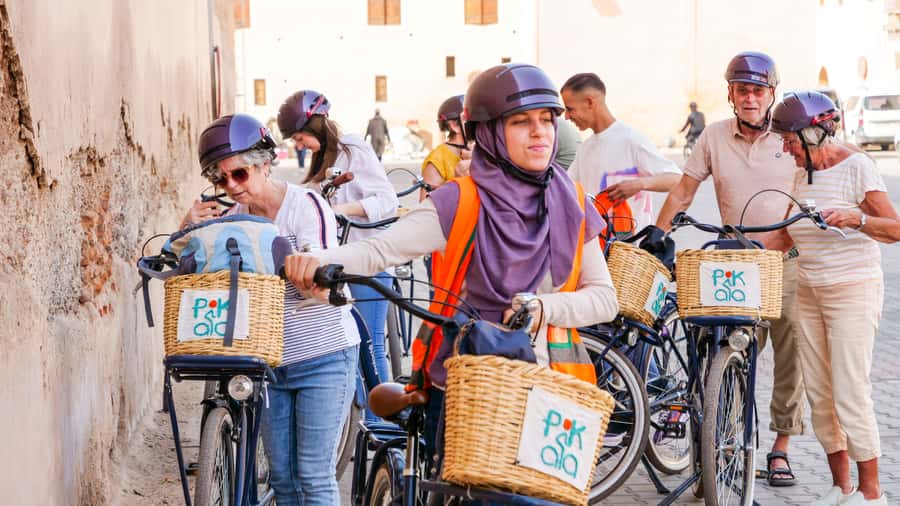
Marrakech is one of those cities where you can walk for hours and still feel like you only grazed the surface. Cycling fixes that. You cover more ground without losing the close-up feeling of street life. And with trained local youth guides in the mix, the tour leans toward real routines rather than a checklist of monuments.
You also get a smart balance of “look around” and “learn something.” The stops are tied to everyday culture—bread, tiles, hammams—so you leave with context, not just photos.
You can also read our reviews of more tours and experiences in Marrakesh.

Price and time: what $34 buys in 3 hours
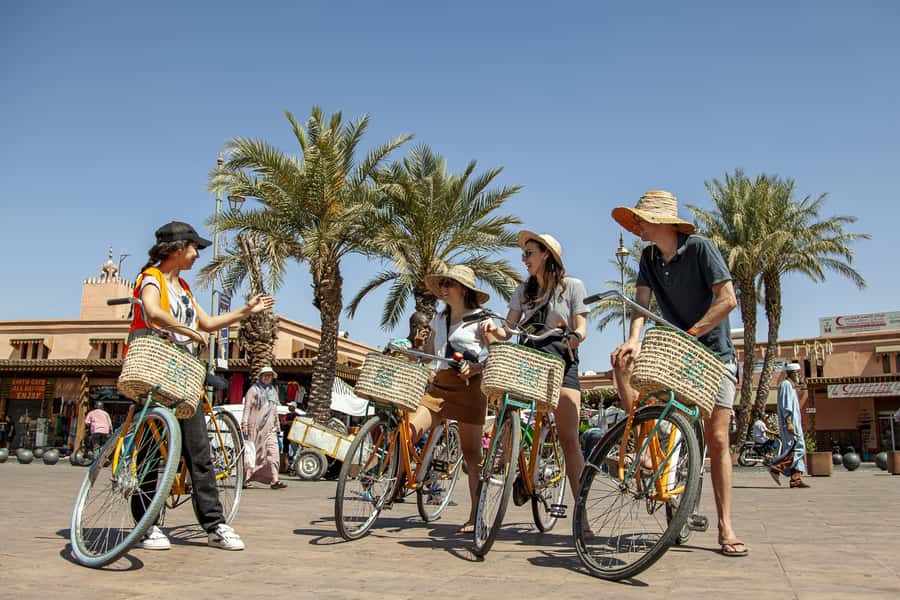
At about $34 per person for a 3-hour ride, this is good value if your goal is cultural orientation fast. It’s not a long, slow day where you wait around for buses and ticket lines. Instead, you get structured stops plus a working bike route between them, including both the medina and the modern city.
You’ll also be fed along the way. The tour includes water and fruit, plus juices and Moroccan pastries at a cultural café stop. That matters in Marrakech, where heat and timing can make a short trip feel long.
The one “price” you pay is mental energy: you’re actively riding and paying attention, especially early.
Meeting at Pikala Bikes: what to expect before you roll
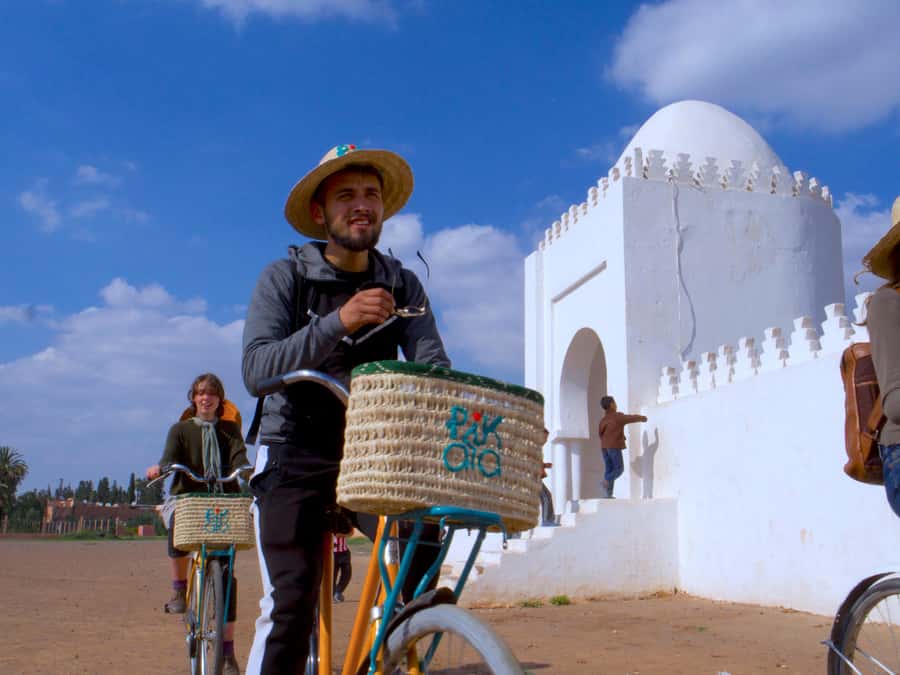
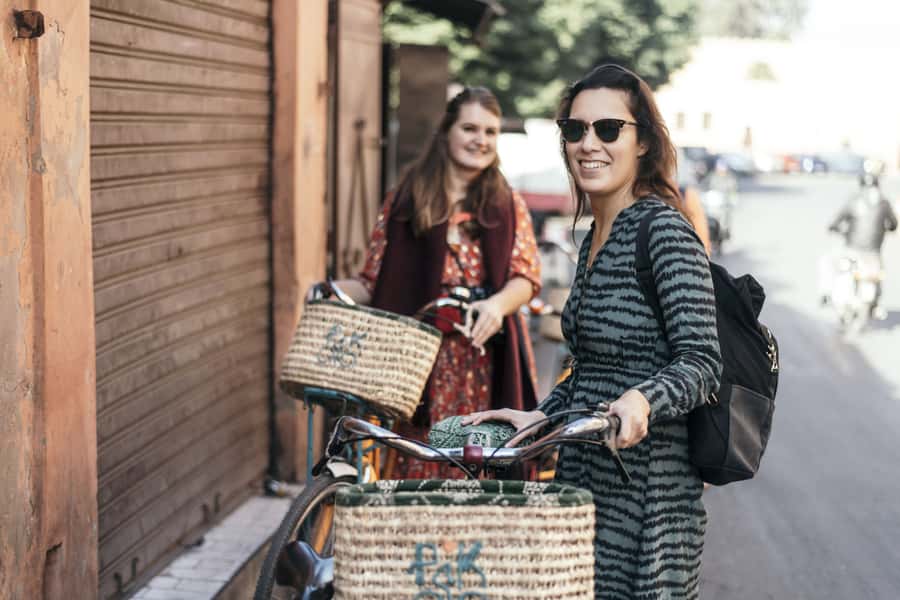
You start at Pikala Bikes headquarters. From there, the vibe is practical: you get set up and then you hit the road. Reviews frequently mention solid bikes with comfortable saddles, and a guide who keeps an eye on the group at crossings.
Dress like you’re going to be moving, not touring museum-style. The tour notes suggest casual clothes, and it also warns to be careful with long dresses or skirts so they don’t catch on the bike or get messy around the bustle.
And bring sunscreen. It’s included, but you’ll still want to think about reapplying if you’re out in strong sun before and after the tour.
Zawiya of Sidi Bel Abbas: a calm photo stop before the street workout
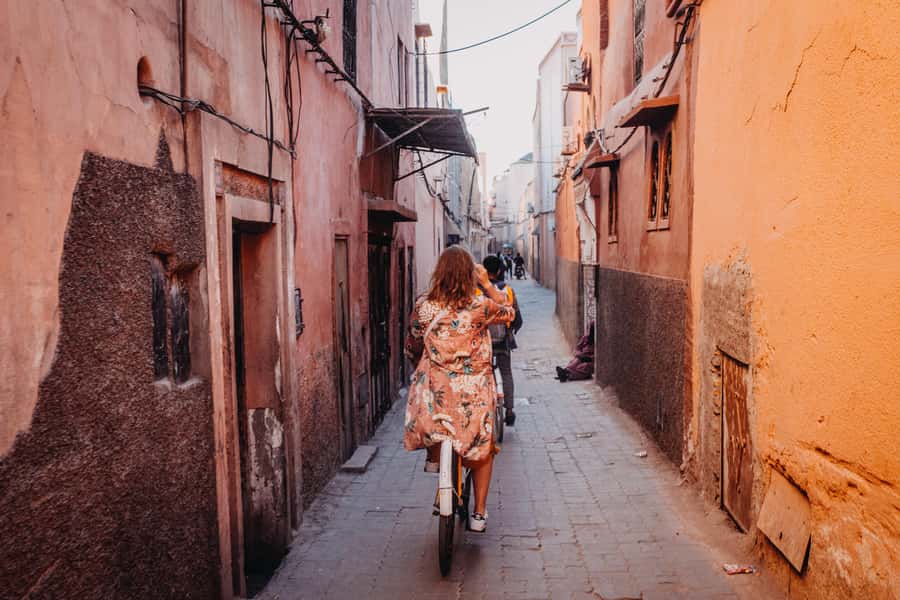
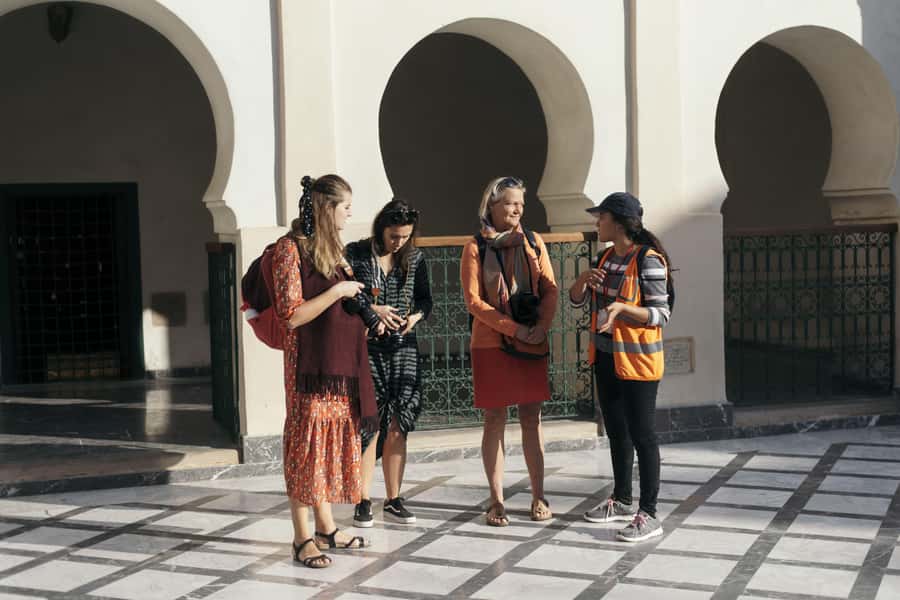
You’ll begin with a stop at the Zawiya of Sidi Bel Abbas. It’s short—about 15 minutes—so this isn’t a deep dive into architecture. But it gives you a sense of where you are in Marrakech’s spiritual and historic layers before the ride gets more active.
This is also a useful “warm-up” mentally. You’re not yet stressed by heavy traffic; you’re getting oriented so the following streets feel less random.
The medina start: traffic chaos, but with structure
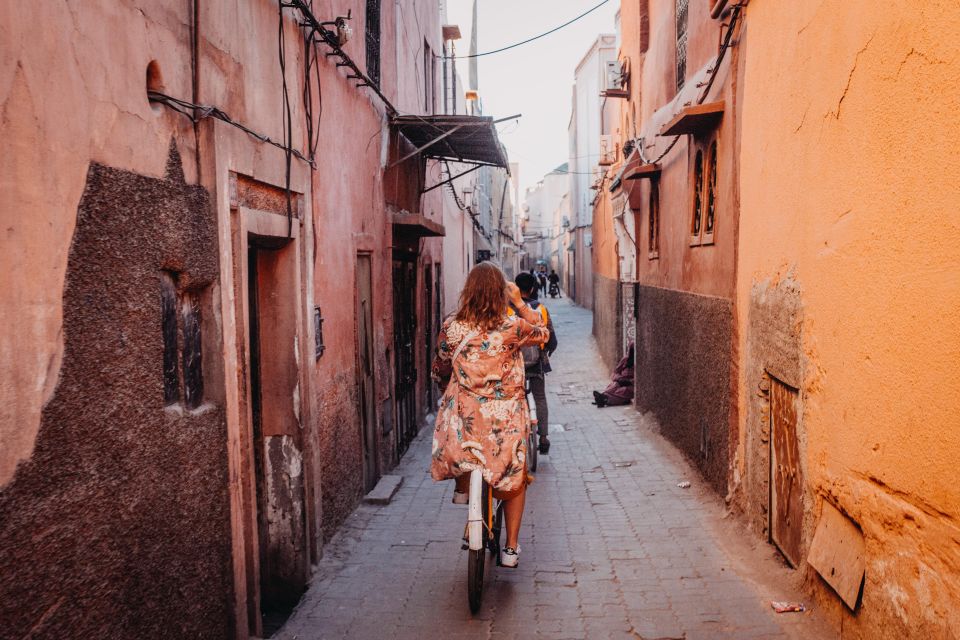
After the opening sights, the tour moves into tighter neighborhoods where bikes share space with pedestrians, mopeds, and slower carts. The big thing I’d stress is not that it’s dangerous—it’s that it’s attention-heavy.
The tour’s own guidance is blunt: Moroccan traffic looks like organized chaos at first, but it works because people are flexible with timing and movement. Reviews back this up with advice like learning how crossings happen with your guide’s timing, not by guessing.
If you’re not comfortable riding in close quarters, plan to take the guidance seriously. Keep your spacing. Watch the guide. Don’t fight the rhythm.


Local bakery stop: clay-oven bread and daily-life meaning
This part is one of the best reasons to choose this tour. You stop at a local bakery for about 10 minutes, where you can watch bread baking in a clay oven and taste fresh Moroccan bread.
Why I think it works so well: bread is one of those topics that sounds simple until someone explains the cultural weight behind it. You’re not just eating a snack—you’re seeing a daily ritual. And when you taste bread hot from the oven, the learning sticks.
You’ll leave this stop with a better sense of how food ties into community life—especially when the rest of the route keeps showing you similar everyday scenes.
Tile workshop and the zellige story you can actually see
Next comes the zellige focus, with time to meet artisans and see firsthand how the tiles are made. The tour is built around the idea that this is more than decoration. Zellige is tied to Moroccan identity—used for centuries in palaces and mosques.
What I like here is that you get a craft lesson that’s visual. You can stand near the work, watch processes, and connect the patterns you see later around the city with the effort behind them.
Even if you don’t consider yourself a “tiles person,” this stop adds texture to your Marrakech understanding. You go from seeing mosaics as pretty surfaces to seeing them as skilled tradition.
Place des Ferblantiers: a break with real street energy
At Place des Ferblantiers, the tour pauses for a break—about 20 minutes. This is a practical moment: hydrate, regroup, and switch from riding mode to street mode.
It’s also a good place to notice how Marrakech works when you’re not only looking at big landmarks. You get scenic views along the way, and the route design gives you a breather without ending the tour too early.
المشور البراني: another short cultural pause
You’ll stop near مشور البراني for about 15 minutes, with photo opportunities and sightseeing time. This is the kind of stop that helps connect the medina’s spiritual and cultural geography with the everyday routes people use.
It’s brief, so don’t expect a long lesson here. But it helps keep the ride feeling like a guided walk-through, not just transit.
Koutoubia Mosque: classic exterior views without waiting all day
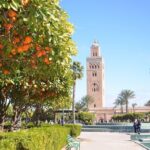
You’ll cycle past Koutoubia Mosque with about 10 minutes of sightseeing time. This is a straightforward highlight: a major landmark with strong visual presence.
A quick note: you’re viewing from the street and public areas rather than doing the sort of slow, ticketed visit that can eat half a day in peak hours. In a 3-hour tour, that’s exactly the trade you want.
Church of the Holy Martyrs: proof Marrakech is more than one story
The route also includes a stop for the Church of the Holy Martyrs (about 10 minutes for photo and sightseeing). I like this because it quietly reminds you that Marrakech isn’t only the medina postcard. There are layers of faith and history beyond the famous Islamic monuments.
This kind of stop gives you a more honest city picture, especially if you’re used to Marrakech being explained only through one lens.
Pikala Cafe finish: tea, Moroccan pastries, and an easy reset
The ride ends back at Pikala Cafe, with about 20 minutes for coffee, tea, and local snacks. This stop is a great close because it slows the pace just enough that you can digest what you learned while it’s still fresh.
From the experience format, you can expect sweet Moroccan baking and tea along with some lighter local bites. Reviews also point to refreshments like mint lemonade and spiced cookies, which fit the idea of a “taste and understand” approach.
If you’re deciding between tours, this matters: leaving a day tour with food you enjoyed while chatting with your guide is a real part of the value.
Gueliz and Hivernage: seeing modern Marrakech without losing the plot
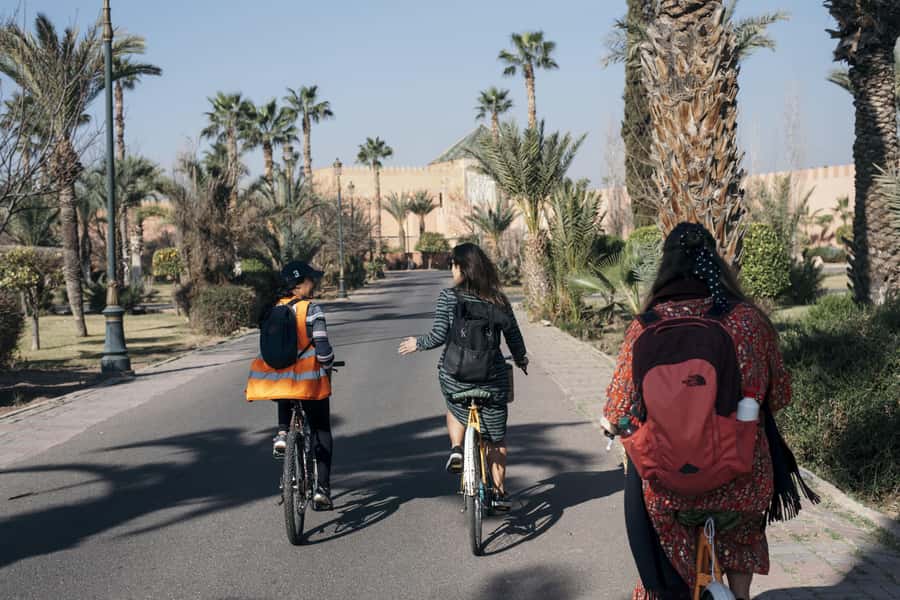
One of the smarter parts of the route is that it doesn’t trap you in the medina the entire time. You ride through Gueliz and Hivernage—wide boulevards, trendy cafés, and luxury hotels—to get contrast.
I like this contrast because Marrakech can feel like two different cities in one trip. The old walls tell one story. The modern neighborhoods tell another: how people move now, work now, and socialize now.
You’ll come away with a mental map that includes both worlds, not just the part of Marrakech most people photograph.
Safety and skill level: who this tour is (and isn’t) for
This is where you should be honest with yourself. Multiple reviews describe the ride as manageable but only if you can handle crowded streets and mixed traffic. You don’t need to be a racer. You do need to be a cyclist who can follow directions and stay focused for the first hour, especially through narrow alleys.
The pace stays gentle and the ride is mostly on flat routes, which helps. But traffic includes mopeds and pedestrians that may cross in unpredictable ways. Your guide handles the group, and you’ll be responsible for staying aware and not drifting.
This tour fits best if you:
- want a cultural intro to real daily life rather than only big monuments
- like bike tours where you learn by moving
- can handle close street riding without getting panicky
Consider skipping it if you hate mixed-traffic situations or you feel shaky on a bicycle at low speeds in tight spaces.
The social enterprise angle: what you’re supporting
Pikala bikes trains Moroccan youth to lead and share local insight. That’s part of why the tour can feel personal instead of scripted. You’re not just being shown places; you’re learning how the city feels from people who live it.
It also tends to show in the guides’ energy. Reviews frequently highlight guides who are friendly, patient, and attentive to the group. You get the sense that the program matters, not just the sightseeing.
Should you book the Marrakech cultural bicycle tour with pastry and tea?
Book it if you want a practical, culture-first Marrakech orientation in a short time. The bakery and pastry/tea stops make it feel like more than a ride, and the craft and tradition stops give you depth you’ll remember later when you see similar tiles or hammam scenes around the city.
Skip or reconsider if you’re not comfortable riding in close traffic early in the tour. Even with a good guide, the medina streets demand attention.
If you’re on the fence, use one test: do you enjoy hands-on cultural stops (bread, tiles, hammams) and street-level city contrast? If yes, this is a strong pick.
FAQ
How long is the Marrakech cultural bicycle tour?
The tour lasts 3 hours.
Where do I meet for the tour?
You meet at Pikala Bikes headquarters.
What languages are the guides?
The live tour guide is available in English and French.
What’s included during the tour?
It includes water and fruits, plus juices and Moroccan pastries at a café stop. It also includes sunscreen and free entrance to the local stops.
Is hotel pickup included?
No. Hotel pickup and drop-off are not included.
Do I need to be a confident cyclist?
You should be comfortable riding in busy areas. The early part of the ride through narrow streets and souk-like areas requires road awareness and confidence around other vehicles and pedestrians.
What cultural stops can I expect?
You’ll visit a local bakery for bread, learn about zellige tiles with artisans, pass by the Royal Palace gardens (Dar El-Makhzen), and experience a traditional hammam tradition stop, with additional sightseeing including Koutoubia Mosque, the Church of the Holy Martyrs, and riding through Gueliz and Hivernage.