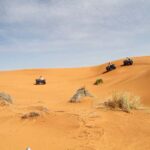
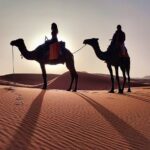
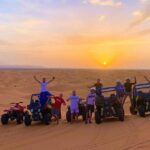
You haven’t lived sand until you follow it on camelback. In Merzouga’s Erg Chebbi dunes, this one-day trip mixes camel trekking with Bedouin-style hospitality, including mint tea moments and a night in a traditional camp.
I especially like the hands-on “nomad rhythm”: trekking across dunes with a guide who keeps you moving safely, then slowing down for dinner and breakfast by camp. I also like that you’re not stuck watching from a distance—you get time to walk the sand and experience the desert’s quiet scale up close.
One possible drawback: this is a desert experience, so don’t expect hotel-level comfort. The camping setup is basic, and the itinerary depends on good weather, so delays or rescheduling can happen if conditions aren’t right.
In This Review
- Key things that make this Erg Chebbi camel experience worth your time
- Erg Chebbi Dunes: what you’re really signing up for
- The 4:00 pm start: how the timing affects your photos and your feet
- Camel trekking in the dunes: the real work (and why it’s worth it)
- A practical tip
- The possibility of a short jeep transfer: what to expect before camel time
- Overnight in a traditional Bedouin tent: basic comfort, real atmosphere
- What to know before you go
- Dinner and breakfast: more than meals, it’s part of the rhythm
- The Bedouin mindset: why this tour isn’t only about the dunes
- Price and value: is $90.63 fair for one day?
- Who this suits best (and who should reconsider)
- Practical packing for a dune camel night
- How to make it smoother once you’re at Kasbah Mohayut
- Should you book this Erg Chebbi camel trek and Bedouin tent night?
- FAQ
- What’s the meeting point for this Erg Chebbi experience?
- What time does it start?
- How long is the experience?
- Is it a private tour?
- What’s included in the price?
- Does it include tickets on a phone?
- Is service animal access allowed?
- Do I need to worry about weather?
- How does confirmation work after booking?
- Can I cancel for a full refund?
Key things that make this Erg Chebbi camel experience worth your time
- 4:00 pm start in Merzouga sets you up for classic desert light changes before and after sunset
- Camel trekking plus time on foot so you feel the dunes under you, not just from the saddle
- Bedouin dinner and breakfast keep the experience grounded in real camp routines
- Staying in a traditional tent gives you the overnight part many short desert trips skip
- Desert Berber guide to help with navigation, pacing, and the nomad-style mindset
Erg Chebbi Dunes: what you’re really signing up for
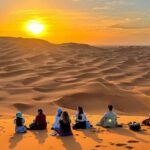
Erg Chebbi is Morocco desert wow-factor without the need for fancy storytelling. The dunes are tall, close enough to feel immediate, and they shift constantly with the wind. That’s the key: you’re going to notice how the desert changes as the light changes.
This trip is built around living those basics—walking, riding, eating, resting—in a Bedouin way. The tour description leans into the nomad mindset: accepting what the desert gives you, and taking it one step at a time. You’ll hear the phrase inch Allah (if God wills), which isn’t just language here. It’s a reminder that conditions can steer the day.
I also like that the experience isn’t packaged as a “show.” You’re traveling with a desert guide and a camel Berber guide, and the focus is on moving through dunes, sharing tea, and spending the night. That’s how desert trips feel authentic instead of rushed.
You can also read our reviews of more tours and experiences in Merzouga.
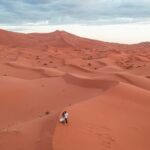
The 4:00 pm start: how the timing affects your photos and your feet
This activity starts at 4:00 pm at Kasbah Mohayut in Hassilabied, Merzouga. A late-afternoon start matters. It helps you reach the dunes when the heat starts easing and the shadows start doing their job.
You’ll still be active, but the pace shifts. Expect a mix of camel trekking and some walking time so your legs get a say in the experience. One of the reviews I found especially interesting noted an exciting walk in the sand, even barefoot. That’s not something I’d treat as guaranteed for everyone, but it matches what this type of dune time can feel like: freeing, strange, and a little addictive.
With dinner and breakfast included, you’re set up for an overnight camp routine rather than a quick “camel ride and goodbye.” The exact sunrise/sunset moment depends on conditions and how the day flows, but the structure is clearly meant for evening into morning.
Camel trekking in the dunes: the real work (and why it’s worth it)
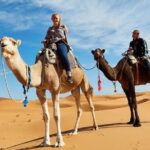
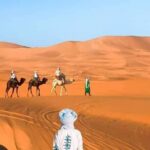
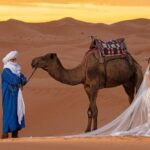
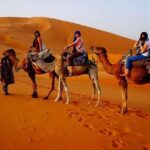
Camel rides sound glamorous in theory. In practice, they’re physical. You sit higher than on a horse, the camel’s gait takes some getting used to, and sand makes everything slower and heavier.
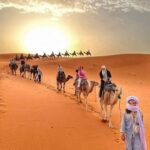
That said, camel trekking is also one of the best ways to move through dunes without burning out instantly. You get that step-by-step feeling—moving over soft curves, shifting your balance, and noticing how the dune surface acts differently as you climb and descend. If you’ve ever walked on a beach after a storm and felt how the sand can grab you, you’ll get a similar sensation here—just amplified.
You also get moments that feel more personal than “tour mode.” The trip description includes time with nomads such as sipping mint tea and even drawing water from a nomad well. Those parts matter because they slow the experience down. They remind you this isn’t only about movement; it’s about daily desert routines.
A practical tip
Bring shoes you can stand the sand in. Even if you’re tempted to walk barefoot, you’ll be happier if you have sandals or light footwear for the practical parts.
The possibility of a short jeep transfer: what to expect before camel time
One detail that came through strongly is that you may travel by jeep before you start your walking/camel segment. The idea is simple: get you closer to the best dune starting point without forcing a long approach across sand.
If you’re trying to picture the day as one uninterrupted trek, adjust that expectation. The jeeps are usually there to save time and energy, and to help you reach the dunes safely and efficiently. Then the real “on foot and on camel” portion begins.
This doesn’t make the experience less authentic. It just means you’re doing the desert route like a working route: efficient where it needs to be, human where it counts.
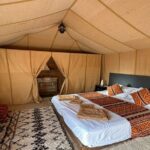
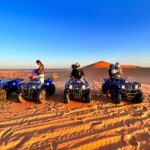
Overnight in a traditional Bedouin tent: basic comfort, real atmosphere
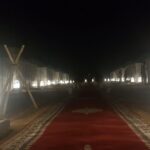
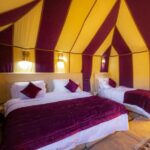
The overnight part is what separates this from a quick desert excursion. You’ll sleep in a camping tent as part of the included package. Reviews point out that comfort isn’t the point here. If you’re used to thick mattresses and private bathrooms, this will feel spartan.
But spartan can still be satisfying. When you’re in the desert at night, you start paying attention to the little things: the quiet, the timing of camp activities, and the feeling that the world outside is simply… farther away. The thin line between night and morning becomes a bigger deal.
What to know before you go
- Expect cool desert temperatures at night, even if the day feels warm (pack accordingly).
- Bring a headlamp or small flashlight if you’re the type who likes not to fumble in the dark.
- If you’re sensitive to dust, plan for it. Sand is part of the deal.
And yes, some reviews mention camp energy like music and firelight. That kind of atmosphere fits this style of camp living—especially when a night lasts long enough for people to settle in.
Dinner and breakfast: more than meals, it’s part of the rhythm
Included dinner and breakfast change your experience in a practical way. You don’t have to hunt food at the worst possible moment—right when everyone’s tired and the sun is going down.
Dinner in a Bedouin-style camp is about pace and sharing. You’re eating after trekking, so your body is ready for something filling. The tour description also emphasizes Bedouin hospitality, including sipping tea with nomads. That means the “meal time” likely comes with those slow pauses that make the desert feel less like a theme park.
Breakfast matters too. A lot of desert day trips end with the camel and then suddenly you’re back to hotels. Here, breakfast keeps you connected to the overnight rhythm. Even if you leave feeling energized rather than sleepy, you’ll likely appreciate not having to figure out logistics.
The Bedouin mindset: why this tour isn’t only about the dunes
The description frames Bedouins as nomadic tribes with deep roots in Morocco’s desert routes, connected to older trading paths across the region. Today, many families open their traditions to visitors, and that’s part of why this experience exists.
What you should take from the “Inch Allah” attitude is not a lesson plan—it’s a way of moving through uncertainty. The desert decides some things: wind, temperature, and timing. Guides work around that, and you’re meant to go with it.
That can actually be a relief if you’re the type who hates feeling rushed. When you follow a desert guide and stop thinking you can control the weather, the day becomes simpler. You just keep moving when it’s time, and you settle when it’s time.
Price and value: is $90.63 fair for one day?
At $90.63 per person, this is not a “cheap and cheerful” activity. But for what’s included, it can feel fair—especially because you’re getting more than a ride.
You’re paying for:
- Camel trekking
- Bedouin dinner
- Breakfast
- Camping tent
- A desert Berber guide
If you’ve ever priced out an overnight camp with food and guided dune access, you know those add up fast. The biggest question is your comfort with basic sleeping and the fact that this is tied to good weather.
So here’s my straight take: it’s good value if you want a real desert night and you’re okay with simple comfort. If you mainly want a short photo-op, you may feel like one day is longer than you expected and less comfortable than you hoped.
Who this suits best (and who should reconsider)
This trip fits you well if you:
- Want the dunes experience with an actual overnight camp
- Enjoy walking and don’t mind “hands-on” travel
- Prefer a guided day over figuring everything out alone
- Like the idea of Bedouin hospitality and a desert guide who manages the rhythm
It may be less ideal if you:
- Need hotel-style comfort or you’re easily bothered by dust and basic bedding
- Want maximum flexibility on timing regardless of weather
- Don’t enjoy animals as part of the experience (camel riding is the core activity)
Also note the group style. This is a private tour/activity, meaning only your group participates. That can be great for comfort and pacing. It can also matter for cost-to-value if you’re traveling solo and there’s no group sharing.
Practical packing for a dune camel night
The tour data doesn’t list a packing list, so use your common sense. The desert punishes the unprepared. Here’s what I’d bring based on what this kind of experience involves:
- Light layers (heat in the afternoon, cool at night)
- A warm layer for the tent hours
- Closed-toe shoes for sand and walking
- Optional: sandals for camp if you like letting your feet breathe
- Sunglasses and sun protection
- A small bag you can keep with you when you’re trekking
- Water discipline: you’ll be in a guided setting, but still plan to drink as needed
If you’re thinking of the barefoot-walk idea some people enjoy, make it optional and smart. Sand can be beautiful and still be harsh on tired feet.
How to make it smoother once you’re at Kasbah Mohayut
You’ll start at Kasbah Mohayut in Hassilabied, Merzouga, and the activity ends back at the meeting point. Since the start is 4:00 pm, arrive with enough buffer that you’re not rushed and flustered when it’s time to move.
Because service animals are allowed and most travelers can participate, the trip is set up for a wide range of visitors. Still, it’s a desert trek. If you have mobility concerns, ask ahead about the walking portion and how the day is structured for your group.
Finally, remember this is private. That’s a plus, but it also means your guide is key. Listen for instructions about pacing, footing, and anything related to safety around dunes and camels.
Should you book this Erg Chebbi camel trek and Bedouin tent night?
Yes—if you want the classic Erg Chebbi experience with a real overnight camp rhythm. The combo of camel trekking, Bedouin dinner, tent sleeping, and breakfast is exactly what makes this kind of desert trip feel complete instead of half-done.
Don’t book it if you want plush comfort or a super flexible schedule. This is weather-dependent and camping is basic by design. But if you’re comfortable trading modern conveniences for a genuine desert day—and you like the idea of inch Allah, mint tea, and walking dunes with a guide—this is a strong match.
If you’re in Morocco and Merzouga is on your route, this one-day format is a solid way to get the dunes in without turning your whole trip into a desert marathon.
FAQ
What’s the meeting point for this Erg Chebbi experience?
The start point is Kasbah Mohayut, Hassilabied, Merzouga, Morocco (4XJM+C57). The activity ends back at the meeting point.
What time does it start?
It starts at 4:00 pm.
How long is the experience?
The duration is listed as about 1 day.
Is it a private tour?
Yes. It’s described as a private tour/activity, and only your group will participate.
What’s included in the price?
Camel trekking is included, along with dinner, breakfast, a camping tent, and a desert camel Berber guide.
Does it include tickets on a phone?
The experience features a mobile ticket.
Is service animal access allowed?
Yes, service animals are allowed.
Do I need to worry about weather?
Yes. The experience requires good weather. If it’s canceled due to poor weather, you’ll be offered a different date or a full refund.
How does confirmation work after booking?
Confirmation is received at the time of booking.
Can I cancel for a full refund?
You can cancel up to 24 hours in advance for a full refund. Cancellation within 24 hours of the start time isn’t refunded.