REVIEW · CASABLANCA
Discover Casablanca: Mosque & City Tour
Book on Viator →Operated by TOUR CASABLANCA · Bookable on Viator
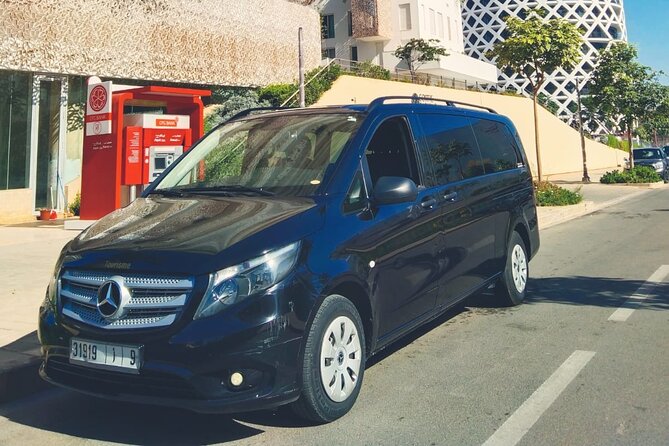
Casablanca moves fast, so this tour is built for getting your bearings without wasting half a day. I love the small-group size (max 6), because you can ask questions and actually hear the guide over the city noise. I also like that the tour keeps logistics simple with hotel pickup and drop-off and a private minivan that shuttles you between neighborhoods.
You’ll start in the central sights zone and work outward, mixing photo stops, walking through the medina area, and ending with ocean views. You’ll also get a little pause built in: coffee or tea and bottled water so you’re not rationing energy while you hop from place to place.
One thing to plan for: Hassan II Mosque is a big highlight, but the entry ticket costs extra (140 MAD per person) and you’ll want to budget for it before you go. If the day is very hot or rainy, the timing can feel tighter, since the tour has a good-weather requirement.
In This Review
- Quick take: what makes this tour work
- Price and logistics: what $50 buys you in real time
- The start-to-finish flow: how the route shapes your day
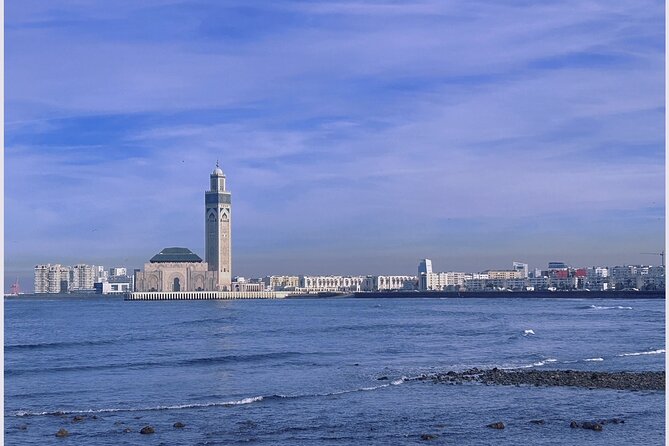
- Stop 1: L’Eglise du Sacre-Coeur—an easy warm-up to the city
- Stop 2: Parc de la Ligue Arabe—breathing room in the center
- Stop 3: Mohammed V Square—symmetry meets symbolism
- Stop 4: Ville Art-Deco—short stop, big architectural payoff
- Stops 5–6: Marche Central and the Old Medina—where you understand the everyday Casablanca
- Stop 7: Mosquee Ould El Hamra—an older layer in the medina
- Stop 8–9: Casa Port and Rick’s Café—port energy and film nostalgia
- Stop 10: Hassan II Mosque—plan for the ticket and the scale
- Stop 11: Ain Diab—Atlantic views that cool your brain
- Stop 12: Habbous—French protectorate-era neighborhood feel
- What I’d call the strongest moments
- Who should book this Casablanca Mosque & City Tour
- Should you book it? My practical recommendation
- FAQ
- FAQ
- How long is the Discover Casablanca Mosque & City Tour?
- What time does the tour start?
- How many people are in the group?
- Is hotel pickup included?
- What’s included in the tour price besides the guide?
- Are the entrance fees included?
- How much does Hassan II Mosque cost?
- What sites does the tour visit?
- Is a mobile ticket used?
- Is the tour weather-dependent?
Quick take: what makes this tour work
- Max 6 travelers keeps the pace human and the explanations clear
- Hotel pickup/drop-off means you spend time seeing, not figuring out transport
- Private minivan connects distant neighborhoods in about 4.5 hours
- Multiple market and neighborhood stops help you understand Casablanca beyond the main landmarks
- Coffee/tea plus bottled water keeps you comfortable during the ride-and-walk rhythm
- Hassan II Mosque included in the plan, but ticket extra so budget ahead
Price and logistics: what $50 buys you in real time
At $50 per person for about 4 hours 30 minutes, this tour is more about efficiency than museum-depth. You’re paying for two things that matter in Casablanca: a guide who can connect the dots, and a vehicle that saves you time between far-apart areas like the medina zone and the coast side.
Most of the listed stops have free admission, so your main predictable extra cost is the Hassan II Mosque ticket at 140 MAD per person. If you’re already budgeting for a headline stop, this works out pretty cleanly: you get the mosque visit option without having to pay separate guided-transport fees on top of it.
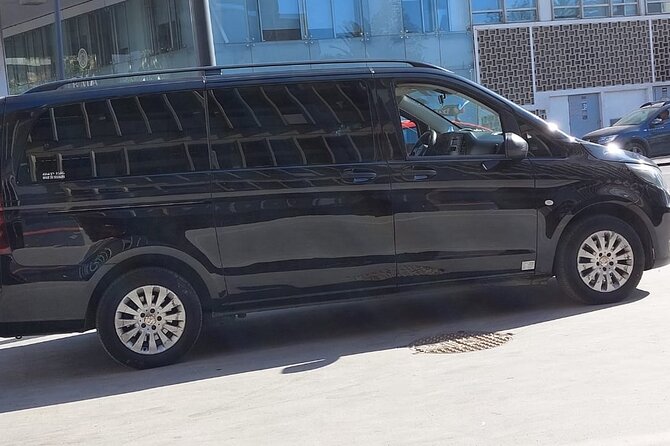
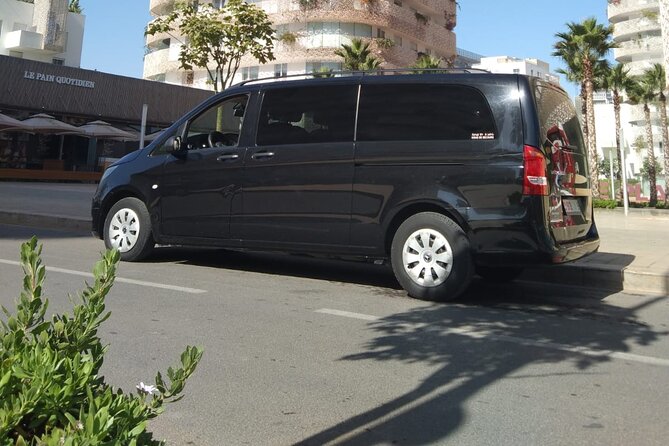
The tour includes pickup from Casablanca hotels (not just a vague meeting point) and returns you to where you started. That’s a big deal here, because Casablanca is spread out and you don’t want to lose sightseeing time in transit. The operator also uses a private minivan, which keeps the day moving even if you’re not staying right near the old center.
You can also read our reviews of more city tours in Casablanca
The start-to-finish flow: how the route shapes your day
This tour runs from 9:00 am, which is a smart time to tackle Casablanca. You’re meeting early enough to see central sights before the day gets sticky, and you still have enough daylight for the coast and older neighborhood streets later.
The rhythm is also practical: short photo or view stops, then a longer walking moment in the medina area, then a few neighborhood transitions. That matters because Casablanca isn’t a “one-street” city. If you try to self-guide everything, you end up zigzagging and spending energy on navigation instead of understanding what you’re looking at.
The group stays small—up to 6 travelers—so you should feel comfortable asking questions and requesting small adjustments, like where to stand for photos. Also, since there’s a mobile ticket, you’re not scrambling with paperwork the morning of.
Stop 1: L’Eglise du Sacre-Coeur—an easy warm-up to the city
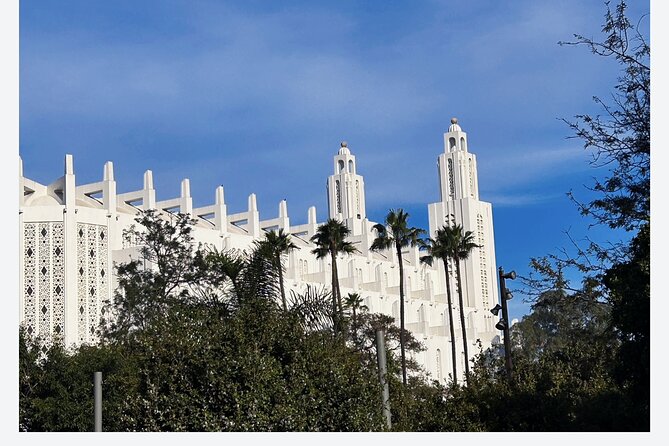
You kick off at L’Eglise du Sacre-Coeur, and it’s a good first stop because it signals the idea of Casablanca as a layered city, not just one style or era. Admission is listed as free, and the time on-site is short (around 10 minutes), which is exactly what you want early on: quick context, clear direction, then moving on while you’re still fresh.
A practical tip here is to treat it as a “get your bearings” moment. Don’t rush through the photos—use it to orient yourself visually. It helps later when you compare architecture as the tour swings toward Art Deco and then the older medina streets.
Stop 2: Parc de la Ligue Arabe—breathing room in the center
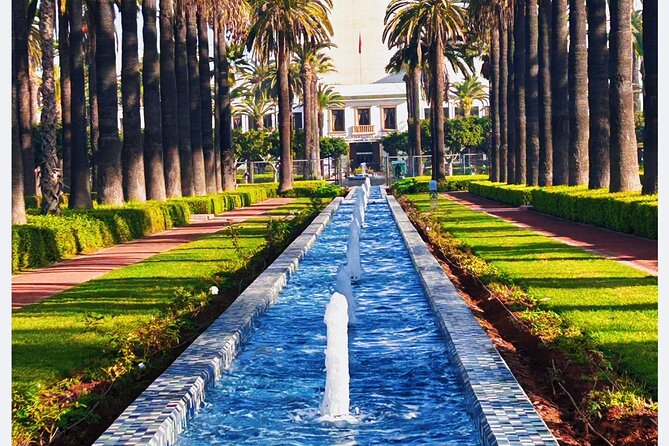
Next is the Arab League Park, one of the larger city parks in Casablanca and located centrally. The stop is about 20 minutes, again with free admission.
Why it’s valuable: it breaks up the urban intensity. You get a chance to regroup, stretch a bit, and reset your brain before the more crowded walking portions. If your morning feels rushed, this kind of park pause is not a luxury—it keeps the rest of the day enjoyable.
Also, parks like this are perfect for photos that aren’t all buildings. You’re likely to get a smoother sense of scale and open space before you hit the density of the medina.
Stop 3: Mohammed V Square—symmetry meets symbolism
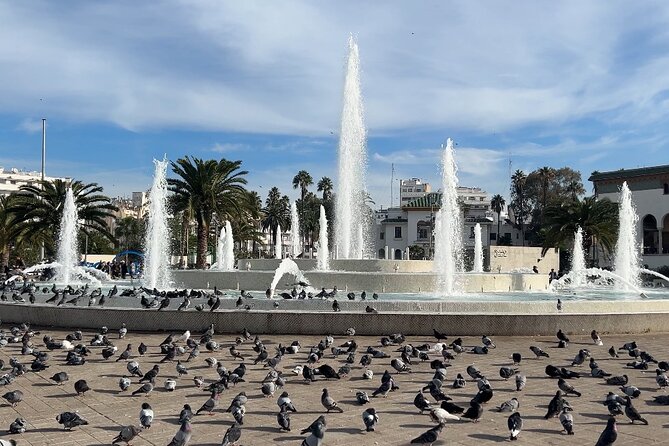
At Mohammed V Square, you’ll get about 30 minutes, with free admission. This is one of those places where the guide’s storytelling matters, because squares are often about more than what you see in front of you—they connect civic identity, major urban planning ideas, and what a city chooses to emphasize.
The big value here is orientation. Once you understand the square’s role in the city layout, the later stops make more sense. Even if you just walk around and take photos, you’ll start noticing how Casablanca organizes itself around prominent public spaces.
Stop 4: Ville Art-Deco—short stop, big architectural payoff
The tour then heads to Ville Art-Deco (an Art Deco apartment complex area). Time is around 25 minutes, and admission is listed as free.
This is the stop that helps you see Casablanca as something other than markets and mosques. Art Deco here gives you a different “visual language”: straight lines, geometry, and the kind of bold styling that reads instantly in photos.
Watch for how you’re likely to feel at this point of the day. If the medina sounds overwhelming, the Art Deco zone is a relief. It’s easier to process and easier to photograph. If you love architecture, even a short visit can do a lot to sharpen your eye.
Stops 5–6: Marche Central and the Old Medina—where you understand the everyday Casablanca
The tour uses two linked stops to teach you how the city breathes through commerce and neighborhood life:
- Marche Central (about 20 minutes, free entry)
- Old Medina of Casablanca (about 40 minutes, free entry)
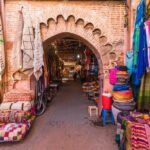
This is where you’ll likely get the most sensory payoff, because markets are noisy, crowded, and alive. The medina area is described as a labyrinth of narrow alleys, winding souks, and traditional architecture—exactly the kind of place that feels confusing if you’re wandering without help.
One especially useful part is the chance to see what people actually buy and cook with. The tour-style coverage can include market sections for everyday staples like fish, olives, and goods tied to crafts and textiles. And it’s also a natural place for a quick peek at food culture—some versions of this tour include a bakery moment, and that can mean seeing the oven where bread gets baked for the public.
Here’s the practical side: in market areas, your best friend is time and patience. Wear comfortable shoes. You don’t need to bargain if you don’t want to, but you’ll get more out of the stop if you let the guide explain what you’re seeing—especially the logic of why stalls cluster where they do.
Stop 7: Mosquee Ould El Hamra—an older layer in the medina
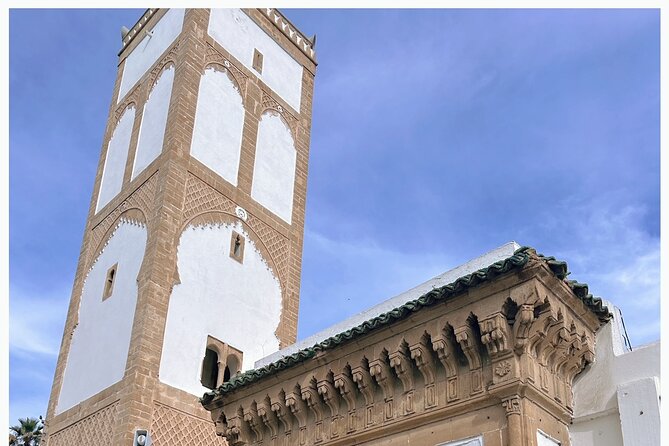
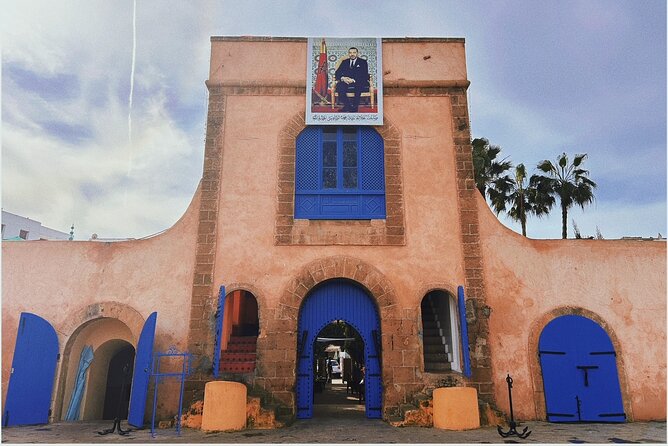
After the markets, the tour makes a short stop at Mosquee Ould El Hamra, listed as free and about 10 minutes. The background detail here is that it was built in 1789 during the reign of Sultan Muhammad III ben Abdullah.
Even with a short visit, that date matters. It anchors your understanding of Casablanca’s timeline, and it helps you see the medina not as a tourist set, but as a place with continuity over centuries. With older sites, it’s worth slowing down for a moment just to notice scale and how the building fits into the streets around it.
One consideration: because it’s in the medina area, movement can feel tight and crowded depending on the day. If you’re sensitive to crowds, keep your expectations realistic during the medina segment.
Stop 8–9: Casa Port and Rick’s Café—port energy and film nostalgia
Next comes a quick hop to Gare de Casa Port (about 10 minutes, free). It’s described as a port-adjacent district near the medina, and that proximity makes it a useful break from walking-only streets.
From there, you stop at Rick’s Café for about 10 minutes. This place is specifically known as a restaurant inspired by the café from the 1942 film Casablanca, complete with cocktails and piano.
This is not a “hidden” cultural temple—it’s more of a mood stop. It can be fun if you like film history, but it can also feel like a tourist stop if you’re only chasing authentic street life. My advice: use it as a photo moment and a quick reset, then move on. Don’t treat it as the main cultural lesson of the day.
Stop 10: Hassan II Mosque—plan for the ticket and the scale
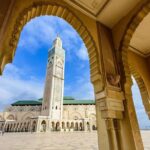
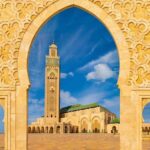
Now you reach the headline moment: Hassan II Mosque. The stop time is about 55 minutes. Admission is listed as not included, with a ticket cost of 140 MAD per person.
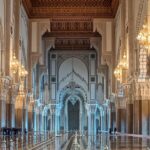
This is one of those places where the guide’s framing matters. The mosque is described as grand, with intricate design and major cultural significance, giving you a strong view into Moroccan faith and artistry. Even if you’re not a deep religious architecture person, a site like this tends to register on first glance.
What you should do practically: budget for the ticket and give yourself enough time to look, not just pose for photos. If you’re taking pictures, decide what you want—wide exterior views vs. details inside. You won’t have unlimited time, and Hassan II is the kind of site where details reward patience.
Stop 11: Ain Diab—Atlantic views that cool your brain
After the mosque, the tour heads toward the coast area: Ain Diab along Boulevard de la Corniche, where you can walk or jog from the lighthouse to the end of the bay. The stop is about 20 minutes, free entry.
This is a morale booster. After crowds and interiors, you get open air and big sky energy. The route is described as offering panorama views of the Atlantic Ocean as you move along the boulevard.
A practical way to enjoy this part: keep your phone camera handy, but don’t stare through the screen the whole time. Look up often. Coast light can change fast, and the best photos often happen when you’re actually facing the view, not only photographing it.
Stop 12: Habbous—French protectorate-era neighborhood feel
The last neighborhood stop is Habbous (also spelled Hubous / Habous). It’s described as one of the older areas of Casablanca, with development dating back to 1916 during the early French protectorate period. The stop is about 20 minutes, free entry.
This is a good final contrast to the medina. After alleys and markets, you’re nudged toward a more “planned neighborhood” vibe, and the guide can connect the dots between how different eras shaped streets and community layouts.
If you still have energy at the end, this is a nice place to slow down and take in street-level atmosphere. The tour ends soon after, so don’t rush past the chance to notice how the neighborhood feels under your feet.
What I’d call the strongest moments
This tour shines when it turns sightseeing into understanding—especially in the medina and market zone. On these stops, a good guide can turn a maze into a map. And in this particular experience, I like the way the guide Yahyah is described as making Casablanca feel more specific, not generic.
You can expect that kind of guided attention to market textures and food culture. If you get time around the fish, olive, and carpet market areas, it’s the kind of exposure that’s hard to replicate quickly on your own. And if the tour plan includes a bakery moment, seeing how a baker’s oven works gives you a tangible link between the city’s sights and what people actually eat day to day.
Who should book this Casablanca Mosque & City Tour
Book it if you want:
- A guided intro to Casablanca in one morning-to-late-day sweep
- A small group (max 6) where you can ask questions
- A tour that mixes big landmarks (like Hassan II) with day-to-day areas (markets and neighborhood streets)
- Pickup and drop-off so you can focus on seeing
It may not be the best fit if you:
- Want a long, slow, deep-walk experience where you can stay for hours in one place
- Hate extra ticket costs in the middle of the day (because Hassan II is 140 MAD)
- Prefer a mostly “coast only” itinerary, since the medina and mosque time can feel more intense
Should you book it? My practical recommendation
I think this tour is a strong value if your goal is to maximize time and get a guided sense of Casablanca’s main neighborhoods without stressful transport planning. The small-group size, the hotel pickup/drop-off, and the private minivan are doing real work for you here. And the mix of markets, an older medina stop, and a true landmark like Hassan II hits different layers of the city.
Just make sure you budget for Hassan II Mosque (140 MAD) and wear shoes that handle uneven walking in the old streets. If you do those two things, you’ll leave with a clearer mental map of Casablanca—plus enough photo moments and street texture to make the city feel less overwhelming.
FAQ
FAQ
How long is the Discover Casablanca Mosque & City Tour?
It’s approximately 4 hours 30 minutes.
What time does the tour start?
The start time is 9:00 am.
How many people are in the group?
The tour has a maximum of 6 travelers.
Is hotel pickup included?
Yes. Pickup and drop-off from Casablanca hotels are offered for ease.
What’s included in the tour price besides the guide?
Coffee and/or tea, plus bottled water are included.
Are the entrance fees included?
All fees and taxes are not included. Most listed stops are free, but Hassan II Mosque has a ticket cost.
How much does Hassan II Mosque cost?
The Hassan II Mosque admission ticket is 140 MAD per person and is not included.
What sites does the tour visit?
It includes stops at places such as L’Eglise du Sacre-Coeur, Parc de la Ligue Arabe, Mohammed V Square, Ville Art-Deco, Marche Central, the Old Medina area, Mosquee Ould El Hamra, Casa Port area, Rick’s Café, Hassan II Mosque, Ain Diab, and Habbous.
Is a mobile ticket used?
Yes, the tour includes a mobile ticket.
Is the tour weather-dependent?
Yes. It requires good weather, and if it’s canceled due to poor weather you’ll be offered a different date or a full refund.