REVIEW · BOUMALNE DADES
Dades Gorge-Monkey Finger’s Canyon Hike in Boumalne Dades
Book on Viator →Operated by Morocco Exposure · Bookable on Viator
A hike that mixes river, canyon, and kasbahs. You’ll be guided from Auberge Kasbah Ait Merghad down to the Dades River, learning how locals farm and manage water, then spending real time in Dades Canyon with canyoning plus a calm pause for coffee, nuts, and dates. I like the clear, paced structure (walk, canyon, summit, then culture), and I love that the experience isn’t just steps and photos—it includes a hands-on cultural segment with tea ceremony vibes and Amazigh heritage context.
One thing to consider: this is active. You’ll be hiking and canyoning, so bring good grip shoes and be ready for a pace that depends on conditions. Also, the experience requires good weather, so plan for a possible date change if it’s not ideal in the gorge.
In This Review
- Key highlights before you go
- From Auberge Kasbah Ait Merghad to the Dades River
- The Valley of Roses and fig trees: a short walk with big payoff
- Dades Canyon canyoning: where the pace turns fun
- The summit climb and 360-degree views over the Dades Valley
- Kasbahs and ancient granaries: Amazigh heritage, up close
- Coffee, snacks, and what’s actually included for $43
- Timing, meeting point, and how to plan your day
- Who should book this Monkey Finger canyon hike?
- A quick word on weather and comfort
- Should you book this Dades Gorge Monkey Finger hike?
- FAQ
- What is the length and duration of the hike?
- What happens during the canyon part?
- Is lunch included?
- Where does the tour start and end?
- How does the tour handle bad weather?
- What is included in the cultural part?
Key highlights before you go
- 7 km route with real canyon time: about 1.5 hours canyoning, not a quick stop.
- Roses and fig trees on the way: a calm 30-minute valley walk that breaks up the adventure.
- A guide who explains what you’re seeing: traditional farming, irrigation systems, and local plants.
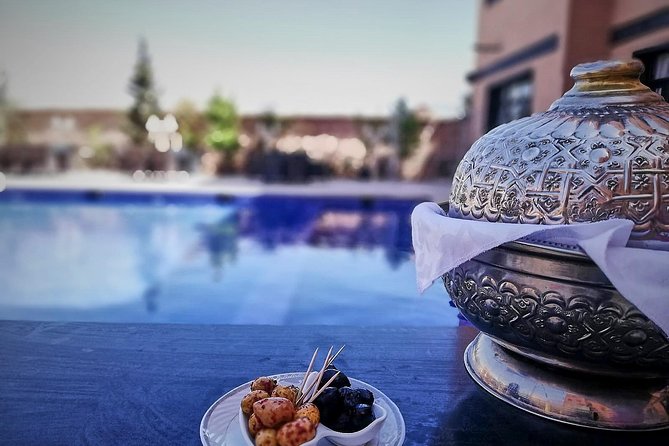
- Coffee, nuts, and dates in the canyon: a very welcome reset after the descent.
- 360-degree summit views: you’ll climb back up for a broad look over the Dades Valley and Berber villages.
- Kasbahs and ancient granaries included: the culture portion is part of the package, not an optional extra.
From Auberge Kasbah Ait Merghad to the Dades River
Your day starts at Auberge Kasbah Ait Marghad, which is about 17 km from Boumalne Dades and sits right in the Dades Gorges area. The first moment matters: your guide welcomes you with a hike briefing and a bottle of water. That’s a small detail, but it sets the tone. You know what’s coming, and you don’t waste energy figuring out the plan with a group you just met.
The early part is a descent toward the Dades River. This is where you’ll start getting the “why” behind what you see. Instead of only pointing at rocks, your guide covers traditional farming and irrigation—how water is used, why it matters here, and how local plant life fits into the system. Even if you’re not a plant nerd, you’ll find it helps you read the valley as a living place, not just scenery.
Practical tip: use this first stretch to settle into the footing. Descents can feel easy until the ground changes. If you’ve got any foot issues, mention them early so your guide can adjust your pace.
You can also read our reviews of more hiking tours in Boumalne Dades
The Valley of Roses and fig trees: a short walk with big payoff
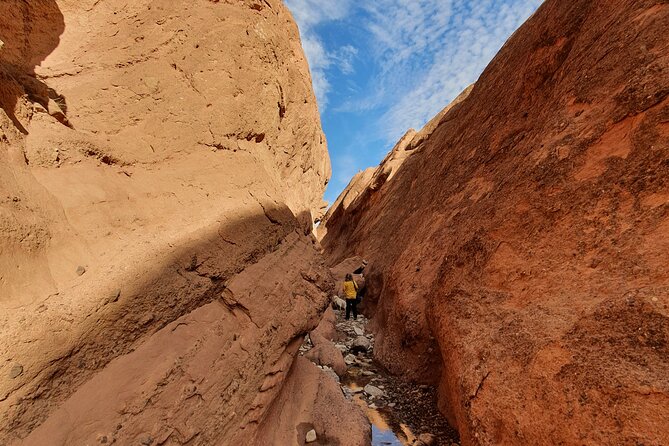
After reaching the river area, there’s about a 30-minute walk through the Valley of Roses and fig trees. This is your decompression zone. The canyon adventure is coming, so this “lighter” stretch is a good moment to slow your breathing and look around.
This section also helps the hike feel balanced. You get movement in open, lush areas before you transition to towering sandstone cliffs. In practical terms, it’s a smart rhythm for people who want activity but still like to enjoy their surroundings rather than only survive the route.
What I like about this part is that it feels intentionally placed. Instead of rushing straight into the steepest terrain, the walk lets you absorb the landscape texture—greens, fruit trees, and the kind of quiet that makes the later canyoning feel even more dramatic.
Dades Canyon canyoning: where the pace turns fun
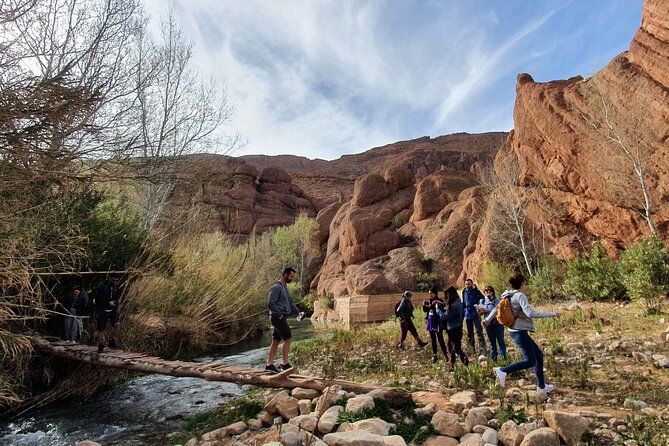
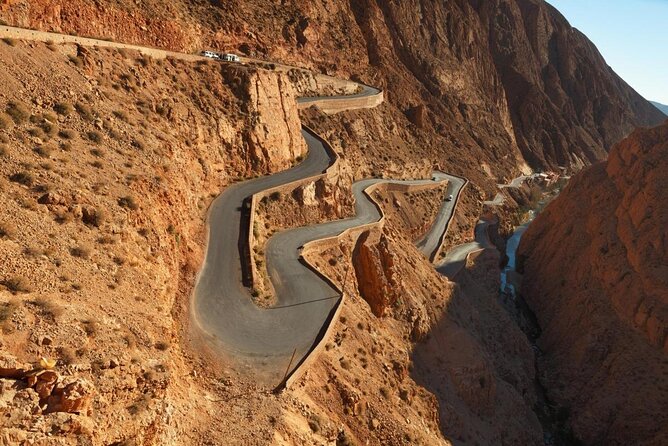
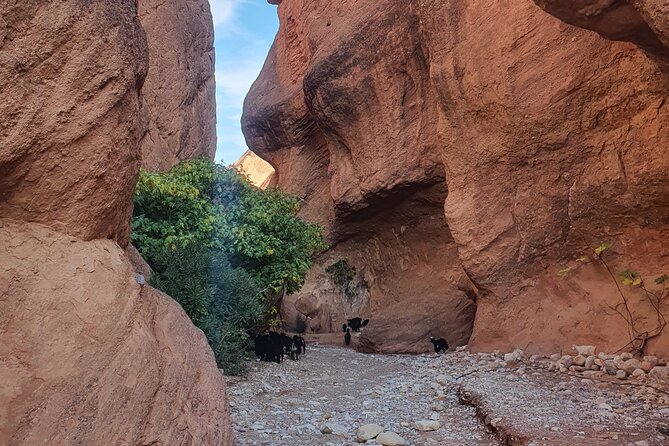
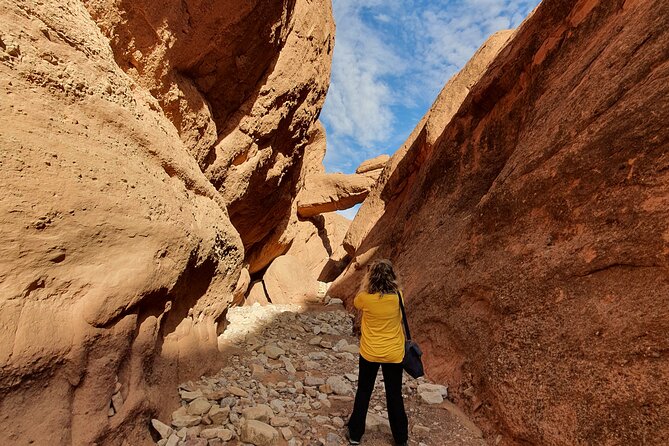
Now for the star: Dades Canyon. You spend roughly 1.5 hours canyoning among sandstone cliffs and unique rock formations. This is the heart of the Monkey Finger’s Canyon experience—the part that turns a simple hike into an actual adventure.
Canyoning here is not just a walk in a dramatic place. You’re moving through the gorge with the cliffs close enough to change the sound of your footsteps and breathing. The sandstone character matters too. When the canyon narrows and the walls rise, the light and shadows shift quickly, and you start seeing details you’d miss from a viewpoint.
You also get a “pause on purpose.” In the canyon, you’ll have time to relax and enjoy coffee, nuts, and dates. That snack break isn’t just food—it’s a gear reset. It gives you a moment to cool down, hydrate, and take photos without feeling rushed.
One consideration: canyoning can be uneven. Even if the route is manageable, the ground can be slick or irregular depending on conditions. Good grip shoes help a lot. If you prefer very stable footing, be honest with your guide during the briefing.
The summit climb and 360-degree views over the Dades Valley
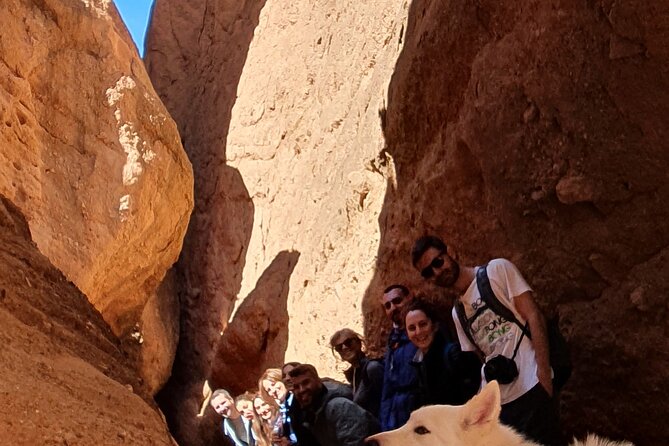
After the canyon segment, you’ll ascend to the summit. This is where the energy shifts from “moving carefully” to “standing still and taking it in.” You’ll get panoramic views—360 degrees over the Dades Valley and surrounding Berber villages.
This is one of the most practical rewards of the day. Views like this are not only pretty; they also help you understand the geography. From the top, the gorge makes sense, and you can picture where you walked and how the canyon cuts through the valley.
If you’re someone who likes photos, this is your moment. Take a breath before you start shooting. The light can change quickly at higher points, so give yourself a few minutes to decide on the angle you want.
Kasbahs and ancient granaries: Amazigh heritage, up close
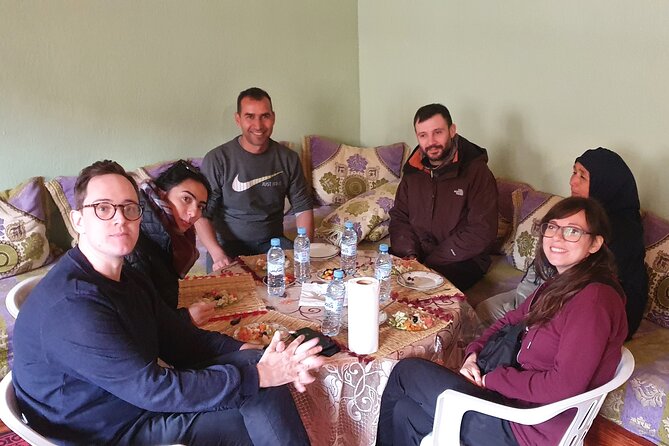
The hike doesn’t end when you reach the top. It closes with a cultural tour of historic kasbahs and ancient granaries. This matters because it connects the physical experience to the human one. You spend the morning learning about water use, farming patterns, and local plant life, then you finish by looking at how Amazigh (Berber) communities built and stored resources over time.
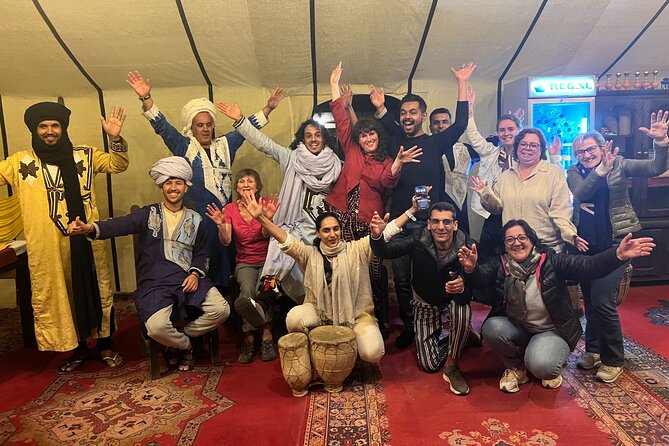
You’ll also see vintage kasbahs, and the experience includes local family hospitality and a tea ceremony. In Morocco’s Dades region, that kind of welcome can be the difference between “I saw buildings” and “I understood why those buildings mattered.” Even if your Arabic is limited, tea ceremony moments usually come with a steady, human rhythm—time to sit, talk in simple terms, and enjoy the hospitality included in the tour.
If you love history but don’t want a museum lecture, this works. It’s hands-on and close-up, tied to the places you were hiking through.
Coffee, snacks, and what’s actually included for $43
Let’s talk value. The price is $43.04 per person for a roughly 3-hour outing, covering a 7 km (about 5-mile) hike with canyoning time plus a cultural visit. On paper, it can look like just another outdoor activity. In reality, you’re paying for a guide who manages safety and pacing in the canyon and also adds context—farming, irrigation, local plants, and then kasbah/granary heritage.
Included in the tour:
- Coffee and/or tea
- Snacks
- Professional mountains guide
- Cultural & historical tour (including granaries and vintage kasbah visit)
- Local family hospitality and a tea ceremony
Not included:
- Tips
- Lunch with a local Berber family or outdoor picnic is 150 MAD per person
That lunch option is worth knowing about. If you’re hungry after a canyon day, you’ll either want to add it or plan another meal after. The good news is the morning-to-afternoon pacing already includes coffee/tea and snacks, so you’re not walking around empty.
Small practical note: you’ll get a mobile ticket, and there are group discounts available. The experience is also private in the sense that only your group participates, which usually means less waiting and more attention from the guide.
Timing, meeting point, and how to plan your day
The tour runs about 3 hours. You’ll start at Auberge Kasbah Ait Marghad and end back at the same meeting point. That makes it easy to fit into a travel day because you’re not dealing with complicated transfers or a “drop-off somewhere else” situation.
It’s also close to public transportation, which can help if your base in Boumalne Dades isn’t right next to the gorge trailhead.
What I’d plan for: comfortable time before and after. With canyoning and a cultural segment, this isn’t a rushed 90-minute activity. If you stack it back-to-back with another tour right away, you may feel pressured during the tea and granary portion.
Who should book this Monkey Finger canyon hike?
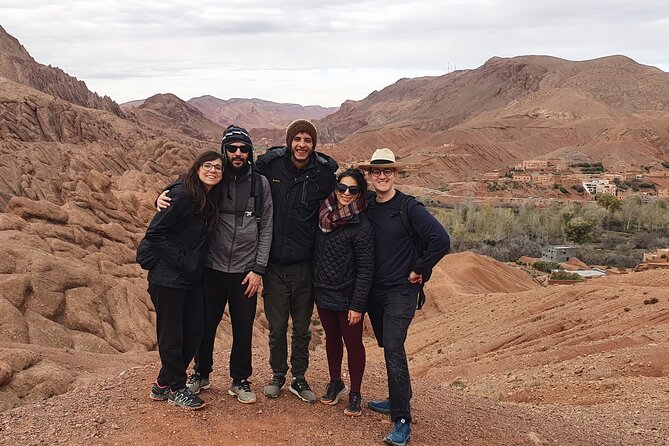
This works well if you:
- Want a mix of outdoor movement and cultural context in one outing
- Enjoy guided explanations about how people live with the land (not just where the photos are)
- Like a paced group format with a clear flow: descent, valley walk, canyoning, summit views, then kasbah/granaries
It’s also a good choice if you want a day that feels more local than “drive to a viewpoint, take pictures, leave.” The coffee/nuts/dates pause inside the canyon is a very specific kind of comfort that many hikes skip.
If you’re someone who hates uneven footing or prefers to avoid canyon environments, this may still be manageable, but you’ll want to talk to the guide early. The tour does say most travelers can participate, yet canyoning by nature means you should be ready for physical terrain.
A quick word on weather and comfort
The experience requires good weather. If conditions aren’t suitable, you’ll be offered a different date or a full refund. That’s important in the gorge, because rain or poor conditions can change the feel and safety of the canyon section.
Comfort-wise: dress for outdoor walking and canyon time. Bring a water-friendly mindset (you’re near the river and in a canyon setting). And again, shoes with good grip are the difference between enjoying the route and thinking about your footing the whole time.
Should you book this Dades Gorge Monkey Finger hike?
I’d book it if you want a short adventure day that actually teaches you something. The combo of canyon time, summit views, and then historic granaries plus kasbahs makes it feel like more than one activity stitched together. At $43.04, you’re getting both the “wow” of Dades Canyon and the “why” behind how communities shaped this landscape through irrigation, farming, and storage.
Do it if:
- you’re okay with active walking and canyoning
- you value guided cultural context (Amazigh heritage, tea hospitality, granaries)
- you want a plan that ends back where you started
Skip it if:
- you strongly dislike canyon terrain or prefer an easy stroll only
- your schedule is too tight for a weather-related reschedule
If you’re looking for a balanced Dades day—half adventure, half culture—this one earns its reputation.
FAQ
What is the length and duration of the hike?
The hike is about 7 kilometers (around 5 miles) and the total duration is approximately 3 hours.
What happens during the canyon part?
You’ll spend about 1.5 hours canyoning in Dades Canyon among sandstone cliffs and unique rock formations, with time to relax afterward.
Is lunch included?
Coffee/tea and snacks are included, but lunch is not. A lunch with a local Berber family or an outdoor picnic is available for 150 MAD per person.
Where does the tour start and end?
The tour starts at Auberge Kasbah Ait Marghad (17 Km de Boumalne Dades, Gorges du Dades) and ends back at the same meeting point.
How does the tour handle bad weather?
The experience requires good weather. If it’s canceled due to poor weather, you’ll be offered a different date or a full refund.
What is included in the cultural part?
The tour includes a cultural & historical segment featuring the granaries and a visit to vintage kasbahs, plus local family hospitality and a tea ceremony.