REVIEW · CASABLANCA
8 Days Morocco Tour with Guide
Book on Viator →Operated by Abdoul Morocco Tours · Bookable on Viator
Casablanca to the desert in just eight days is a fast story arc. This private tour strings together classic stops and big-sky moments, with English-speaking driving, guided time in the medinas, and a Merzouga desert segment that’s built for photos. You also get arrival help that makes the first day feel less chaotic.
I particularly like the way the itinerary mixes city history with nature time. You spend meaningful hours in Fez el Bali and Marrakech with a guide, then you swap to the desert and canyon valleys without it feeling like a checklist. I also like the practical setup: private transfers, pickup offered, and a mobile ticket so you’re not hunting for paperwork.
One thing to consider: you’re in the car a lot. This is a strong option if you want to cover Morocco efficiently, but it’s not for you if you hate long drives or prefer lots of downtime between stops.
In This Review
- Key highlights to care about before you book
- Why this 8-day Morocco route feels efficient (and not rushed)
- Day 1: Casablanca arrival support and a calmer first night
- Day 2: Rabat and Meknes stops built around landmarks you’ll actually remember
- Day 3: Exploring Fez el Bali like a real local medina day
- Day 4: Fes to Erfoud, then Merzouga desert photography with 4×4 transport
- Day 5: Dades Gorge height, canyon views, and Skoura’s oasis calm
- Day 6: Crossing the High Atlas with Aït Benhaddou and Ouarzazate film history stops
- Day 7: Marrakech highlights with a private guide (Koutoubia and El Bahia Palace)
- Day 8: Marrakech back to Casablanca, with an English-speaking driver
- Price and logistics: what $1,200 covers and what to budget for
- Who this tour is for (and who should skip it)
- Should you book this 8 Days Morocco Tour with Guide?
- FAQ
- How long is the 8 Days Morocco Tour with Guide?
- What is the price per person?
- Is pickup offered, and is it private?
- Are mobile tickets provided?
- Do I need to pay for Hassan II Mosque?
- Is the Merzouga desert portion included?
- What time does the tour start, and where is the meeting point?
- Is free cancellation available?
- What happens if the tour can’t run due to weather or minimum travelers?
Key highlights to care about before you book
- Casablanca arrival support that helps you handle customs and immigration without the queue scramble
- Hassan II Mosque in the Rabat day plus other landmarks around Rabat and Meknes (with entrance noted for direct payment)
- Fez guided medina time in UNESCO-listed Fes el Bali, including context around the medina’s artisan culture
- Merzouga desert day with 4×4 transport and guide-led desert activities focused on photography
- Dades Gorge and the Valley of One Thousand Kasbahs scenery, including the canyon height you’ll want to see in person
- Marrakech with a private guide covering Koutoubia and El Bahia Palace, not just quick photo stops
Why this 8-day Morocco route feels efficient (and not rushed)
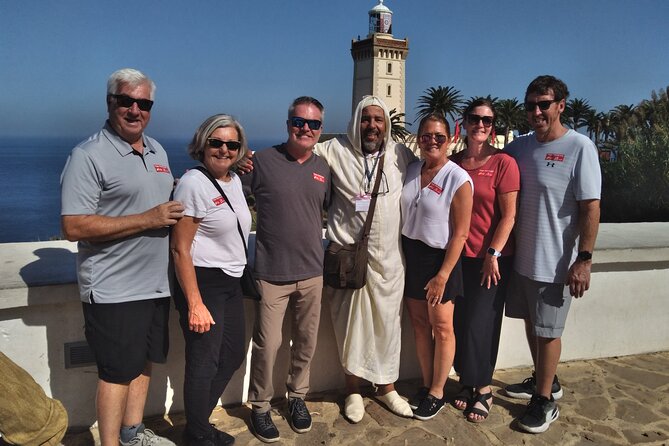
This plan is a loop that makes sense geographically: you start in Casablanca, work your way through Rabat and Meknes, land in Fez for the heart of Morocco’s artisan medina culture, then head south to Merzouga and the desert edge. From there you move through the Dades and Skoura oasis country, cross the High Atlas around iconic Aït Benhaddou and Ouarzazate, and finish in Marrakech before returning to Casablanca.
What makes it feel good is the balance. You get guided time in the places where a local guide really pays off (Fez and Marrakech). Then you get “look and breathe” time in the places where scenery and light are the main event (Merzouga, Dades Gorge, and the kasbah valley areas).
If you’re choosing between this kind of big-route tour and a slower, single-region trip, this one is for you if you want a wide Morocco overview without losing the story. If you prefer deep staying and minimal driving, consider whether you’d rather spend more days in one region.
You can also read our reviews of more guided tours in Casablanca

Day 1: Casablanca arrival support and a calmer first night
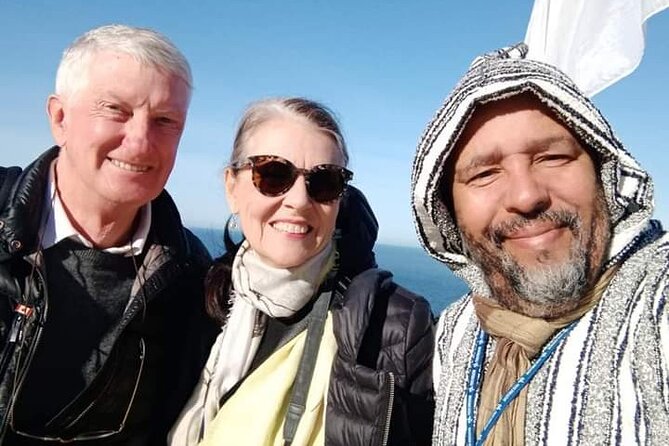
Your day starts with a local representative meeting you on the tarmac in Casablanca. That small detail matters. It means you’re not wandering around trying to figure out where your group is, and you’re assisted through customs and immigration in a way that’s meant to avoid line stress.
Then you get a private transfer between your hotel and the Casablanca international airport. The driver is English-speaking, and the ride is listed as up to about an hour depending on where you’re staying. For me, this is one of the best “value” pieces of the whole trip: getting to Casablanca smoothly sets the tone for the rest of the week.
If you’re sensitive to jet lag, this first day is also a good reset. You get help, you settle in, and you don’t spend the night trying to solve logistics.
Day 2: Rabat and Meknes stops built around landmarks you’ll actually remember
Day 2 is a long moving day, but it’s structured with big-name sites and a clear sense of progression: Casablanca to Rabat, then onward toward Meknes and into the Fez direction.
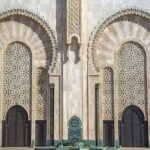
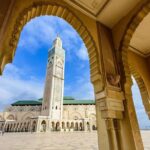
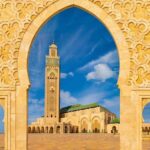
The highlight is Hassan II Mosque. It’s mentioned as the second-largest mosque in the world after Al-Haram Mosque in Mecca, and the entrance is noted as direct payment. That’s useful info for your budget because it’s the one clearly called out as not included.
From there you transition to Rabat’s power-and-palace areas: the Royal Palace, a Merinid necropolis, and the Andalusian Gardens inside the walls of the Kasbah of Oudaya. Even if you don’t know the names yet, this is the kind of place where guided context helps you understand why the layout and walls matter.
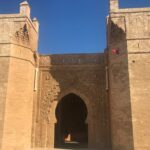
You also pass through Meknes, famous for its long city walls—listed as about 25 miles—and its gates. The itinerary includes Bab Mansour, known as an impressive elaborately detailed gate. If you love architecture, gates are one of Morocco’s easiest “wow” moments, because they’re designed to impress from a distance.
Day 3: Exploring Fez el Bali like a real local medina day
Fez is where this itinerary starts to slow down in the right way. You meet your guide in the hotel lobby, then head into Fes el Bali, the UNESCO World Heritage Site founded in the 9th century.
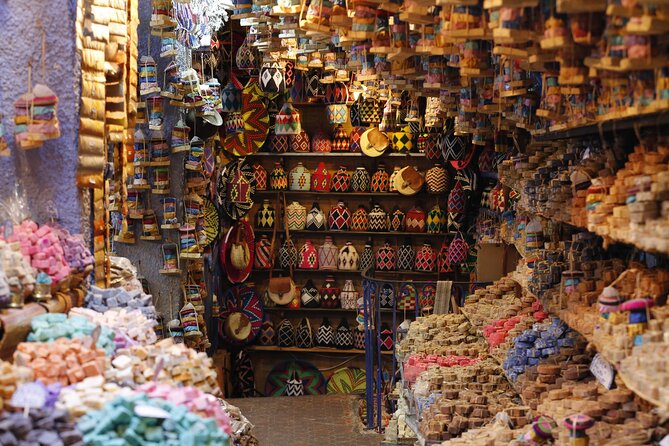
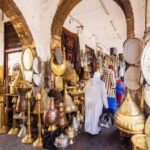
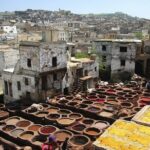
What I like about a guided Fez day is that the medina is not just old buildings. It’s a living system: the itinerary notes that Fez’s artisan culture is still active today, with workshops where master craftsmen work in trades like sculpting and blacksmithing.
You also get helpful anchor points: Fez is described as the cultural and spiritual center, and it’s tied to the world’s oldest university founded in 859 CE. Then there’s the Merinid era peak in the 13th and 14th centuries, when Fez reached economic and cultural height and even replaced Marrakech as the capital.
The value here is mental navigation. A guide helps you understand what you’re looking at—why certain areas feel “busy,” why craftsmanship matters, and how the city grew. Without that context, Fez can feel like a maze you conquer with map apps. With it, you start noticing patterns.
Practical tip: plan for walking inside the medina. Even when the itinerary lists a set time (about 6 hours), the medina pace can vary, and you’ll want comfortable shoes.
Day 4: Fes to Erfoud, then Merzouga desert photography with 4×4 transport
This is the long “travel day” that turns into a desert day, and it’s one of the most exciting parts of the trip.
Your route from Fes to Erfoud goes through the cedar forest and across the Middle Atlas Mountains. You stop for lunch logistics near Midelt, where lunch is picked up. Then the drive continues through the dramatic Ziz Gorge, and you pass Rissani—listed as an ancient, holy city—along with the ruins of Sijilmasa, which was a once capital and merchant stopping place tied to ancient caravan routes.
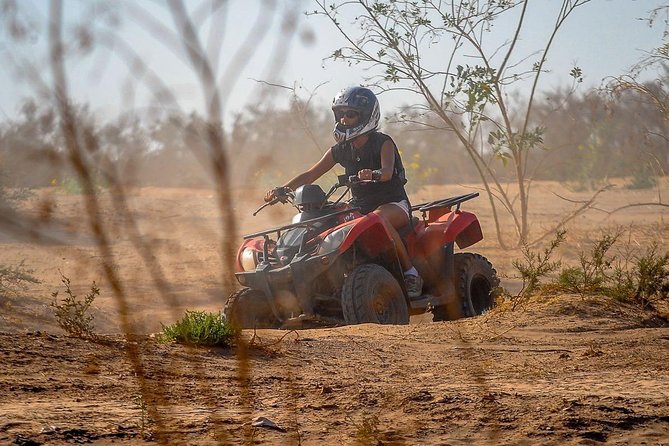
The itinerary frames this as about 7 hours of travel to reach Erfoud, and then you move into the desert segment with a 4×4 vehicle waiting for you. The tour highlights specifically call out fun desert activities with photography at Merzouga Desert, guided by your team.
What that means for you: the desert part is not just a scenic drive. It’s designed for the moments when you’ll want photos and you’ll benefit from someone who knows where to stop and when to shoot.
One consideration: it’s still a full day. You’ll be in transit and then shifting to desert conditions. If you’re traveling in colder months, it’s worth packing layers, and if it’s hot, bring water planning into your routine.
Day 5: Dades Gorge height, canyon views, and Skoura’s oasis calm
Day 5 links desert-edge travel to Morocco’s dramatic canyon country.
You travel between Erfoud and Skoura using a private vehicle and driver. En route, you stop at Dades Gorge, described as massive canyon walls reaching some 900 feet high. That scale is hard to grasp from photos, so it’s a good stop for anyone who wants a “stand and stare” moment.
Then you’re on to the Dades Valley, also described as the Valley of One Thousand Kasbahs. The itinerary notes it stretches between the High Atlas and the Jbel Sarhro mountain range, and it’s one of the oasis valleys that define southern Morocco.
You’ll arrive in Skoura, a useful base because it breaks up the week. It’s not another mega-city day, so you get a softer landing before the higher-mountain crossing ahead.
If you’re photographing, this day is your best chance for canyon angles and road-to-view compositions. Go slow when you stop. The best shots usually come after you’ve looked around longer than you planned.
Day 6: Crossing the High Atlas with Aït Benhaddou and Ouarzazate film history stops
This day is the bridge between southern scenery and Marrakech’s famous old-city energy.
The route runs between Skoura and Marrakech, and the plan includes photo-friendly stops like Aït Benhaddou, listed as a UNESCO World Heritage Centre where movies such as Gladiator and Jesus of Nazareth were filmed. It also includes the High Atlas drive through Tizi n’Tichka pass to Ouarzazate.
Aït Benhaddou is one of those places where pop culture helps with recognition, but the real payoff is the setting. The structure’s built to feel timeless, and once you’re there, it’s easier to understand why filmmakers pick it.
The itinerary also points out Ouarzazate’s main focal point: a long and wide street called Avenue Muhammed V, plus the Kasbah of Tifoultoutte. Exact driving time can vary depending on stops made along the way, so keep your schedule flexible.
What I like about this day is that it sets up your Marrakech experience. You come from desert and canyon country, then you cross the mountains into a city that feels different in texture and sound. It’s a good “mood change” built into the route.
Day 7: Marrakech highlights with a private guide (Koutoubia and El Bahia Palace)
Marrakech day is about iconic sites with guidance, not just hopping between quick checkmarks.
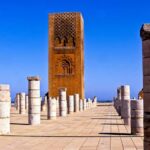
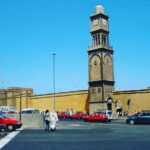
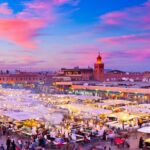
You start with Koutoubia Mosque, constructed in the 12th century. The minaret is described as visible from nearly every approach to the city, because of an ordinance that forbids other buildings in the old city to rise above the height of a palm tree. That’s an unusually practical detail, and it explains why the skyline feels so coherent.
Then you visit El Bahia Palace—named as the Palace of Brilliance. The tour description emphasizes the ornate, meticulously crafted nature of the property. Even if you only catch small sections, a guided visit can help you notice the craftsmanship details you might otherwise rush past.
This is also the day where pacing matters. Marrakech can be visually intense. A private guide keeps the day organized so you’re not stuck turning in circles, and it helps you spend your time inside the spaces that are most worth it.
Plan to take breaks. This is a walking-heavy city, and the more you slow down, the more you’ll appreciate the architecture.
Day 8: Marrakech back to Casablanca, with an English-speaking driver
Your final day is simpler: a private vehicle transfer between Marrakech and Casablanca with an English-speaking driver. The approximate travel time is about 2 hours 30 minutes.
That’s helpful if your flight is on the same day. After a full week, you don’t want last-minute complexity. This ending gives you a clean wrap-up so you can focus on getting to your next plan.
Price and logistics: what $1,200 covers and what to budget for
At $1,200 per person for an 8-day private experience, you’re paying for real logistics: private transfers across multiple cities, English-speaking driving support, guided time in the medinas, and a desert segment marked as included.
Here’s what looks most value-heavy:
- Private transportation throughout most of the route, so you’re not waiting on other groups
- Guide time where it matters most (Fez and Marrakech)
- Merzouga desert activities listed as included, plus 4×4 transport into that segment
- Arrival handling in Casablanca, including meeting you on the tarmac and escorting you through customs and immigration
Two practical budget notes:
- Hassan II Mosque entrance is direct payment (the itinerary calls it out). You’ll want to carry that cost in advance.
- The itinerary repeatedly lists admission ticket as free for many days, but it doesn’t give a blanket “everything included” statement. So treat “direct payment” items as a cue to ask what’s included before you go.
Also note the “mobile ticket” is offered. That’s convenient, especially if you don’t want to print anything.
Finally, there’s a start time listed as 10:00 pm. That’s unusual for an 8-day tour beginning, so I’d treat your confirmation details as the source of truth for when the first pickup actually happens.
Who this tour is for (and who should skip it)
This trip is a great fit if you want:
- A guided introduction to Fez and Marrakech
- A desert day that includes guided activities and photography focus at Merzouga
- A route that mixes culture + nature instead of only cities
It may not be your best match if you:
- Hate long drives between regions
- Want more free time in one place instead of many stops
- Prefer the same style of pacing (mostly structured visits) each day
One more point from the guide pattern tied to Abdoul Morocco Tours: strong feedback consistently mentions a guide named Abdul Salam (also spelled Abdussalam) being punctual, speaking strong English, and being clear about costs. I like that because it usually translates into smoother days and fewer surprises when you’re on the move.
Should you book this 8 Days Morocco Tour with Guide?
I’d book it if your priority is seeing a wide cross-section of Morocco in one trip and you want guidance where it counts—especially in Fez el Bali and Marrakech. The combination of private driving, a desert 4×4 segment with photography-focused activities, and major landmark coverage like Hassan II Mosque, Bab Mansour, Koutoubia, and El Bahia Palace makes it a strong value for $1,200.
I would pause if you dislike driving or you want lots of unplanned time. The itinerary is structured, and you’ll feel the travel days.
If you’re the type who likes getting your bearings fast and then enjoying the ride, this one is built for you.
FAQ
How long is the 8 Days Morocco Tour with Guide?
The tour is listed as 8 days approximately.
What is the price per person?
The price is $1,200.00 per person.
Is pickup offered, and is it private?
Pickup is offered, and the tour is private, meaning only your group participates.
Are mobile tickets provided?
Yes, mobile tickets are included.
Do I need to pay for Hassan II Mosque?
Yes. Hassan II Mosque entrance is noted as direct payment for the entrance.
Is the Merzouga desert portion included?
The Merzouga Desert day is listed with admission ticket included, and the highlights mention desert activities with photography at Merzouga.
What time does the tour start, and where is the meeting point?
The meeting points list a start time of 10:00 pm and notes it is near public transportation.
Is free cancellation available?
Free cancellation is available up to 24 hours in advance for a full refund.
What happens if the tour can’t run due to weather or minimum travelers?
If the experience is canceled due to poor weather, you’ll be offered a different date or a full refund. If it’s canceled because the minimum number of travelers isn’t met, you’ll be offered a different experience/date or a full refund.