REVIEW · IFRAN
Unique 2 Days Fez Marrakech via Desert & Visit Ait Benhaddou
Book on GetYourGuide →Operated by Tihama Trans Tours · Bookable on GetYourGuide
Two days, two worlds, one serious road trip. This Fes to Marrakech desert route works because you get the Erg Chebbi sunset camel ride and then hit the UNESCO-listed Ait Ben Haddou on the way to the city. My favorite part is how much Morocco you pack in for the time, without feeling like you’re just sitting on a bus all day. The main drawback to plan for is the long driving day toward Marrakech.
You’ll start in Fes around 7:45 AM, then roll south in an air-conditioned minibus with a professional driver. Along the way, the best drivers (like Driss, Mohamed, or Mohammed from past groups) tend to keep the ride lively, stop for photos, and point out small things you’d miss if you were traveling solo.
One more reality check: summer heat can make the AC feel uneven inside the vehicle, and the camp tent setup can vary day to day. If you care a lot about tent comfort, you’ll want to confirm what you booked before you’re handed off to the camp team.
In This Review
- Key highlights worth your attention
- Route highlights: Fes to Merzouga to Marrakech in 48 hours
- Entering the comfort zone: Ifrane and the Azrou Cedar Forest stops
- Midelt and the Ziz Valley: where palm groves meet long drives
- Arriving at Merzouga: Erg Chebbi dunes and a camp on the edge
- Camel ride to camp dinner: how the desert night actually feels
- Day 2 start: sunrise walk on the dunes
- Sandboarding and the Road of a Thousand Kasbahs to Ait Ben Haddou
- High Atlas crossing: Tizi n’Tichka Pass and the final push to Marrakech
- Price and value: is $150 a fair deal for this itinerary?
- Comfort, food, and what to bring for a smoother desert night
- Who should book this Fes–Marrakech desert tour
- Practical tips that make a big difference
- Should you book this tour?
- FAQ
- What time do pickups start in Fes?
- Is lunch included on this tour?
- What’s included in the desert overnight?
- Do you include a camel ride and sandboarding?
- Is there an entrance fee included for Ait Ben Haddou?
- Is there a vegetarian option?
- What’s the cancellation policy?
Key highlights worth your attention
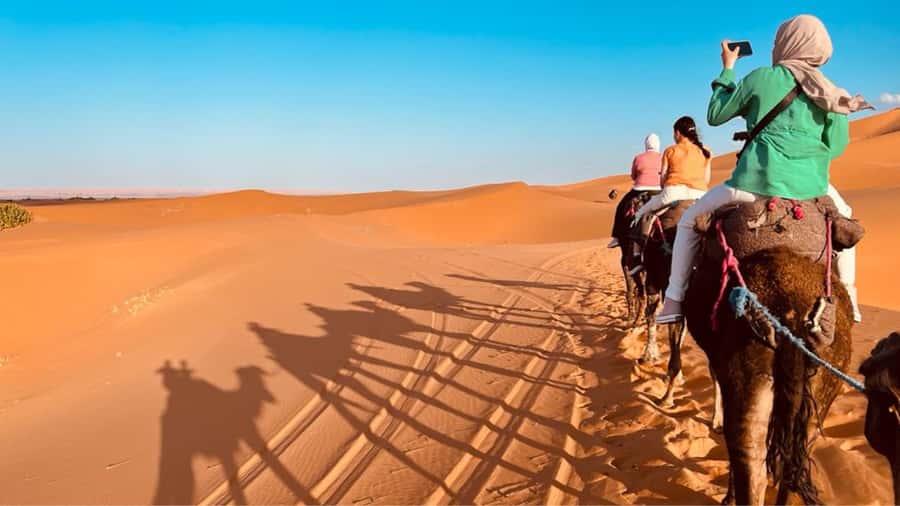
- Erg Chebbi camel ride timed for sunset with golden dunes and a classic desert feel
- Berber camp night with dinner plus Saharan-style music around the fire
- Sandboarding included at the camp (free when you ask staff)
- UNESCO Ksar of Ait Ben Haddou with a local guide on the Marrakech side of the trip
- Middle Atlas to High Atlas crossing via Cedar Forests and the Tizi n’Tichka Pass route
- Air-conditioned minibus plus frequent break opportunities along the long drive
Route highlights: Fes to Merzouga to Marrakech in 48 hours
This is a fast, concentrated Morocco trip. You’re basically doing two big goals: reaching the Sahara (Merzouga, near Erg Chebbi dunes) and then connecting to Marrakech with heritage and mountain views.
The itinerary is built around that rhythm. Day 1 focuses on getting you from Fes to the desert edge, with multiple stops so the day doesn’t feel like one long straight highway. Day 2 starts early in the dunes, then spends the rest of the day on the drive to Marrakech—adding Ait Ben Haddou and the High Atlas pass along the way.
The value is that you’re not just getting a camel ride and a photo stop. You’re getting a full Morocco sampler: Ifrane’s alpine vibe, cedar forests with macaques, the Ziz Oasis region, desert night culture, and then the Kasbah world before the city lights.
A few more Ifran tours and experiences worth a look
Entering the comfort zone: Ifrane and the Azrou Cedar Forest stops
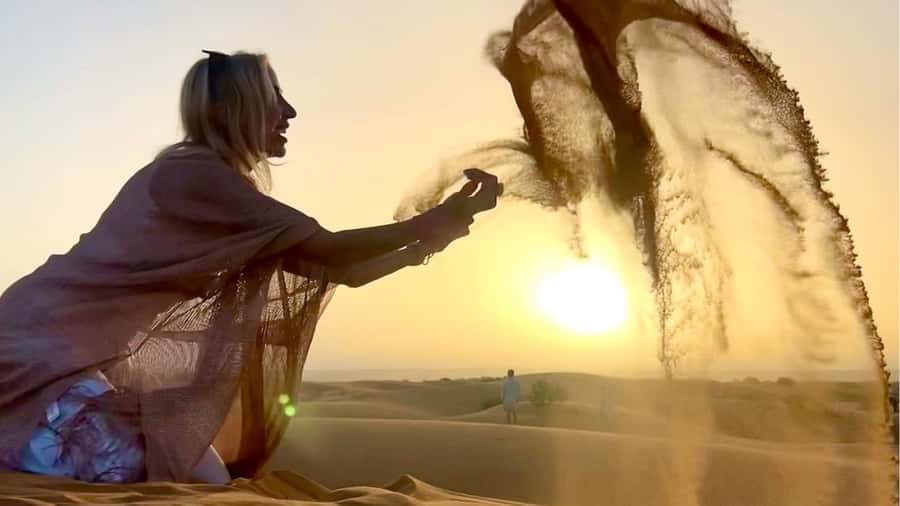
Your day begins in Fes with pickup from your hotel or a nearby meeting point, then a drive toward Ifrane. Ifrane often gets compared to Switzerland because of its alpine-style architecture and the noticeably cooler feel. If you want a quick mental reset from the heat and bustle of Morocco’s cities, this is where you get it. Plan on a short walk, a few photos, and a bit of breathing room.
Next comes Azrou and the cedar forests. This is where the trip gets fun in a very local way. You’ll have time to wander among the trees and watch for Barbary macaque monkeys. It’s a neat change of scenery before the desert heat kicks in, but use common sense: don’t rush animals, and keep your belongings secure if you’re close to them.
These stops matter because they break up the long drive and help you understand how diverse this region is. You’re not going from city to desert in one hop—you’re shifting through different climates.
Midelt and the Ziz Valley: where palm groves meet long drives
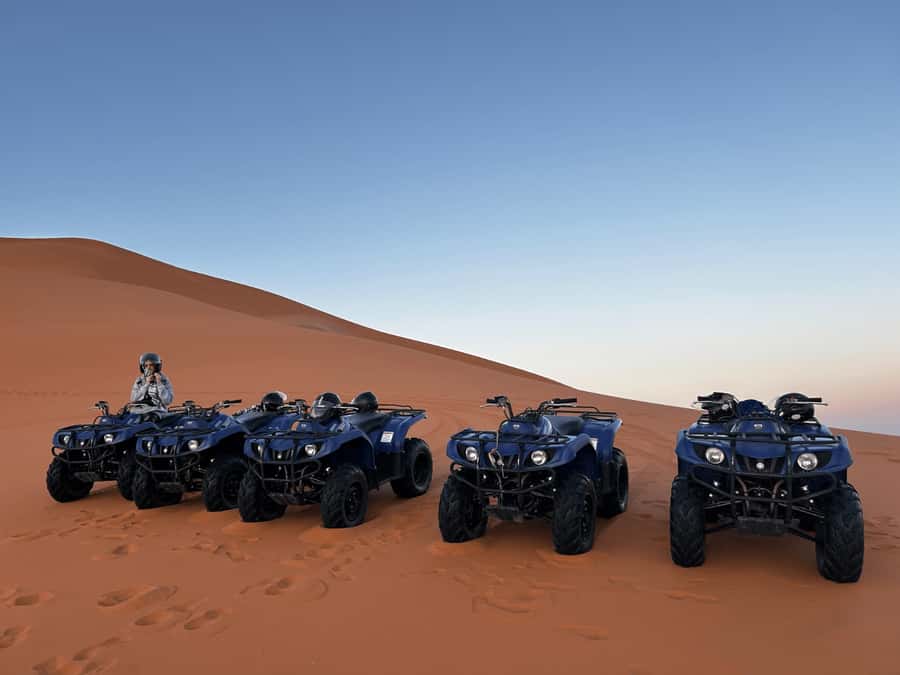
After the cedar forest, the route heads toward Midelt. This is often where you’ll take your lunch break. Lunch isn’t included, but the tour provides a recommended restaurant option, and you can choose to eat there or use your own plan.
From Midelt, the drive follows the Ziz River and goes through the Ziz Valley. This is one of those stretches where you start seeing palm groves and mud-brick villages tucked into the valley. It’s also where the road-trip feeling kicks in: you’ll spend hours in the minibus, but the stops keep it from becoming pure monotony.
A practical consideration: the day is timed so you’ll arrive at Merzouga in the late afternoon. That works well because it gives you a soft landing at the dunes—no need to rush straight into night activities without a chance to settle.
Arriving at Merzouga: Erg Chebbi dunes and a camp on the edge
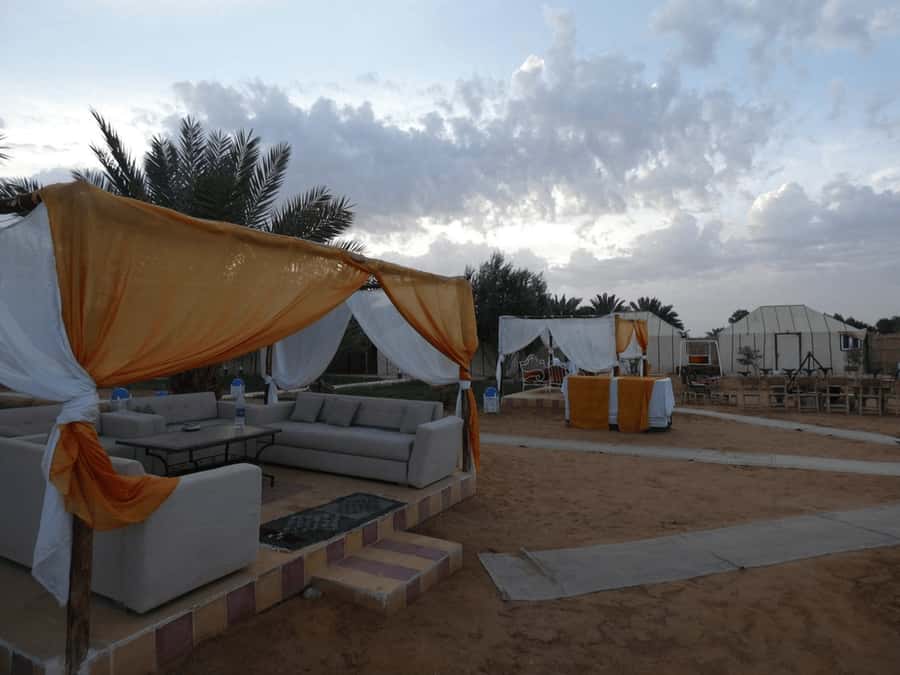
By late afternoon you’ll reach Merzouga, at the edge of Erg Chebbi dunes. Depending on timing, you might get a short moment to relax at a local kasbah before your camel trek starts.
Then comes the camel ride—about 20 minutes—across the dunes. The goal here isn’t endurance. It’s the view and the timing. You’ll ride while the sands turn gold under sunset light, which is exactly when Erg Chebbi looks most dramatic.
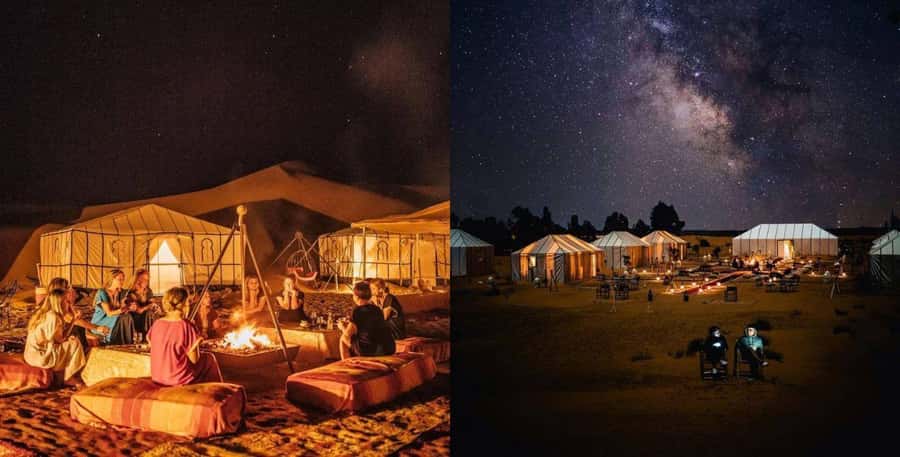
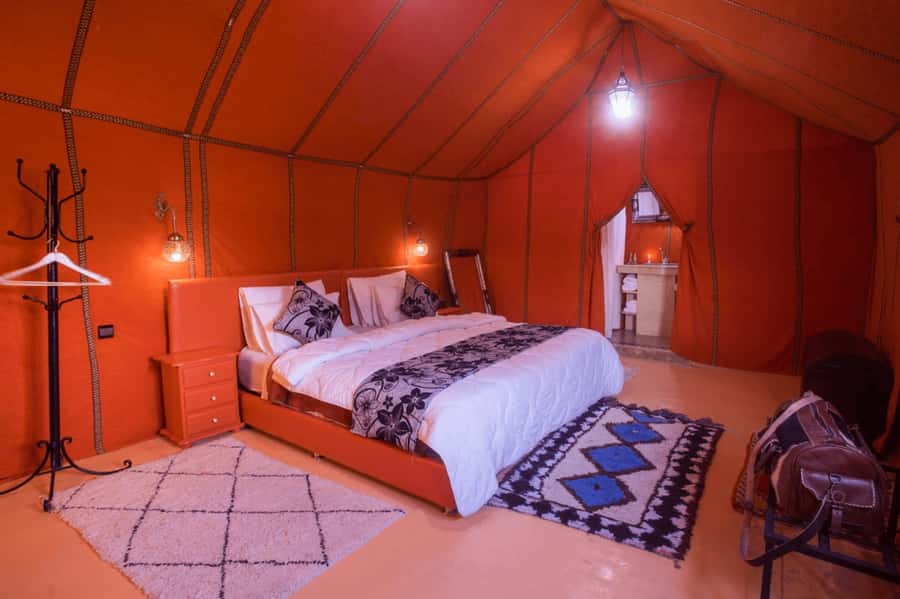
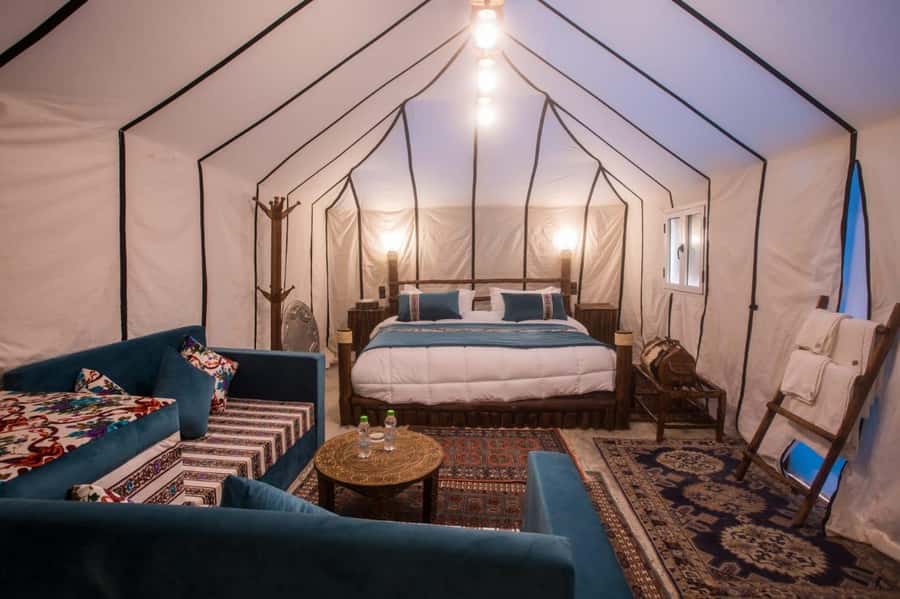
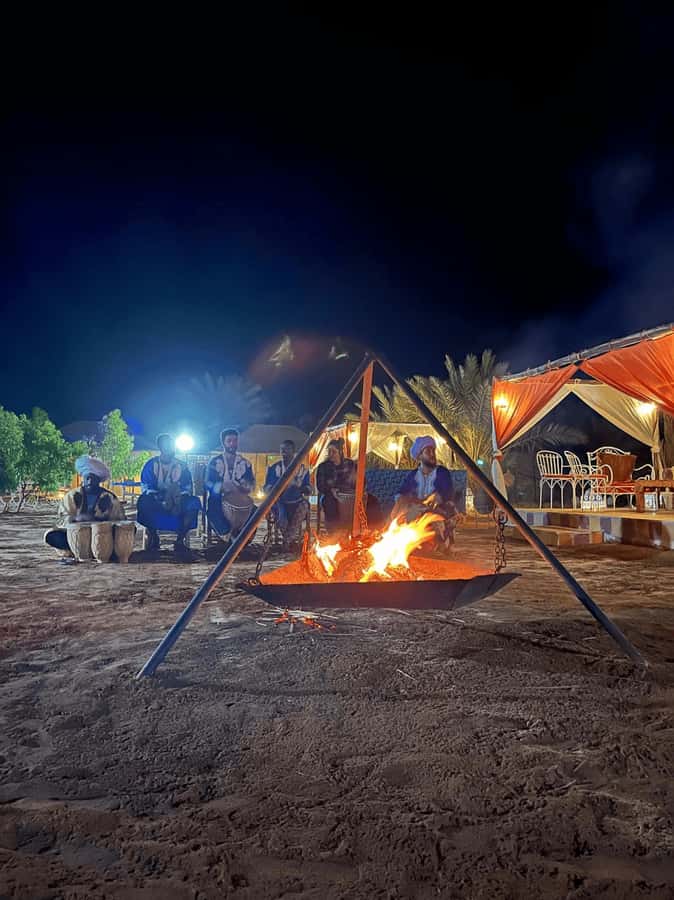
When you reach the desert camp, you check in to your Berber-style tent. Dinner is included, and the evening is built around a campfire atmosphere with Saharan drums and music under the stars. If you’ve only seen desert photos online, this is where your brain finally catches up.
Two small realities to plan for:
- Camp comfort can depend on tent type and how the camp team sets things up.
- The night can get surprisingly warm in summer, and the trip notes that AC on the vehicle doesn’t always circulate evenly during the hottest months.
Camel ride to camp dinner: how the desert night actually feels
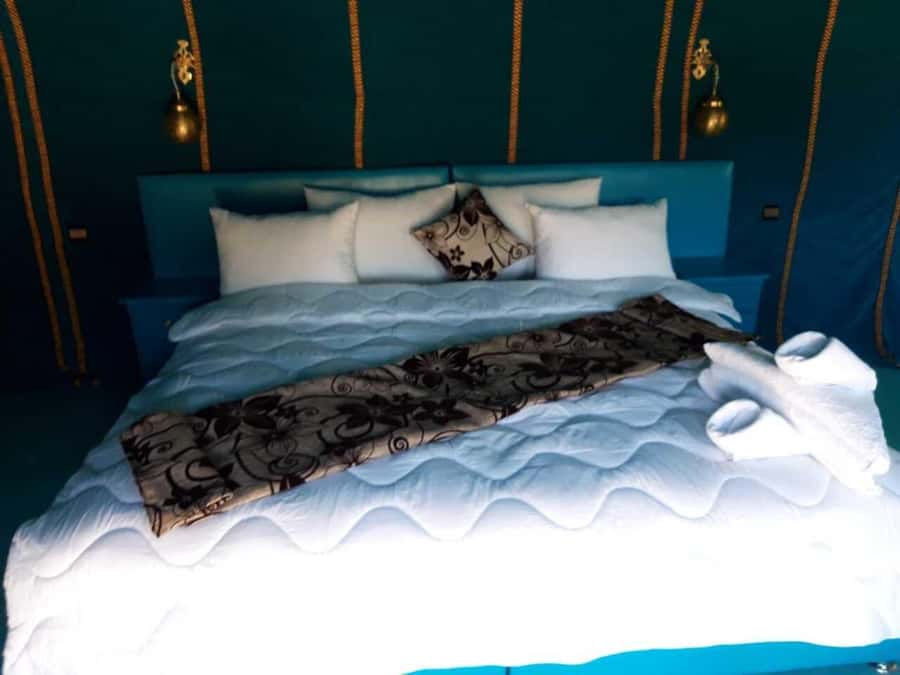
The camp night is one of the most praised parts of this tour because it’s not just sleep and go. You’re there for the vibe: dinner, then music around the fire.
This is also where a good driver makes a difference. In past groups, drivers like Driss or Mohammed have been described as cheerful and helpful, sometimes even adding small touches like finding breakfast locally and taking photos at photo stops. Your itinerary already has the structure; a strong driver helps you feel looked after.
If you’re wondering what to do with your time at camp: enjoy the quiet. Sit with the music, watch the sky shift, and let the desert slow your pace. It’s the kind of night that’s hard to replace with a daytime photo.
Day 2 start: sunrise walk on the dunes
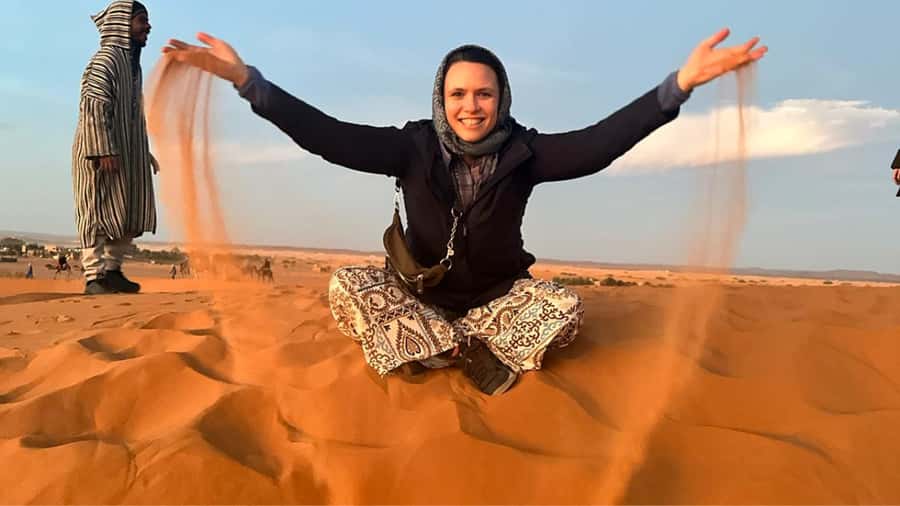
Day 2 begins early with a walk across the dunes to watch sunrise. This is one of those moments that feels like it has its own rules—quiet, slow, and then suddenly bright. You’re not chasing a show. You’re watching nature change color in front of you.
After the sunrise, you head back for breakfast and time to freshen up before continuing the drive toward Marrakech.
This early start is worth it, but it also means you should treat your evening at camp like a real bedtime. Pack smart for the morning so you’re not digging around when it’s cold-to-mild and windy.
Sandboarding and the Road of a Thousand Kasbahs to Ait Ben Haddou
After breakfast, the tour keeps moving. The route follows the famous Road of a Thousand Kasbahs, passing Berber villages and arid valleys scattered with historic fortresses. You’ll feel the region’s rhythm here: change is slow, but the road keeps revealing new corners.
Then you get the stop for Ait Ben Haddou, a UNESCO World Heritage Site. The tour includes a local guide, which matters. This place isn’t just a set of mud walls—you need context to understand why it was built the way it was and how it functioned as a fortified community.
One timing note to keep in mind: the Ait Ben Haddou stop can land late in the evening on the Marrakech side. In at least one past experience, the group arrived late and the area was closed, so the visit ended up being mainly an outside look. That doesn’t make it useless, but it does mean you should temper expectations if you’re hoping to explore deeply inside.
High Atlas crossing: Tizi n’Tichka Pass and the final push to Marrakech
After Ait Ben Haddou, the route goes up into the High Atlas Mountains. You’ll cross the Tizi n’Tichka Pass—the highest paved pass in North Africa—so expect big viewpoints and road curves.
This is also where the long driving hours become real. The trip notes that the Merzouga to Marrakech drive can take up to +10 hours, with limited stops. That’s the trade-off for fitting desert night plus major heritage plus a mountain pass into two days.
When the day ends, you’re expected to arrive in Marrakech around 20:00 (8:00 PM). It’s late enough that you’ll probably want a simple dinner plan waiting for you, not an ambitious evening.
Price and value: is $150 a fair deal for this itinerary?
For around $150 per person, the value is mostly in what’s included:
- air-conditioned minibus transport,
- dinner and breakfast,
- an overnight in a desert camp,
- camel ride,
- free sandboarding,
- guided UNESCO visit at Ait Ben Haddou.
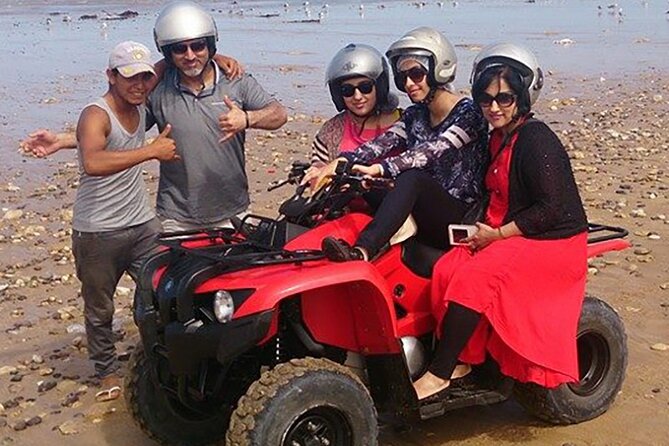
What you pay extra for usually comes down to personal choices: lunches, drinks, and optional ATV/quad activity. Entrance fees at Ait Ben Haddou can also be optional depending on what you choose to do on site.
So is $150 fair? If you want the full package—desert camp night plus camel ride plus Ait Ben Haddou in one shot—yes, it’s strong value for the amount of distance covered and the number of included activities.
If you’re mainly interested in the dunes and don’t care about Ait Ben Haddou or the mountain pass, you might find other trip styles more focused. But for a two-day framework, this one is built to deliver.
Comfort, food, and what to bring for a smoother desert night
Comfort is a mixed bag, but it’s manageable if you plan.
Vehicle comfort: the minibus is air-conditioned. Still, in hot months (June to August), airflow may not circulate evenly. If you’re sensitive to heat, the tour specifically suggests bringing a small personal fan. That’s a smart move. It’s one of those small purchases that can save your whole trip mood.
Camp comfort: tents are comfortable enough for many people, and sunrise plus music makes it feel worthwhile. Still, one past note flagged that the tent system could use improvement, with options not always verified before tents were handed out. If tent comfort matters, check before you get settled.
Food: dinner at the camp and breakfast the next day are included. Lunch isn’t included, but you’ll get an optional restaurant suggestion. Drinks aren’t included, so bring money for water and sodas, especially during the long drive.
What to bring:
- a hat,
- cash (handy for stops and optional purchases).
What to know about limits:
- pets aren’t allowed,
- no alcoholic drinks in the vehicle,
- it runs rain or shine.
Who should book this Fes–Marrakech desert tour
This trip is best for you if:
- you want an efficient way to see both the Sahara area (Merzouga/Erg Chebbi) and a major UNESCO site,
- you’re comfortable with long drives and early mornings,
- you like cultural moments like campfire music and guided heritage stops.
It may not be the right fit if:
- you have heart problems or serious medical conditions,
- you’re pregnant (the tour is not recommended),
- you dislike rough timing, since the Merzouga to Marrakech day can be very long with fewer stops.
Also, consider your personal tolerance for heat. Summer can make the ride feel warmer even with AC.
Practical tips that make a big difference
A few small habits will improve this trip fast:
- Bring cash and use it early. Drinks, optional lunches, and small needs pop up during long driving days.
- Confirm your tent option at the camp handoff. If you booked a specific comfort level, check it before you settle.
- Pack for sunrise. Even if your day feels hot, mornings near the desert can feel cooler once the sun is low.
- Set expectations for Ait Ben Haddou timing. If you arrive late, you might see more of the outside than the inside spaces.
- Choose your energy wisely. Day 2 is packed with sunrise, then drive time, so don’t over-plan your night in Marrakech.
Should you book this tour?
I think you should book it if you want the classic Sahara experience without stitching together multiple separate bookings. The combo of Erg Chebbi camel ride at sunset, a Berber camp night with music, and a guided UNESCO stop on the way to Marrakech is a lot for two days.
I’d skip or rethink it if long driving hours and early starts sound miserable. This route trades comfort and flexibility for speed and variety, which is exactly what some people want and what others can’t stand.
If you’re the type who likes a packed itinerary, loves desert nights, and wants Marrakech plus Ait Ben Haddou in one go, this one fits well.
FAQ
What time do pickups start in Fes?
Pickup begins around 7:45 AM from your hotel or the nearest meeting point in Fes.
Is lunch included on this tour?
Lunch is not included. The tour suggests a restaurant option during the route, and eating there is optional.
What’s included in the desert overnight?
You get dinner once at the camp, breakfast the next morning, and an overnight in a Berber-style tent.
Do you include a camel ride and sandboarding?
Yes. The camel ride is included, and sandboarding is free at the camp when you request it.
Is there an entrance fee included for Ait Ben Haddou?
Entrance fees are not included as part of the package and are listed as optional at Ait Ben Haddou.
Is there a vegetarian option?
A vegetarian option is available. You should advise at the time of booking if you need it.
What’s the cancellation policy?
You can cancel up to 24 hours in advance for a full refund.