REVIEW · AGADIR
High Atlas Tour & Paradise Valley
Book on Viator →Operated by Adi Tours · Bookable on Viator
Waterfall season changes the whole day, and that’s part of the fun on this High Atlas run from Agadir to Imouzzer at 1200m. I love the slow switch from coast road to pine, argan, and palm groves, and I love wandering Paradise Valley with oleander and streams while almond trees bloom in winter. The one drawback: the cascades can be dry outside the rainy months, so plan for scenery and walking more than guaranteed waterfall power.
You start early with pickup and an air-conditioned ride, which helps you arrive before the day heats up and settle into the route at a calm pace. You also get a real break in the hills, with tea and a taste of traditional bread and thyme honey, plus a chance to catch the weekly Thursday souk near Imouzzer.
In This Review
- Key things I’d note before you go
- Morning Start: Agadir to the High Atlas via the Honey Road
- Imouzzer at 1200m and a Thursday Souk Moment
- Stop One Cascades: Beautiful Scenery, Seasonal Water, Free Entry
- Paradise Valley Agadir: Oleander Streams and Winter Almond Bloom
- The Guide Makes It Feel Personal: Mohamed With Adi Tours
- Price and Value: Is $81.33 Worth It From Agadir?
- Timing and Terrain: Moderate Fitness and a Walk-Friendly Day
- What to Expect at Each Stop, Without the Guesswork
- Best Time to Book and Who This Trip Fits
- Should You Book High Atlas Tour & Paradise Valley?
Key things I’d note before you go

- Early start from Agadir keeps the trip comfortable and timed for views
- Imouzzer at 1200m gives you an instant change of air and altitude feel
- Thursday rural souk can add local life beyond just scenery
- Paradise Valley walking focuses on streams, oleander, and winter almond bloom
- Cascades are seasonal and may be only lightly flowing outside winter rains
- Adi Tours guides like Mohamed are often praised for being friendly and helpful on the walk
Morning Start: Agadir to the High Atlas via the Honey Road
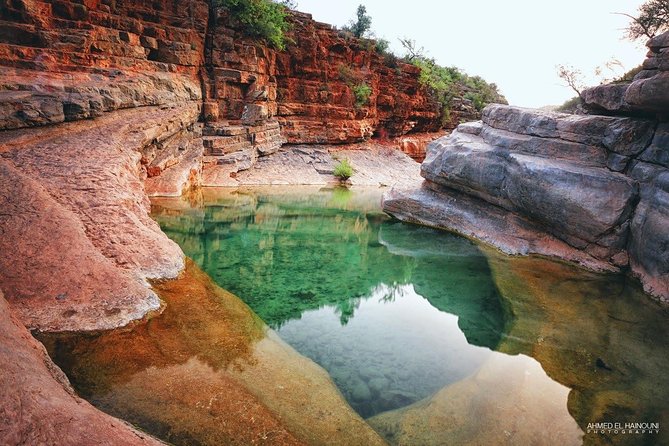
This is a 5-hour style outing that feels like a proper half-day escape, not a quick photo drive. Departure is around 8:00 a.m., then you head out toward Essaouira before turning off toward the mountain village area of Imouzzer.
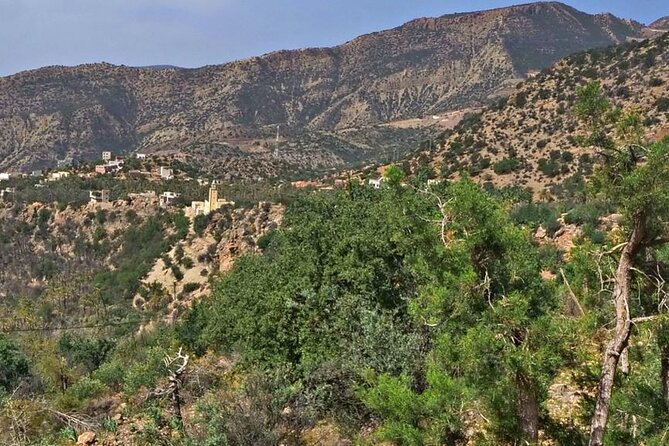
You’ll see why locals call this stretch the honey road: the drive passes hands-on agriculture—banana sellers and small vegetable plots—plus roadside trade in semi-precious stones. Expect the view to change gradually, with the coastline world giving way to fir and pine zones, and then to the mix of argan trees, oleanders, palms, and Berber villages scattered along valleys.
Because the vehicle is air-conditioned and you’re not doing this by public transit, it’s a good option if you want fresh air and real scenery without the stress of navigating transfers on your own.
You can also read our reviews of more tours and experiences in Agadir.



Imouzzer at 1200m and a Thursday Souk Moment
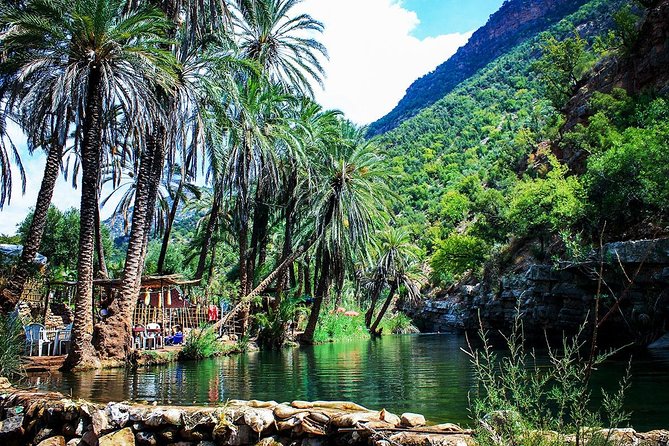
One of my favorite parts is the way the trip doesn’t just jump to the big nature stops. You deviate toward Imouzzer, and you reach it at about 1200m altitude, which is noticeable right away as the air feels cooler and the vegetation shifts.
If your day lines up with a Thursday, you may get the weekly rural souk near the village—held every Thursday morning. Even if you’re not shopping, markets like this are a quick way to understand daily life: what people grow, what they trade, and what items are most useful at the moment.
And even when the souk isn’t happening, this section still works because you’re seeing the High Atlas pattern of villages, small fields, and orchards laid into the slopes. It’s the kind of place where the views come with context, not just postcards.
Stop One Cascades: Beautiful Scenery, Seasonal Water, Free Entry
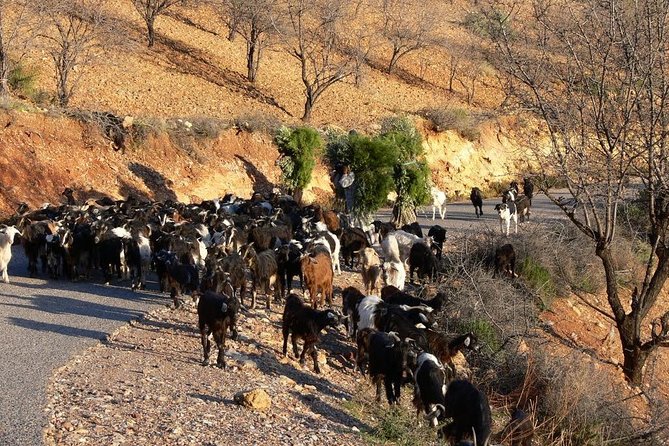
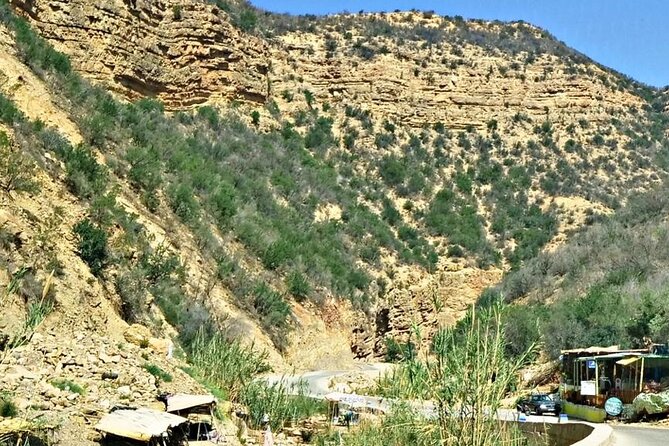
The first real nature stop centers on the cascades (the tour schedule places this segment around 9:00 after you leave the city). Along the way, you cross mountain areas with pine forests, fir trees, argan trees, oleanders, palm groves, and green fields—plus Berber villages that sit around the valley edges.
Admission is free here, which matters because this isn’t an experience built around paid attractions. It’s built around the scenery you can walk through and observe.
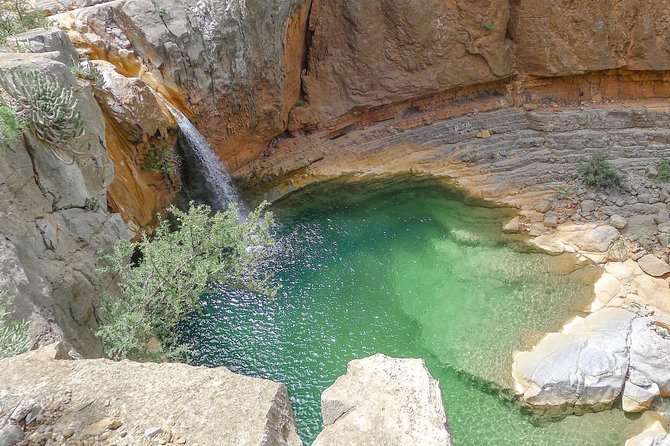
Now, the important part: waterfalls here are seasonal. The trip specifically notes that the waterfall is visible and full of water only during winter. That doesn’t mean you’ll see nothing—oleander, greenery, and mountain gorges can still look great—but it does mean your expectations should match the season.
Some people arrive expecting year-round flow and end up disappointed when there’s no water. The best way to handle it is simple: treat cascades as a bonus that’s worth checking, and make Paradise Valley the anchor of the day.
Practical tip: if you’re going outside the rainy winter months, bring your patience. You’re not really gambling on the waterfall; you’re buying a mountain drive and a valley walk.
Paradise Valley Agadir: Oleander Streams and Winter Almond Bloom
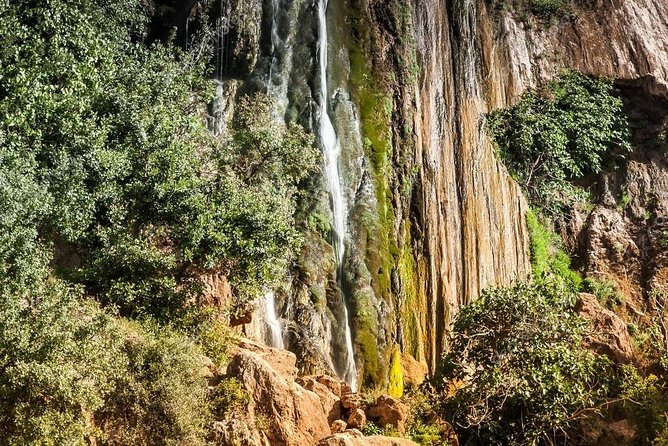
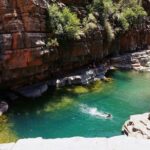
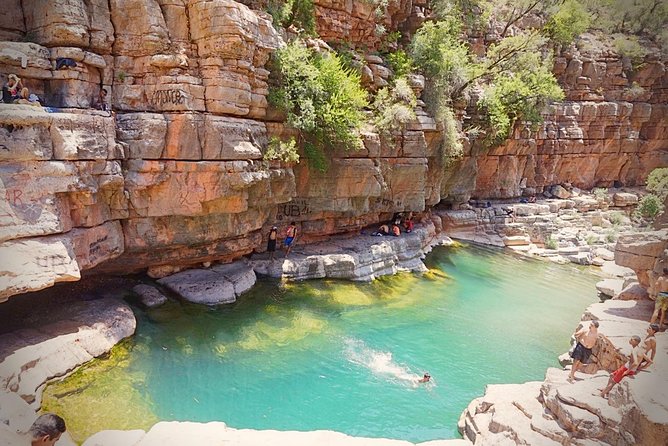
This is where the trip earns its name. After the cascades segment, you head into Paradise Valley, where the focus is on natural features that don’t depend entirely on rainfall.
You’ll encounter a valley full of oleander and streams, with almond trees blooming in winter. That winter detail is key. If you’re traveling during the season when almonds flower, the valley can shift from green-and-wild to something more delicate and fragrant-looking, even before you factor in any waterfall action.
The valley is also set up for walking. The scenery is made of small-scale nature moments: moving water where it exists, shaded greenery, and plant life that changes by altitude and season. It’s the kind of outing where you can slow down, pause often, and enjoy the mix of nature and local land use.
You also get a break in the area—tea plus a taste of traditional bread and thyme honey. That matters more than it sounds. A short pause like this turns the day from a drive-through into a lived-in experience, and it helps you keep energy for the up-and-down walking parts.
And if the cascades are dry, Paradise Valley is still the payoff. The valley’s beauty doesn’t hinge on one dramatic waterfall view.
The Guide Makes It Feel Personal: Mohamed With Adi Tours
A big positive thread in how this trip runs is the guide. One guide name that shows up clearly is Mohamed from Adi Tours.
What people tend to appreciate most is a mix of friendliness and practical support while you move through the valley. When you’re walking up and down, small course-corrections help—where to step, when to pause, how to handle uneven ground—so the day stays relaxing instead of “work.”
Even if you’re comfortable physically, having a guide who talks about what you’re seeing can turn a quick scenic stop into something more meaningful. You’re not just looking at the High Atlas; you’re getting a local read on it.
If you want a tour that feels guided but not stiff, this one is built in that direction.




Price and Value: Is $81.33 Worth It From Agadir?
At $81.33 per person, you’re paying for a half-day mountain escape that includes private transportation and an air-conditioned vehicle, plus pickup. That’s the core value.
You’re not covering an expensive ticketed attraction. The stops are free where entry fees apply, and most of what you’re paying for is time, route planning, and a guide to help you experience the places in an organized way.
Also, you’re not stuck hunting for food. Lunch isn’t included, but the trip does include a break with tea and a tasting of traditional bread and thyme honey. That’s a small cost-saver and it adds local flavor, so you’re not spending the whole day thinking about where your next meal will come from.
Where the value shifts is seasonality. If you travel in winter, the cascades and almond bloom elements can feel more “full.” If you travel when there’s little rain, you’ll want to treat the waterfall as optional and enjoy the valley walks and greenery as the main event.
So yes—this can be a strong deal if you like scenery plus a guided, easy-format day. If your entire reason for booking is a guaranteed waterfall spectacle, then the seasonal reality is the risk.
Timing and Terrain: Moderate Fitness and a Walk-Friendly Day
This tour is listed as requiring moderate physical fitness. That doesn’t mean it’s extreme, but it does mean you should be ready for some walking through valley areas and around the cascades zone.
The good news is that the valley is described as ideal for walking, which suggests the experience is built around moving at a manageable pace and stopping for views. You also return to Agadir around 1:30 p.m., so you’re not committing to a full day of hiking.
Still, plan for uneven ground and some hills. If you’re the type who likes slow scenic exploration, you’ll likely enjoy this more than a more “marching for miles” style hike.
What to Expect at Each Stop, Without the Guesswork
Here’s the flow in practical terms:
Morning drive (around 8:00 a.m.)
You leave Agadir and head toward Essaouira before turning toward Imouzzer at 1200m. The road view changes gradually from valley agriculture and villages to pine/fir zones.
Cascades segment (around 9:00 a.m.)
You pass the mix of argan trees, oleanders, palms, and green fields. Entry is free. The waterfall is winter-dependent, so expect it to vary.
Paradise Valley (about 2 hours)
This is the walking-focused part, described with oleander, streams, and almond bloom in winter. You’ll also stop for tea and sample traditional bread and thyme honey.
Return to Agadir (around 1:30 p.m.)
You’re back early enough to keep your afternoon open for beach time, a market visit, or just a long meal.
That structure makes it easy to fit into your overall Morocco plan without feeling like you’ve lost the whole day.
Best Time to Book and Who This Trip Fits
If you’re chasing winter nature details—almond blossoms and full-feeling winter greenery—this is a smart choice. The almond bloom timing is specifically noted in the Paradise Valley description, and the waterfalls are clearly labeled as being full only during winter.
This also suits you if you like:
- Mountain scenery with agriculture and Berber village life in the frame
- A guided day where you’re not figuring out directions and parking
- Short walks and nature pauses rather than long hikes
- The idea of a tea break with local tastes like thyme honey
I’d think twice if:
- Waterfalls are your single must-see, and you’re visiting in a season when water flow is unlikely
- You want a completely flat, low-walking experience (the trip has a moderate fitness requirement)
For families or mixed groups, the private transportation helps because the whole day stays controlled and less stressful.
Should You Book High Atlas Tour & Paradise Valley?
I think this is worth booking if you’re there for mountain views, Berber scenery, and a valley walk that can still be beautiful even when waterfall flow is light. The best part is how the day shifts between High Atlas villages, Paradise Valley greenery, and a tea-and-taste break that feels local.
Just don’t build your plan around the cascades being pouring all year. If you go with a seasonal mindset, you’ll likely enjoy the day for what it really is: a guided half-day into the High Atlas that trades “one big show” for steady nature moments plus local flavor.
If you want, tell me your travel month and what kind of scenery you love most (water, flowers, or mountain villages). I’ll help you decide whether to prioritize this or pair it with a different day trip from Agadir.