REVIEW · DAKHLA
Exclusive Beginners’ Kitesurfing Adventure in Dakhla
Book on Viator →Operated by Kitesurfing Dakhla · Bookable on Viator
This wind lesson changes how you think about control. In Dakhla, a beginner-friendly kitesurfing session helps you understand the wind, the kite setup, and the safety steps you need before you ever pull power on the water.
What I like most is the methodical, safety-first coaching and the clear progress from land skills to water relaunch and power control. The teaching style is patient and precise, with instructors like Lahcen and Rachid pushing you step-by-step and correcting you as you go.
One thing to watch: double-check what your session includes once you get to the water. Some people have had booking confusion about whether the initial time is only on land versus also covering water practice, so it’s worth confirming the plan before you show up.
In This Review
- Key highlights to know before you go
- Why Dakhla Works So Well for Beginners
- Your 3-Hour Beginner Plan: From Wind Window to Water Body Drag
- Small Group Coaching: What Max 4 People Changes
- Wind, Equipment, and Safety: The Stuff That Makes Kitesurfing Possible
- Learning the wind like a pilot, not a guesser
- Equipment basics that prevent beginner disasters
- Safety tools: practiced timing beats memorized fear
- On the Beach: Flying, Landing, and Walking the Kite
- First: fly and land with both hands
- Then: stability with one-hand control
- Finally: walking to the water
- Into the Water: Relaunch Practice and Downwind Body Drag
- Relaunch: how to recover when the kite hits the water
- Body drag downwind: learning power without boards
- Equipment, Timing, and Energy: How to Make the Most of 3 Hours
- Pickup, Hours, and the Weather Reality Check
- Price and Value: Is $141.27 Worth It?
- Who Should Book This Beginners Session?
- Should You Book This Tour or Wait for a Longer Course?
- FAQ
- How long is the beginners’ kitesurfing adventure in Dakhla?
- How many people are in the group?
- Is pickup offered, and do I get a mobile ticket?
- What will I learn on land before going into the water?
- Do I need good weather for the lesson?
- What is the cancellation policy?
Key highlights to know before you go
- Small group = real feedback: Max 4 people total, with one teacher and two kites in the sky shared between pairs
- Wind comes first: You learn wind strength, direction, quality, and how it affects the kite’s behavior
- Safety tools are practiced, not just explained: You’re taught when and how to use the safety system
- You train kite control in phases: Bar work with both hands, then stability with one hand, then walking the kite
- Water work targets fundamentals: Relaunch after a fall and body drag downwind for controlled power
- Weather matters: The experience requires good wind, so plan for schedule adjustments if conditions are off
Why Dakhla Works So Well for Beginners
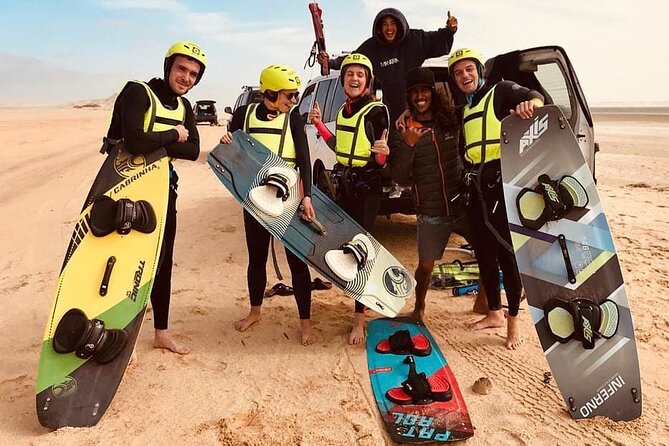
Dakhla is one of those places where kitesurfing lessons feel logical. The area is built around kiteboard conditions, and the setting makes you want to pay attention. You’re not just learning random tricks; you’re learning a system: wind direction, the kite’s flying zone, and how your body interacts with power.
This is the kind of location where a short lesson can feel valuable, because the environment supports repetition. If the wind is there, you get chances to practice control and timing without waiting forever.
And there’s another practical side. In a place like Dakhla, you can ask questions beyond your session, from how to read conditions to what to do when something feels off. That matters early, because early mistakes are usually about judgment, not effort.
You can also read our reviews of more tours and experiences in Dakhla.


Your 3-Hour Beginner Plan: From Wind Window to Water Body Drag
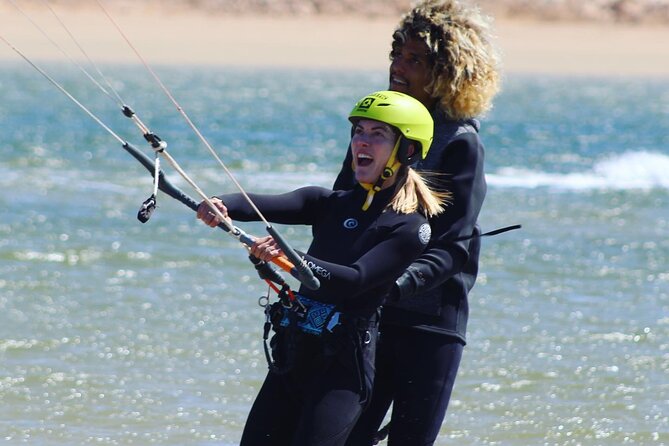
Think of this lesson as a tight workflow. You don’t start by sprinting toward the board. You start by learning what makes the kite fly and how to make it do what you expect.
On land, the session moves through the basics in a structured order:
- Wind basics: strength, direction, and quality
- Equipment basics: how the kite gear works and how to set it up for use
- Wind window: the kite’s working zone and why staying in the right part of that window matters
- Safety: when and how to use the safety tools
- Control on the bar: first learning to fly and land with both hands on the bar
- Stability control: keeping the kite steady with both hands, then with one hand
- Walking the kite: moving to the water while controlling the kite with one hand
Then you switch to water skills:
- Relaunch: what to do when the kite falls into the water
- Body drag downwind: how to generate enough power to move through the water while managing control
That sequence is the real value. It trains decision-making. Most beginners struggle because they try to skip the earlier steps. This plan keeps you on the steps that matter.
Small Group Coaching: What Max 4 People Changes
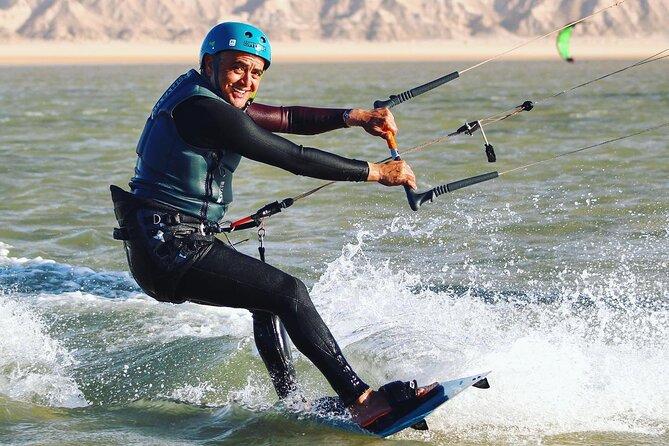
Max 4 travelers sounds small because it is. You’re not competing for attention. With a setup that uses one teacher and two kites in the sky shared between pairs, you spend less time waiting and more time practicing what you just learned.
For you, that means:
- You’re more likely to get corrections in real time
- You can ask questions while the kite is still in your mind
- You build confidence faster because you see how the same skill applies with different cues from the wind
This kind of small-group structure also reduces the stress that can come with learning anything technical. Kitesurfing is not just athletic. It’s also mechanical and safety-focused. When the instructor can watch carefully, your learning curve gets kinder.
Wind, Equipment, and Safety: The Stuff That Makes Kitesurfing Possible
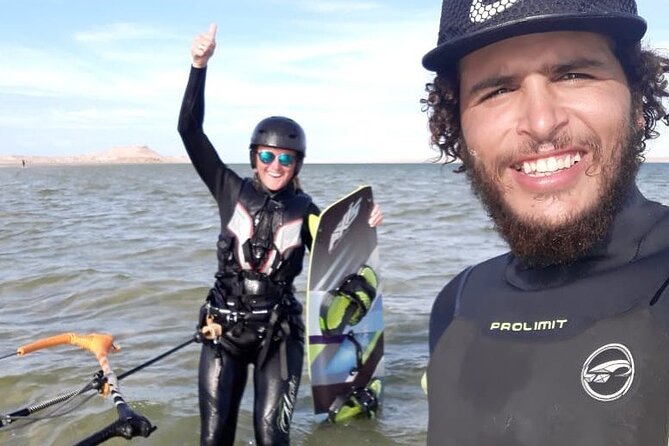
A lot of beginner sessions rush to the fun part. This one starts with the unglamorous pieces that actually control your outcome.
Learning the wind like a pilot, not a guesser
You’ll be taught:
- wind strength (how much pull you can expect)
- wind direction (where that pull will go)
- wind quality (how steady or messy the kite behavior can feel)
If you get this wrong, everything else becomes chaos. If you get it right, you stop fighting the kite and start working with it.


Equipment basics that prevent beginner disasters
You get an introduction to kite equipment and how to set it up for use. That matters because poor setup can lead to awkward sessions, wasted practice, or safety problems. Early understanding also helps when something feels off and you need to troubleshoot quickly.
Safety tools: practiced timing beats memorized fear
You’ll learn when and how to use the safety tools provided. This is huge for beginners. It turns safety from a warning into a skill set you can use confidently.
A safety-first approach shows up in how instructors teach control: you learn how to handle the kite while staying calm and grounded. That calm is not just nice. It helps you read the wind and react properly when conditions change.
On the Beach: Flying, Landing, and Walking the Kite
This part is where you build the foundation for every next step.
First: fly and land with both hands
When you first meet the kite, you learn to fly it and land it safely using both hands on the bar. This is about muscle memory and positioning. You’re training yourself to keep the kite stable instead of chasing it.
Then: stability with one-hand control
Next you practice keeping the kite stable in the air with both hands and then with one hand on the bar. This is a big shift. It’s not about showing off. It’s about learning the kite doesn’t need constant brute force to stay alive in the air.
Finally: walking to the water
You then practice walking the kite. You learn how to move to the water while controlling your kite with one hand only. This matters because the beach-to-water transition is where many beginners panic. Your body has to stay connected to the system.
Instructors like Lahcen and Rachid are known for methodical steps and clear correction. That style really helps here, because beach skills are the difference between enjoying the lesson and spending it in confusion.
Into the Water: Relaunch Practice and Downwind Body Drag
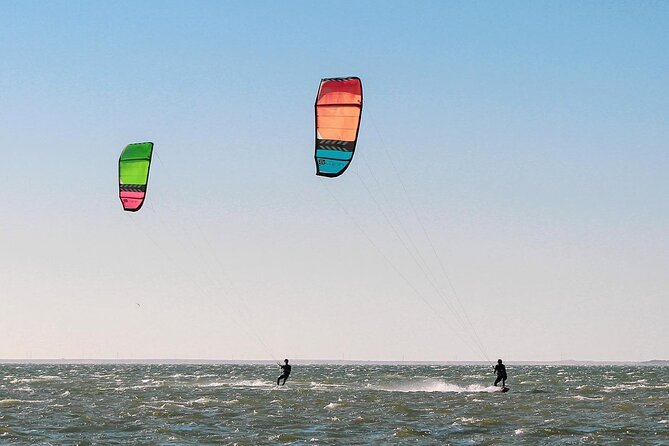
Now you get to the part where the training becomes physical.
Relaunch: how to recover when the kite hits the water
You learn relaunching when the kite falls in the water. Relaunch is one of those beginner skills that can feel intimidating until you do it under guidance. Then it becomes a repeatable process.
This is where safety teaching pays off. If you know the kite system and safety basics, you’re not guessing what to do. You act.
Body drag downwind: learning power without boards
Then comes body drag downwind. You learn how and where to fly the kite in the wind window to generate enough power to drag yourself through the water. This is not random. It trains the relationship between kite position and your movement.
If you do this well, you’ll come away feeling more capable right away. That early feeling of control is a real motivator, especially if you’re the type who learns best by doing instead of just watching.
Equipment, Timing, and Energy: How to Make the Most of 3 Hours
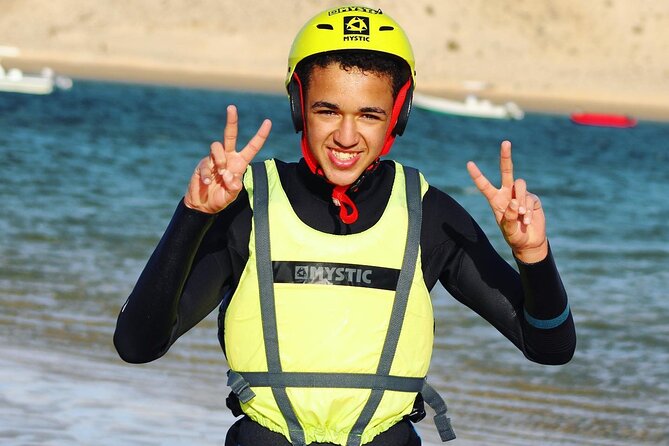
Three hours is short. So the best strategy is to show up ready to listen and ready to repeat.
What helps most during a short session:
- Wear gear that doesn’t restrict movement
- Pay attention to instructor cues even if they sound repetitive
- Treat corrections as part of the lesson, not interruptions
Because the session includes both land and water time, you’re likely to get a sense of flow rather than isolated drills. That’s good for beginners. You see how one skill connects to the next.
Also, remember this is weather-dependent. If wind is too weak or unpredictable, the plan can change. If it’s a windy day, you benefit more from practice time.
Pickup, Hours, and the Weather Reality Check
Pickup is offered, and that can make your day easier. Kitesurfing lessons start early enough that minimizing friction matters. If you’re arriving from another part of Dakhla, ask about timing so you’re not rushing.
The experience also follows local opening hours from 9:00 AM to 7:00 PM (and it runs through the listed date range). Confirmation is received at booking, so make sure you have that message ready on your phone.
Most importantly: the activity requires good weather. If conditions aren’t right, you’ll either be offered a different date or get a full refund. That’s not a nuisance; it’s part of protecting your learning and keeping the session safe.
Price and Value: Is $141.27 Worth It?
At $141.27 per person for about 3 hours, this isn’t a cheap impulse purchase. But it can still be good value because you’re buying more than “someone showing you how.” You’re buying:
- structured teaching from wind and safety through water fundamentals
- tight small-group coaching (max 4)
- equipment guidance and active practice time
A 3-hour format works best when you want a clear introduction and quick skill momentum. If your goal is to become truly independent, you’ll likely want additional sessions after this. But for a beginner, getting wind comprehension and first water skills under supervision is exactly the right starting point.
If you’re cost-sensitive, compare this session to longer multi-day learning. Longer courses can spread practice across more days. Short sessions are less complete, but they can be a smart entry point—especially if you’re not sure yet whether kitesurfing is your thing.
Who Should Book This Beginners Session?
This is a strong fit if you:
- are new to kitesurfing and want clear steps
- like hands-on learning with close coaching
- want safety fundamentals taught early (wind, wind window, and safety tools)
- prefer a small group environment rather than a crowded class
It’s also a reasonable match if you’re traveling with friends or family, because the course structure supports shared learning. If you’re going solo, you may still be placed with others in the group.
Should You Book This Tour or Wait for a Longer Course?
Book it if you want a fast, structured start. You’ll learn the wind basics, get kite control training on land, and then practice relaunch and body drag downwind in the water. That combination helps you leave with real confidence, not just theory.
Wait or plan for more training if:
- you want to master staying up on a board in one go (this session is built for fundamentals)
- you’re arriving with unclear expectations about what counts as land versus water time, and you prefer everything detailed before you commit
If you book, do one simple thing before you go: confirm what the 3-hour session includes for your group—especially how much time is on land versus in the water—so you get the exact experience you expect.
FAQ
How long is the beginners’ kitesurfing adventure in Dakhla?
It lasts about 3 hours.
How many people are in the group?
The experience has a maximum of 4 travelers, with one teacher and two kites in the sky shared between pairs.
Is pickup offered, and do I get a mobile ticket?
Pickup is offered, and the experience includes a mobile ticket.
What will I learn on land before going into the water?
You learn wind fundamentals, equipment setup, the wind window, and safety tool use. You also practice kite control (flying and landing with both hands on the bar, stability, and walking the kite with one hand), before water practice.
Do I need good weather for the lesson?
Yes. The experience requires good weather. If it’s canceled due to poor weather, you’ll be offered a different date or a full refund.
What is the cancellation policy?
You can cancel for free up to 24 hours before the experience’s start time for a full refund. If you cancel less than 24 hours before, the amount paid is not refunded.