REVIEW · AGADIR
4-Day Private South Desert Tour From Agadir Ending in Marrakech
Book on Viator →Operated by DesertTrips · Bookable on Viator
Desert dunes in 4 days can be real. This private South Desert route from Agadir to Marrakech strings together Atlas mountain towns, desert villages, and the famous dunes of Erg Chebbi. You get a door-to-door setup, plus a camel ride and a night camp planned around sunset.
I especially like how the itinerary balances big sights with small stops that explain Morocco’s trades and traditions, like saffron in Taliouine and carpets in Taznakht. The second thing I like is the comfort level for the desert night: your camp includes a private tent with toilet and shower, and you’re not stuck in a basic sleeping setup.
One drawback to plan for: you’ll spend a lot of time in the car across long driving days. Also, lunches and drinks aren’t included, so you’ll want to budget for meals on your own between included dinners and breakfasts.
In This Review
- Key highlights to know before you go
- From Agadir to Taroudant: wall views, souk energy, and Atlas peaks
- Taliouine and Taznakht: saffron and carpets, not just a roadside pause
- Ouarzazate overnight: where desert movies start (and where your day resets)
- Day 2 from Ouarzazate through Draa Valley to Erg Chebbi
- Khemliya and Gnawa music: the part that feels human
- Camel ride to White Camel: comfort meets the dunes
- Day 3: Rissani market, fossil stories, and the Todra-to-Dades day
- Rissani market: caravan-route history with souk timing
- Erfoud fossil stop: the geology behind the souvenirs
- Todra Gorge: 300m cliffs and that tall, narrow feel
- Dades Valley: monkies fingers and mud kasbahs
- Day 4: Rose Town, Skoura palms, Hollywood Ouarzazate, and Ait Benhaddou to Marrakech
- Rose Town (El Kalaa Mgouna): the rose story by the numbers
- Skoura: kasbahs in palm groves
- Ouarzazate and Ait Benhaddou: the UNESCO stop that ends strong
- High Atlas drive to Marrakech: finish the trip with big mountain views
- Price and value: what your $1,232.57 per person realistically covers
- How the guides and drivers shape the experience
- Who this Agadir to Marrakech desert tour fits best
- Quick booking decision: should you book this one?
- FAQ
- Where does the tour start and how do they pick you up?
- What time does the tour begin?
- How long is the tour?
- Is this a private tour or shared with other people?
- What desert experience is included?
- What meals are included?
- What is not included in the price?
- Where does the tour end?
- What are the Rissani market days mentioned on the itinerary?
Key highlights to know before you go
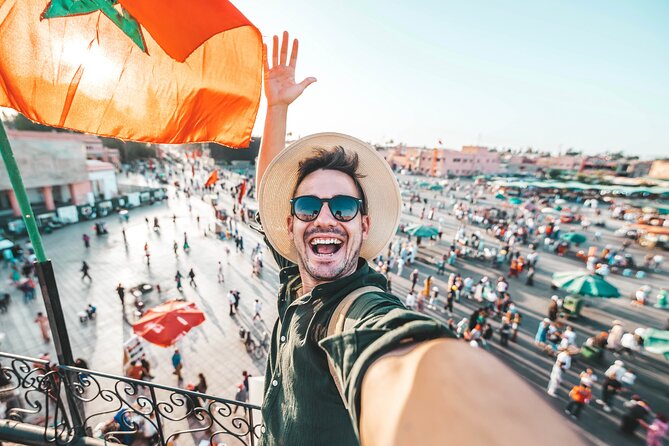
- Private door-to-door transportation from your Agadir hotel and drop-off anywhere in Marrakech
- Erg Chebbi sunset camel ride ending at the White Camel luxury camp
- Real culture stops like Gnawa music with a village family in Khemliya
- Todra and Dades Gorge scenery with dramatic cliffs and the monkies fingers rock formation
- UNESCO Ait Benhaddou plus Rose Town and Skoura palm groves on Day 4
- Comfort included for the desert night (air-conditioning and private bathroom in your tent)
From Agadir to Taroudant: wall views, souk energy, and Atlas peaks
Your day starts with a pick-up anywhere in Agadir. The departure time is 9:00 am, so you’ll be on the road early, which is a good thing if you want the best light for mountain viewpoints later.
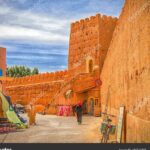
The first big stop is Taroudant, often called Little Marrakesh. You’re not just passing through. You’ll see the town’s ramparts and the walled medina setting, with the High Atlas showing up in the background. This is the kind of stop that helps you feel Morocco’s geography: cities are stacked into valleys, and the mountains keep looming like a frame.
I like Taroudant for its in-between vibe. It’s lively enough to feel like a real working town, but it doesn’t try to be a theme park. If you enjoy wandering where locals shop and talk, this is a strong way to ease into the trip before the desert days.
Practical note: Taroudant is a good place to slow down, take photos, and stretch your legs before the longer drives begin.
You can also read our reviews of more private tours in Agadir

Taliouine and Taznakht: saffron and carpets, not just a roadside pause
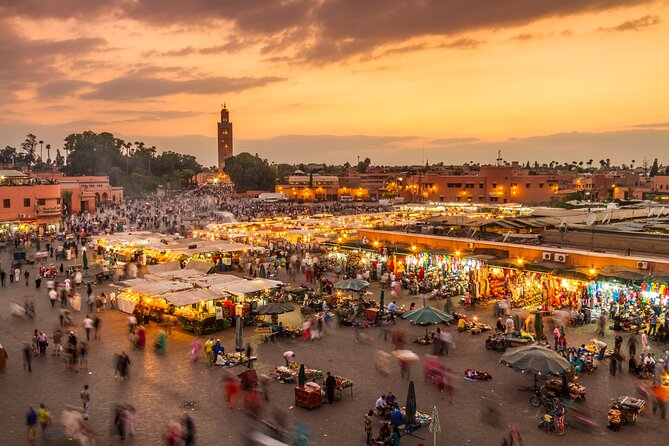
After Taroudant, the tour heads toward Ouarzazate, with two quick cultural stops that actually make sense.
First is Taliouine, often labeled Morocco’s saffron capital. The timing here is short, but it’s enough to get a feel for why this region is famous. Saffron is grown in specific conditions, and being in the High Atlas zone helps the story click instead of feeling like a random fact.
Next comes Taznakht, known as Morocco’s carpet capital. You’ll stop at the Shop Espace Taznakht for refreshments and stretching time. Even if you don’t buy anything, it’s worth looking carefully. Carpet design in Morocco is a language: colors, patterns, and knot styles can hint at regional traditions. This is also a good stop if you want to pick up small gifts without waiting until the end in Marrakesh.
If you’re the type who likes to understand what you’re seeing, these two stops are a good match for the rest of the route. They teach you how daily craft connects to the landscape you’ll see later.
Ouarzazate overnight: where desert movies start (and where your day resets)
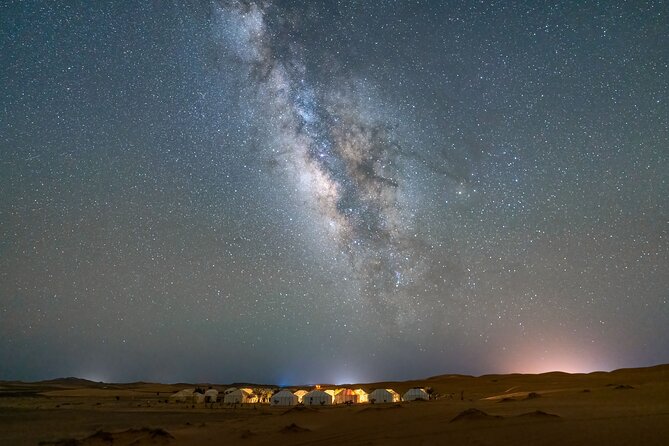
Ouarzazate is described as a Gateway to the Sahara, and after a full day of driving and stops, it works as a practical landing point. You’ll reach your accommodation, rest, and reset before the deeper desert work starts.
This is where I appreciate the tour design: you’re not trying to cram the desert experience on Day 1. You get time to arrive, shower, and sleep without rushing into the cold reality of early desert mornings.
Expect a hotel or traditional riad overnight. That flexibility is part of the appeal, but you should still plan on a travel day ending with a quiet dinner and an early night.
Day 2 from Ouarzazate through Draa Valley to Erg Chebbi
This is the day that turns the trip from Morocco sightseeing into a real desert journey.
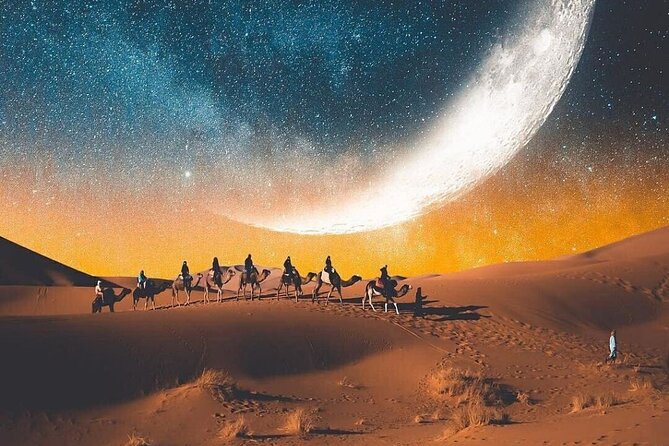
You’ll drive from Ouarzazate into Draa Valley, typically about five hours on the way to Erg Chebbi. Along the route, you’ll see palm groves, kasbahs, and mud-brick villages. As you travel, the color shift in the sands is described as moving from golden tones to deeper reds. That line matters because it tells you you’ll be watching nature change while you’re still in transit, not only after you arrive.
Then you reach Erg Chebbi, the dunes area near Merzouga. Erg Chebbi is the star here, so this isn’t just a quick photo stop. You’ll have time built in to enjoy the dune setting and the play of light and shadow as the day moves.
Khemliya and Gnawa music: the part that feels human
Before the camel ride portion, you’ll stop at Khemliya village to meet a Gnawa family and listen to their Gnawa music. The tour frames it as spiritual healing music, which often means it’s more than a performance. It’s repetitive, it’s lively, and it’s rooted in Moroccan tradition with origins in the sub-Saharan region.
This is one of the most memorable cultural stops on the route because it’s not just about scenery. Music connects people across time. It also breaks up the long car day so you don’t feel like you’re only moving from one view to another.
A few more Agadir tours and experiences worth a look
Camel ride to White Camel: comfort meets the dunes
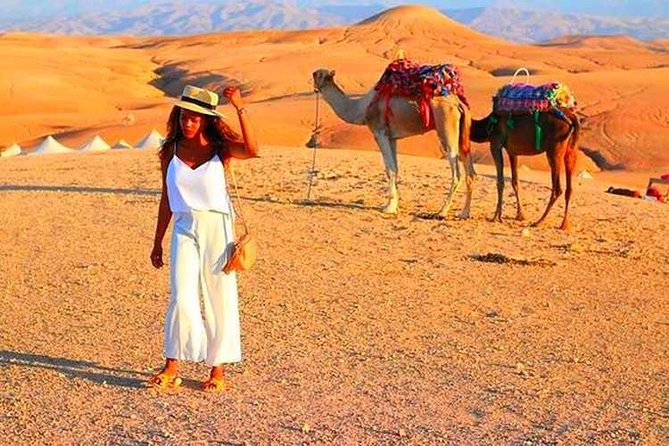
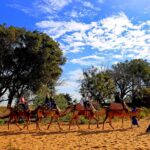
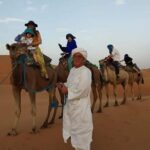
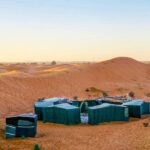
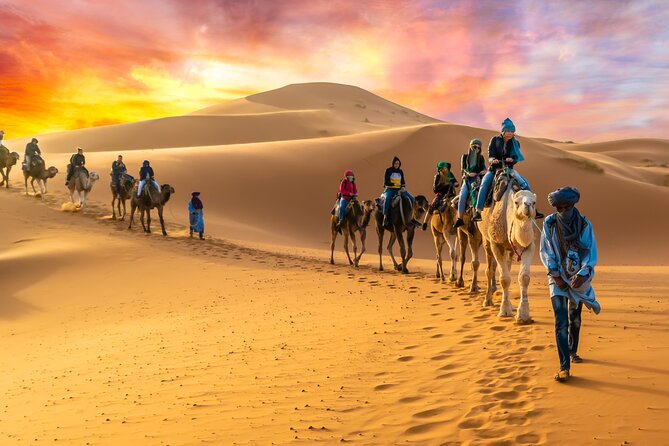
After Khemliya, the next step is the camel journey across rolling dunes. The ride is described as relaxed, and it’s timed so you arrive at the luxury desert campsite—The White Camel—in time for sunset.
This camp is one of the biggest value points in the itinerary because it’s not a bare-bones overnight. Your tent is private, with toilet and shower, and it includes air-conditioning. You’ll watch the dunes change colors from the nearest dune as the sun goes down, then head back for dinner with traditional Berber music.
If you think of the Sahara as only a sleeping-in-sand experience, this tour challenges that assumption. You still get the stars, the darkness, and the vastness. But you also get the kind of comfort that helps you enjoy it instead of counting minutes until bed.
Day 3: Rissani market, fossil stories, and the Todra-to-Dades day
Day 3 starts after breakfast at the camp, and you’ll leave the dunes behind. Then the day becomes a string of places that each have a specific identity.
Rissani market: caravan-route history with souk timing
You’ll travel toward Rissani, a major stopping place on the Saharan caravan routes. If your day matches market days—Tuesdays, Thursdays, and Sundays—you’ll get the chance to visit the souk.
This timing detail matters. A souk isn’t the same experience on an off day. Market days add energy, bargaining, and that sense of real local rhythm. Even when it’s not a market day, the place still connects you to the old trade routes that made the desert towns matter.
Erfoud fossil stop: the geology behind the souvenirs
Next is Erfoud, known for date festivals and fossil mining. You’ll also visit fossil artisan factories. The stop includes a chance to see hillside mines where large rocks are taken from the earth, then to visit a local artisan collective where you learn about the fossils and the process of turning fossil-rich rock into objects.
This is another stop I like because it gives context. Morocco sells fossil souvenirs in many places, but here you’re seeing how the material becomes a product. If you enjoy understanding how crafts are made, this is a great mid-trip break.
Todra Gorge: 300m cliffs and that tall, narrow feel
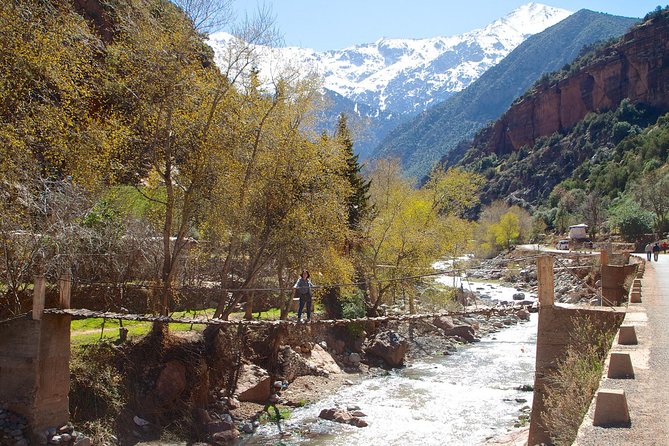
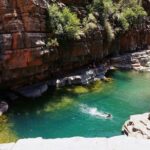
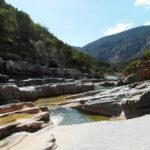
From Erfoud, you’ll continue toward Todra Gorge via villages like Millab, Tinjdad, and Toroug. Then you’ll reach Todra’s gorges—a narrow vertical passage with cliffs that can rise around 300 meters on both sides. The tour notes it’s popular with climbing lovers, which tells you the space is dramatic and steep.
You’ll drive around 30 minutes to the gorge area for exploration, and then continue toward Dades Valley.
Dades Valley: monkies fingers and mud kasbahs
In Dades Valley, you’ll see the rock formation locally called monkies fingers, plus mud kasbahs and dramatic valley views. This is the part of the itinerary that gives you a break from dunes and replaces them with something equally impressive: rocky, layered terrain with human structures built right into it.
You’ll have dinner and rest in the Dades area, so it’s a good night to power down after a full day of switching environments again.
Day 4: Rose Town, Skoura palms, Hollywood Ouarzazate, and Ait Benhaddou to Marrakech
This is the closing day, and it’s packed. The upside is that it feels like you’re collecting Morocco’s greatest hits without repeating the same type of place twice.
Rose Town (El Kalaa Mgouna): the rose story by the numbers
You’ll head to El Kalaa Mgouna, often called Rose Town. The itinerary highlights that over 400 tonnes of rose petals are picked in spring to be processed into rosewater or exported for perfume production. The rose festival is held every May.
Even if you’re not there in May, the stop is still valuable because it explains why the scent and the product matter here. This is a different Morocco: not desert and mountains only, but agriculture and industry shaped by seasonal rhythms.
Skoura: kasbahs in palm groves
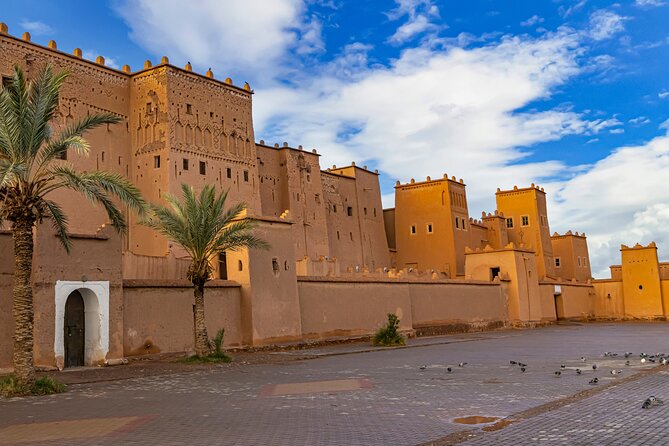
From there, you’ll travel toward Skoura, a small town surrounded by palm groves, where you’ll find some of the most beautiful kasbahs in southern Morocco. It’s a calmer visual break after Todra’s cliffs.
If you’re the type who likes architecture that looks like it belongs to the land, Skoura fits. You’re also moving back toward the route that leads to Ouarzazate and then to Marrakech.
Ouarzazate and Ait Benhaddou: the UNESCO stop that ends strong
Next comes Ouarzazate again—called Hollywood of Africa in the tour description—connected to major cinema studios. You’ll then visit Ait Benhaddou, a UNESCO World Heritage kasbah site. You’ll have free time to visit and lunch in the village before heading to Marrakesh.
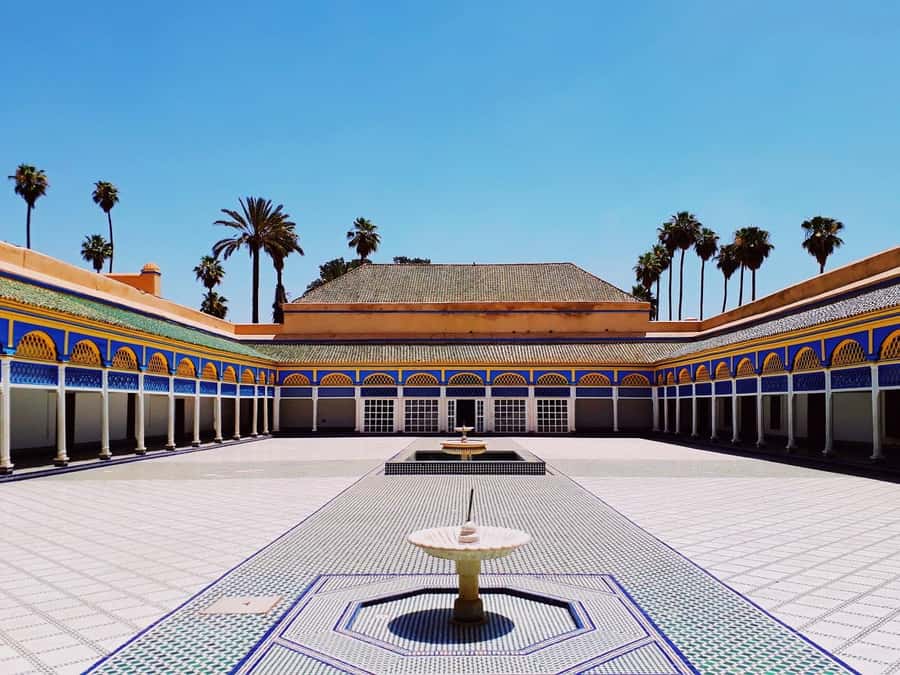
Ait Benhaddou is the type of place where photos look great, but the scale and the feel of the kasbah streets are what stick. This is one of the stops that makes the whole arc of the trip feel like it has a payoff: desert, mountains, and then a world-famous historic fortress village.
High Atlas drive to Marrakech: finish the trip with big mountain views
The final transfer takes you from Ait Benhaddou to Marrakech via the High Atlas. The route mentions the elevation around 2260 and offers impressive mountainous views and Berber villages along the slopes.
You’ll arrive in Marrakech in the evening and be dropped at your accommodation anywhere in the city. That drop-off is important. After four days of moving, it saves you the hassle of arranging the last taxi or bus ride.
Price and value: what your $1,232.57 per person realistically covers
At $1,232.57 per person, this is not a budget day trip. But it also isn’t just a long bus ride to “see the desert.”
Here’s where the value comes from based on what’s included:
- Private transportation throughout, plus pickup and drop-off in Agadir and Marrakech
- Accommodation for 3 nights (hotel/riad/camp mix)
- Desert night with a private luxury tent including toilet and shower, plus air-conditioning
- Camel ride and a sunset timing plan
- Meals included: dinner (2) and breakfast (3)
- Bottled water during touring
- Parking fees, fuel surcharge, and guided touches in the day-to-day flow
What’s not included is also clear: lunches and all drinks, plus tips to your driver, local guides, and staff. If you’re the kind of traveler who always buys drinks and snacks on the road, your real daily spend can creep up. Plan for that and you’ll feel the budget make sense.
If you’re traveling with friends and want the flexibility of a private group pace, the per-person price can start to feel more reasonable. The tour also notes group discounts, which can help if your group size fits.
How the guides and drivers shape the experience
One consistent theme in the feedback is that good drivers made the long route feel smoother. Names that show up include Khalil for communication, and drivers like Addi, Hassan, Mohamed, Said, and Sallah. The common thread is practical care: comfortable driving, clear timing, and the confidence to make the day flow.
That matters on a route like this. When you’re crossing regions and switching from town to gorge to dunes, you want someone who’s on top of the schedule and who knows the route well enough to keep stress low. The tour’s structure seems designed to help that happen.
Who this Agadir to Marrakech desert tour fits best
This tour is a strong fit if you:
- Want one trip that links Agadir, Atlas towns, Sahara dunes (Erg Chebbi), Todra and Dades, and ends in Marrakech
- Like comfort upgrades in the desert without giving up the real experience of the dunes at sunset
- Enjoy learning Morocco through specific stops tied to saffron, carpets, fossils, roses, and caravan-route towns
- Prefer a private plan over joining a crowded group bus schedule
It’s less ideal if you:
- Hate long driving days or get antsy when the day is mostly transit between stops
- Need lots of flexible downtime in the middle of the itinerary, because the route is structured and paced
Quick booking decision: should you book this one?
If you want a private Agadir-to-Marrakech desert route that covers the Sahara, strong gorge scenery, and major historic sights like Ait Benhaddou, this makes a lot of sense. The desert camp setup is the key selling point: you get the dunes and the sunset timing, with real comfort like a private shower and air-conditioning.
I’d book it if you’re comfortable spending most days in transit and you’re willing to budget for lunches and drinks. If that sounds like a fair trade for a well-shaped “great Morocco sampler,” you’ll likely feel satisfied with how quickly four days can feel like a complete journey.
If you want, tell me your travel month and your group size. I can help you judge whether the rose stop and Rissani market timing are likely to line up with your dates.
FAQ
Where does the tour start and how do they pick you up?
It starts in Agadir, and pickup is offered from your hotel anywhere in Agadir.
What time does the tour begin?
The start time is 9:00 am.
How long is the tour?
It’s listed as 4 days (approximately).
Is this a private tour or shared with other people?
This is a private tour/activity, and only your group participates.
What desert experience is included?
You’ll have a desert adventure with a camel ride and a luxury night camp at The White Camel, with a private tent that has a toilet and shower.
What meals are included?
Breakfast is included for 3 mornings, and dinner is included for 2 evenings.
What is not included in the price?
Lunches and all drinks are not included, and tips to the driver, local guides, and restaurant staff are also not included, plus personal expenses.
Where does the tour end?
It ends in Marrakesh, with drop-off at your accommodation anywhere in Marrakesh.
What are the Rissani market days mentioned on the itinerary?
The souk visit is possible on Tuesdays, Thursdays, and Sundays.