REVIEW · ATLANTIC COAST
Discovery of Moroccan Culinary Heritage, History and Secrets
Book on Viator →Operated by Moroccan Culinary Arts Museum · Bookable on Viator
Spices have a learning curve you can taste. This experience turns Moroccan cooking into real skills, with a Dada-led kitchen and a bread-oven lesson you can follow step by step. I really like the professional setup built for teaching (not a demo show), and I also like how the cook explains spice dosing so the flavors make sense. One thing to watch: alcoholic drinks aren’t included, even if a Moroccan wine tasting is offered as an optional add-on.
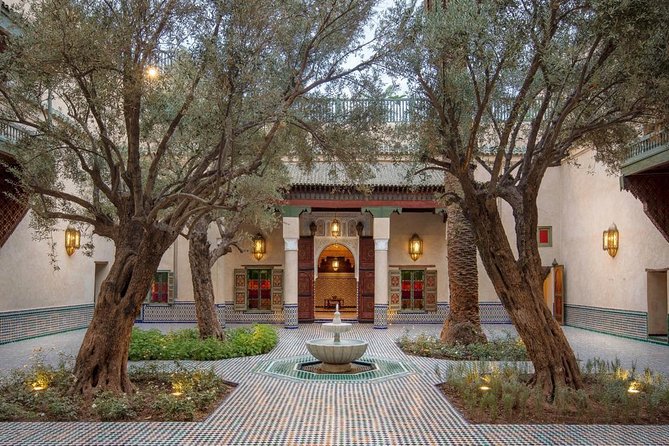
You start in a beautiful riad setting at the Moroccan Culinary Arts Museum on Rue Riad Zitoun el Jdid, near the Bahia Palace area. The visit is designed to help you understand the why behind Moroccan food, with cooking methods and food history presented across the museum spaces before you head upstairs to the kitchen stations.
The whole program runs about 2 hours and ends back where you started. With a maximum group size of 34, it tends to feel organized and focused, but you’ll want to arrive on time so you don’t miss the bread and tea parts.
In This Review
- Key highlights you’ll actually care about
- Entering the Moroccan Culinary Arts Museum in Marrakech
- Up to the second floor: 34 kitchen stations and a real cooking classroom
- Bread-making demonstration: why Moroccan bread is its own lesson
- Spice origins: the herbalist visit that makes tajines make sense
- The cooking class with the Dada: tajines, couscous, and technique
- Moroccan tea ceremony: a short pause that resets your palate
- Terrace dining and tastings: what you’ll eat and what costs extra
- Practical tips so you get more from a 2-hour Moroccan cooking class
- Price and value: does $69.79 make sense here?
- Who should book this (and who might want a different style of tour)?
- Should you book this Moroccan Culinary Arts Museum cooking experience?
- FAQ
- How long is the Moroccan cooking experience?
- Where does the experience start?
- What’s included in the price?
- Are alcoholic drinks included?
- What’s the group size limit?
- Can I get a refund if I cancel?
Key highlights you’ll actually care about
- 34 teaching stations in a kitchen made for learning, not just watching
- Bread-making + bread oven visit, so you understand where flavor starts
- Spice origin stop at a herbalist area, tying dishes to ingredients you can picture
- Tea ceremony included, a calm reset between cooking and eating
- Lunch and coffee and/or tea included, so you’re not scrambling for food
- Optional Moroccan wine tasting, with alcohol otherwise not included
Entering the Moroccan Culinary Arts Museum in Marrakech
The day starts at the Moroccan Culinary Arts Museum, tucked into one of the classic Marrakech riad buildings. The setting matters here. You get that quieter, courtyard-style atmosphere that makes it easier to focus on food instead of fighting crowds.
Inside, the museum helps you get your bearings fast. You’ll see information about Moroccan culinary history and traditional methods, and you’ll find visual explanations of how common dishes fit together. It’s not just a hallway of objects; it’s set up as a practical guide to the logic of Moroccan cooking.
If you’re the type who keeps wondering why one bread tastes different or why one sauce behaves differently, this museum format helps. It gives you context before you ever step into the kitchen.
You can also read our reviews of more tours and experiences in Atlantic Coast.
Up to the second floor: 34 kitchen stations and a real cooking classroom
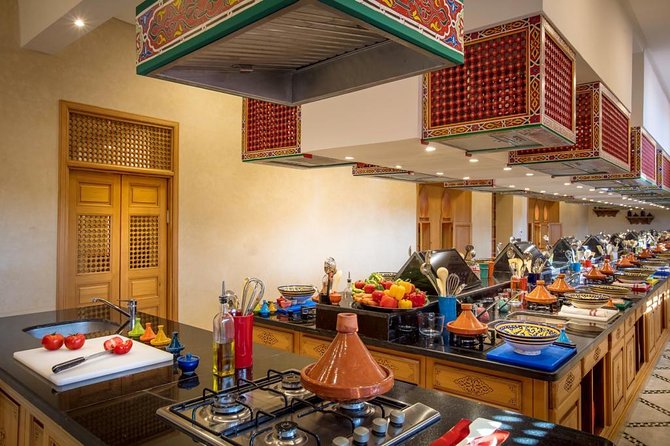
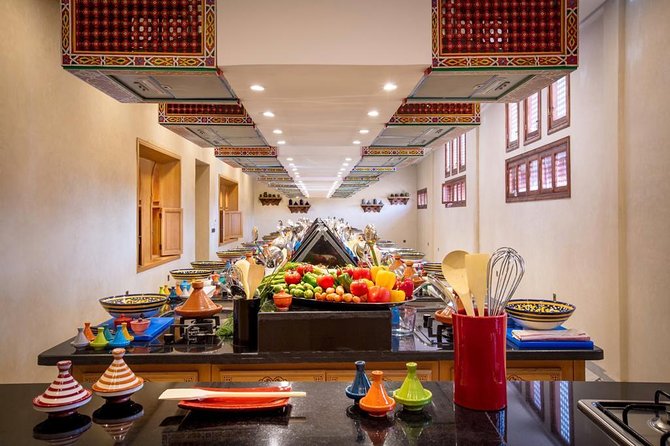
The action moves upstairs to the second floor of the riad. That’s where the reception area is, along with 34 kitchen stations and a Moroccan living room setup. Seeing that number tells you something important: this isn’t built for vague interaction. It’s built for hands-on teaching.
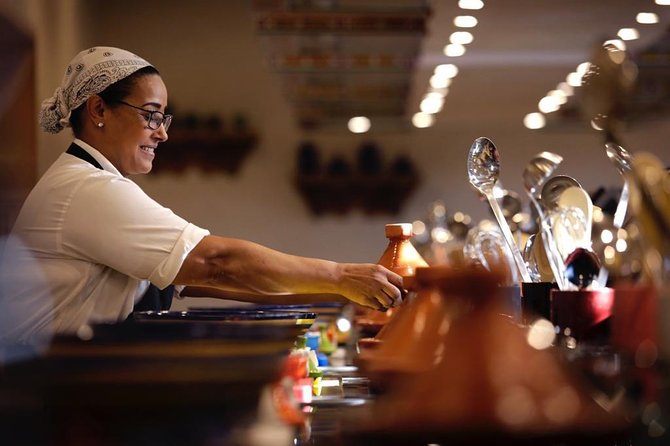
You’re welcomed with help from a French or English interpreter. That support is useful because the Dada (the traditional cook) explains techniques like dosing spices and baking steps, and you’ll get more out of it when you can follow the instructions clearly.
This is also where the “museum to kitchen” connection becomes real. You don’t just learn terms like tajine or couscous—you learn how the cooking process is structured, and why certain spices are added at certain stages.
Bread-making demonstration: why Moroccan bread is its own lesson
One of the best parts of this experience is the Moroccan bread-making demonstration. Bread in Morocco isn’t a side dish you ignore. It’s part of how you scoop, share, and experience sauces and toppings.
After the demo, you visit the bread oven. That stop is more than a quick photo moment. It shows you the cooking environment behind the flavor, and it helps you understand why baking isn’t just time and heat—it’s technique and timing too.
And because Moroccan bread is tied to everyday life, you’ll leave with a clearer mental picture of how a meal is built. It makes the next steps in cooking feel more logical.
Spice origins: the herbalist visit that makes tajines make sense
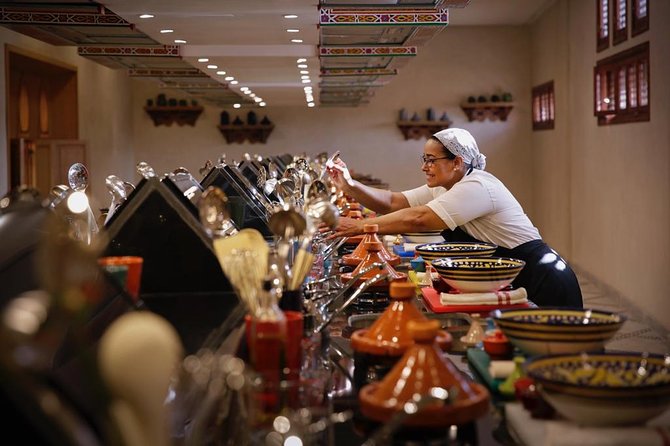
You also visit a bread-oven area and an herbalist area in the district, where you can connect spices to their origins. That matters if you’ve ever tasted a Moroccan dish and thought, I can’t pinpoint what’s doing the work.
Here’s the key idea: Moroccan flavor comes from mixing spices with intention. The Dada’s coaching on dosing spices isn’t abstract. It’s about getting the right balance so you get warmth and aroma without one spice taking over.
Even if you don’t cook at home in Morocco every day, this kind of ingredient-logic is transferable. You start to see spice blends as a tool, not a mystery.
The cooking class with the Dada: tajines, couscous, and technique
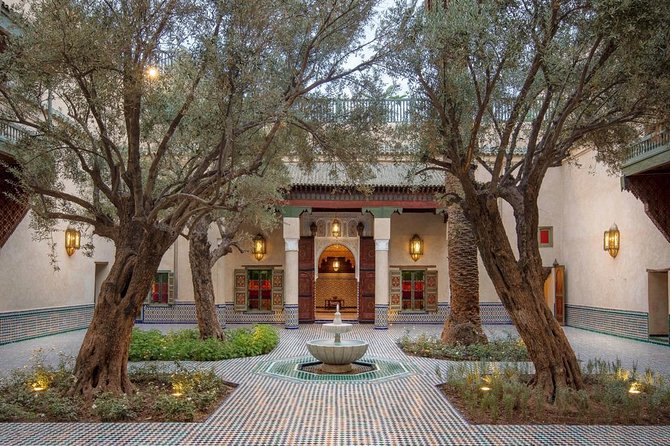
Now you’re in the kitchen classroom proper. The Dada teaches the cooking class, and the focus is on practical technique—how to handle spices, how to cook, and how to put flavors together with confidence.
You’ll work on Moroccan dishes such as tajines and couscous, plus other parts of Moroccan cuisine. The exact menu can vary, but the approach stays the same: you learn how the structure of the dish works, and you cook enough to taste the result.
This part is where the experience earns its reputation for organization. The kitchen is designed for teaching with clear instructions, and staff support helps you keep moving even if you’re not a “natural in the kitchen.”
One important consideration: you’re only in this cooking segment for part of your overall 2-hour experience. So think of it like skill-building and tasting, not a full-day course where you master five complicated recipes end to end.
Moroccan tea ceremony: a short pause that resets your palate
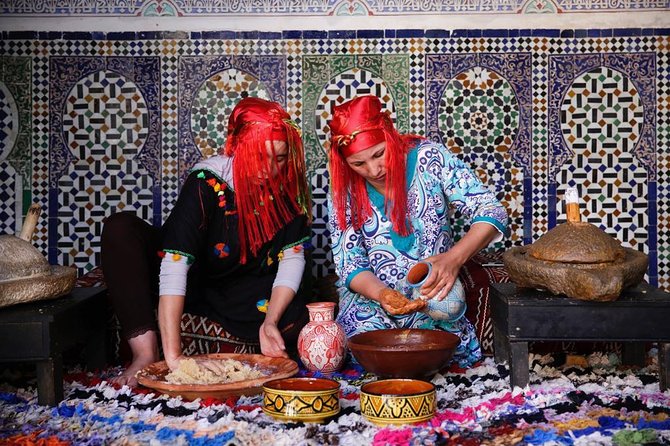
Between cooking and eating, you get a Moroccan tea ceremony. This is more than ritual for ritual’s sake. It gives you a palate reset and helps you slow down after handling spices and hot ingredients.
Tea also acts like a bridge between the lessons. You can connect what you just cooked to how Moroccan hospitality feels in everyday life—calm, welcoming, and designed for sharing.
In a busy Marrakech day, this break makes the experience feel complete. Without it, you’d be rushing straight from cooking to lunch, and you’d miss the rhythm.
Terrace dining and tastings: what you’ll eat and what costs extra
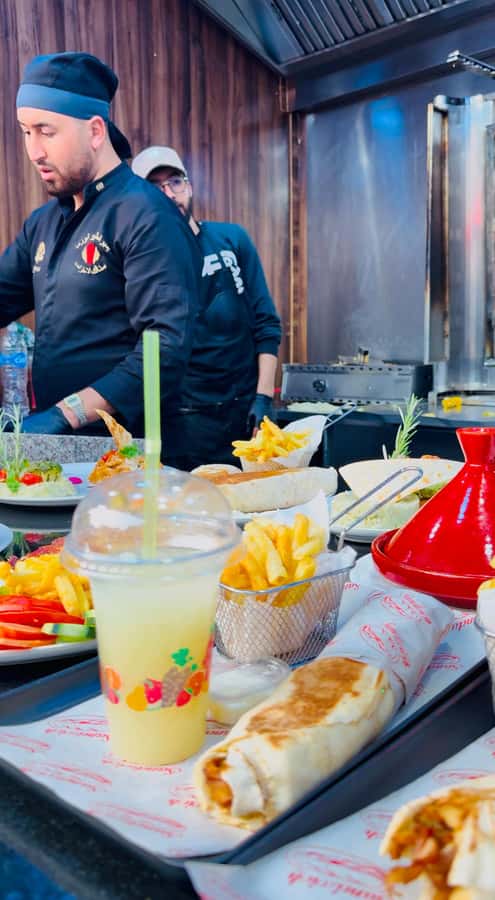
After you prepare dishes, you can enjoy what you made on the terrace. This is a major quality-of-life detail. You’re not eating standing up or in a loud room. You’re eating in an outdoor setting that fits the pace of a cooking lesson.
The experience includes lunch, bottled water, and coffee and/or tea. So you can budget without guessing about basic drinks and food.
There’s also a tasting component with the discovery of Moroccan wines as an optional extra. Alcoholic beverages aren’t included as part of the base offering, so if you want the wine pairings, plan on paying for them on the day (or during checkout, depending on how the option is set up).
Practical tips so you get more from a 2-hour Moroccan cooking class
To make this kind of short class feel worth it, you want to show up ready.
- Arrive a little early near the start time so you can settle in before bread and tea kick off.
- Expect spice. Even when flavors are balanced, Moroccan cooking often tastes bolder than what many visitors expect.
- Ask questions during the Dada’s explanation. This is the moment when spice dosing becomes understandable.
- Wear shoes you can stand in. A kitchen classroom and terrace eating both involve a bit of movement.
If your goal is to learn, this experience rewards curiosity. The teaching style is built for you to follow steps and then taste the outcome while it’s still fresh.
Price and value: does $69.79 make sense here?
At about $69.79 per person, the value depends on what you compare it to. If you’re comparing this to a simple museum visit or a generic cooking demo, it’s a strong deal because you’re getting multiple components:
- Museum time focused on Moroccan culinary art and methods
- Bread-making demonstration plus a bread oven visit
- Herbalist/spice origin stop
- A cooking class taught by the Dada with hands-on kitchen work
- Moroccan tea ceremony
- Lunch, bottled water, and coffee and/or tea included
The optional Moroccan wine experience is the one part that can add cost, and alcohol is explicitly not included in the base price. Still, you can fully enjoy the meal and the learning without the wine add-on.
Group size matters too. With a maximum of 34 travelers, it’s large enough to be lively but small enough that the kitchen teaching can stay organized.
Who should book this (and who might want a different style of tour)?
This works best for you if you want more than photos of food. If you like understanding ingredients, learning technique, and then eating what you made, this is a very practical fit.
It’s also a good choice if you’re combining curiosity with comfort. The museum sets the context, the kitchen gives you hands-on results, and the tea ceremony and terrace meals keep the tone Moroccan and relaxed.
If you’re looking for a long, full-day cooking bootcamp where you cook everything from scratch for hours, you might find the time a bit compact. This is a 2-hour experience, so it’s designed to teach and feed you efficiently.
And if you’re very sensitive to language issues, keep in mind the presence of a French or English interpreter at reception. It’s wise to confirm your language preference when booking.
Should you book this Moroccan Culinary Arts Museum cooking experience?
Book it if you want a Marrakech food experience that feels structured and real—bread, spices, cooking technique, and a sit-down meal included. You’ll get a clearer understanding of Moroccan flavors than you would from simply eating dishes around town.
Skip or consider another option if your main goal is wine-focused partying or a full-length cooking immersion. The alcohol side is optional, and the class time is intentionally short.
For most people—food lovers, curious cooks, couples, and even families who like learning through doing—this hits a sweet spot: informative, hands-on, and tied to a beautiful riad setting.
FAQ
How long is the Moroccan cooking experience?
It runs about 2 hours.
Where does the experience start?
The start point is the Moroccan Culinary Arts Museum, Rue Riad Zitoun el Jdid, Marrakesh 40000, Morocco. The activity ends back at the meeting point.
What’s included in the price?
Included are bottled water, lunch, and coffee and/or tea.
Are alcoholic drinks included?
No. Alcoholic beverages are not included. Moroccan wines are part of an optional tasting.
What’s the group size limit?
The experience has a maximum of 34 travelers.
Can I get a refund if I cancel?
Yes. You can cancel up to 24 hours in advance for a full refund. If you cancel within 24 hours of the start time, the amount paid isn’t refunded.
If you tell me your travel dates and whether you want the wine option, I can help you decide the best time to fit this into your Marrakech plan.